Subscribe to OW blog for an instantly better inbox
Oops! Something went wrong while submitting the form.

Articles and Podcasts on Customer Service, AI and Automation, Product, and more
A year ago, we looked at the user research market and made a decision.
We saw product teams shipping faster than ever while research tools stayed stuck in time. We saw researchers drowning in manual work, waiting on vendor emails, stitching together fragmented tools. We heard "should we test this?" followed by "never mind, we already shipped."
The dominant platforms got comfortable. We didn't.
Today, we're excited to announce Optimal 3.0, the result of refusing to accept the status quo and building the fresh alternative teams have been asking for.
The gap between product velocity and research velocity has never been wider. The situation isn't sustainable. And it's not the researcher's fault. The tools are the problem. They’re:
These platforms haven't changed because they don't have to, so we set out to challenge them.
Optimal 3.0 isn't an incremental update to the old way of doing things. It's a fundamental rethinking of what a research platform should be.
Research For All, Not Just Researchers.
For 18 years, we've believed research should be accessible to everyone, not just specialists. Optimal 3.0 takes that principle further.
Unlimited seats. Zero gatekeeping.
Designers can validate concepts without waiting for research bandwidth. PMs can test assumptions without learning specialist tools. Marketers can gather feedback without procurement nightmares. Research shouldn't be rationed by licenses or complexity. It should be a shared capability across your entire team.
A Complete Ecosystem in One Place.
Stop stitching together point solutions.Optimal 3.0 gives you everything you need in one platform:
Recruitment Built In Access millions of verified participants worldwide without the vendor tag. Target by demographics, behaviors, and custom screeners. Launch studies in minutes, not days. No endless email chains. No procurement delays.
Testing That Adapts to You
Learn more about Live Site Testing
AI-Powered Analysis (With Control) Interview analysis used to take weeks. We've reduced it to minutes.
Our AI automatically identifies themes, surfaces key quotes, and generates summaries, while you maintain full control over the analysis.
As one researcher told us: "What took me 4 weeks to manually analyze now took me 5 minutes."
This isn't about replacing researcher judgment. It's about amplifying it. The AI handles the busywork, tagging, organizing, timestamping. You handle the strategic thinking and judgment calls. That's where your value actually lives.
Learn more about Optimal Interviews
Chat Across All Your Data Your research data is now conversational.
Ask questions and get answers instantly, backed by actual video evidence from your studies. Query across multiple Interview studies at once. Share findings with stakeholders complete with supporting clips.
Every insight comes with the receipts. Because stakeholders don't just need insights, they need proof.
A Dashboard Built for Velocity See all your studies, all your data, in one place. Track progress across your entire team. Jump from question to insight in seconds. Research velocity starts with knowing what you have.
Integration Layer
Optimal 3.0 fits your workflow. It doesn't dominate it. We integrate with the tools you already use, Figma, Slack, your existing tech stack, because research shouldn't force you to abandon how you work.
What Didn't Change: Methodological Rigor
Here's what we didn't do: abandon the foundations that made teams trust us.
Card sorting, tree testing, first-click tests, surveys, the methodologically sound tools that Amazon, Google, Netflix, and HSBC have relied on for years are all still here. Better than ever.
We didn't replace our roots. We built on them.
18 years of research methodology, amplified by modern AI and unified in a complete ecosystem.
Product development isn't slowing down. AI is accelerating everything. Competitors are moving faster. Customer expectations are higher than ever.
Research can either be a bottleneck or an accelerator.
The difference is having a platform that:
Optimal 3.0 is built for research that arrives before the decision is made. Research that shapes products, not just documents them. Research that helps teams ship confidently because they asked users first.
A Fresh Alternative
We're not trying to be the biggest platform in the market.
We're trying to be the best alternative to the clunky tools that have dominated for years.
Amazon, Google, Netflix, Uber, Apple, Workday, they didn't choose us because we're the incumbent. They chose us because we make research accessible, fast, and actionable.
"Overall, each release feels like the platform is getting better." — Lead Product Designer at Flo
"The one research platform I keep coming back to." — G2 Review
This launch represents our biggest transformation, but it's not the end. It's a new beginning.
We're continuing to invest in:
Our goal is simple: make user research so fast and accessible that it becomes impossible not to include users in every decision.
See What We've Built
If you're evaluating research platforms and tired of the same old clunky tools, we'd love to show you the alternative.
Book a demo or start a free trial
The platform that turns "should we?" into "we did."
Welcome to Optimal 3.0.
AI prototyping isn’t just a side experiment anymore. It’s quickly becoming a real advantage for product and design teams. According to a 2025 industry report, companies using AI prototyping tools saw a 35% increase in development efficiency and a 25% improvement in user adoption rates compared to traditional coding methods.
The takeaway? Rapid prototyping with AI doesn’t just save time. It’s driving measurable product impact.
AI prototyping turns simple text prompts into interactive, functional prototypes. You can describe your design concept in plain English e.g. "I want to create a flight booking webpage to review a checkout flow" and minutes later, you have a working, clickable prototype.
AI prototyping can also suggest layouts, flows, and components and lets you experiment without writing a single line of code. You can easily experiment with multiple design concepts and seamlessly transition from idea to testable prototype.
You bring the design thinking. AI handles the build.
Product teams today are under pressure to ship faster without compromising quality. AI prototyping addresses one of the biggest bottlenecks in product development: turning ideas into something realistic enough to test.
Instead of debating static mockups in meetings, you can put a clickable experience in front of users and make decisions based on evidence.
Here are some widely used AI prototyping tools to explore:
AI prototyping gets you to a clickable experience quickly. Optimal helps you validate it with real users.
Here’s a step-by-step workflow to combine both:
Here’s how we recommend getting started. Pick something where you can experiment with low stakes and learn without pressure. Sign in to Optimal or sign up for a free trial and start testing.
This isn’t about replacing design expertise. It’s about shifting time and energy toward understanding user needs and iterating based on evidence. AI can handle the heavy lifting of generating prototypes. Your team can focus on strategy, clarity, and experience quality.
The result? Faster validation. Smarter decisions. Better products.
Figma has long been the go-to tool for UI/UX designers, known for its intuitive interface and real-time collaboration. In fact, over 95% of Fortune 500 companies rely on Figma, and 13 million monthly active users trust it to design and prototype digital experiences.
If you’re already designing in Figma, integrating with Optimal can help to validate your ideas early, reduce costly mistakes, and deliver experiences users actually want.
Validating designs before development and catching usability issues early has a measurable impact on both users and the business. Research consistently shows that:
Instead of waiting for post-launch analytics or expensive redesigns, you can test your Figma prototypes with real users in hours, not weeks with Optimal. Get quantitative data, watch recordings, analyze heatmaps, and actually see where users struggle, all before a single line of code is written.
Here’s a look into 4 practical ways teams use Figma and Optimal together.
Ever had a debate with your team about which design direction to take? Let data decide.
Here's how:
You've got a bold new concept. It makes perfect sense to you. But will users get it?
The process:
You've built a clickable prototype with multiple screens and interactions. It looks polished. But does it actually work for users?
Step-by-step:
What you'll discover might surprise you. Users will:
The rise of AI design tools like Figma Make has changed the game. You can now generate a functional prototype from a text prompt in minutes. But just because AI can create it doesn't mean users can use it.
Quick workflow:
This is perfect for rapid experimentation.
Figma gives you the power to design and prototype rapidly, while Optimal gives you the insights to make sure those designs actually work for real users. Together, they create a workflow built on real insights, not guesswork.
By testing early and often, teams can reduce risk, build confidence in their designs, and move into development knowing their work has already been validated by users. Gather insights quickly, collaborate more effectively, and keep projects moving forward with evidence-backed decisions.
Ready to validate your next Figma prototype? Use Optimal as part of your workflow and start testing with real users today.
.webp)
Live site testing is now part of the Optimal platform and is designed to give you real insights from real user interactions without code, installs, or complicated setups.
If you missed our recent Live Site Testing Training webinar or want a refresher, we’ll get you up to speed with this recap of all the key insights.
Optimal’s live site testing lets you watch users navigate any website or web app, including your own staging or production site, or even competitor experiences. It’s all about understanding how people behave in the environments they actually use, helping you identify friction points you might otherwise miss.
In usability research, the “real world” often looks very different from controlled prototype tests. People use their own devices, have distractions, and bring patterns and expectations shaped by real life. Foundational research shows the richest insights often come from observing users in these real contexts.
Live site testing is built to reflect that reality, helping you answer not just if someone completes a task, but how they approach it and why they struggle.
One of the biggest barriers to live site testing historically is complexity, needing code snippets, extensions, or technical setup. Optimal’s tool removes all that friction so you can see natural behaviour without influence or disruption:
When crafting tasks for live site testing, think about real user goals. Asking people to complete realistic tasks (e.g., find a product, book a flight, compare two pages) and encouraging them to think out loud leads to much richer insights than purely metric‑focused tests. You can also mix tasks with survey questions for quantitative data.
A big part of getting real behavior is ensuring participants feel comfortable and unencumbered. Optimal’s built-in task window is readily available when needed but otherwise minimizes to stay out of the way. This flow helps people stay focused and act naturally, which directly improves the quality of insights you collect.
For even deeper insights, pair live site testing with Optimal Interviews. Once you upload live site testing recordings, you get automated insights, transcripts, summaries, as well as highlight reels in Interviews. You can also explore further with AI chat, so you can quickly uncover quotes, compare experiences, and answer ad‑hoc questions.
This combination doesn’t just make analysis faster; it helps you convince stakeholders with clear, digestible, and compelling evidence from real user behaviour. Instead of long reports, you can present snackable, actionable insights that drive alignment and decisions.
We’re evolving live site testing at Optimal with solution testing, a multi-method approach that combines prototypes, live sites, and surveys in a single study. This will let teams capture even richer insights with speak-aloud tasks, automated analysis, highlight reels, and AI chat, making it faster and easier to understand user behavior and share compelling findings.
Can you test staging or test environments and sites behind a password or firewall?
Yes, Optimal's live site testing tool works with any URL, including staging and test environments as well as sites behind a password or firewall.
You can share specific instructions with participants before they start. For example, if participants need to create an account and you don’t want that recorded, you can ask them to do this in advance via the welcome screen. That way, when the study begins, they’re already logged in.
Will live site testing affect my live website or real data?
No, user testers interacting with a live site test cannot make any changes to your website or its data.
What permissions are needed to test competitor websites?
With Optimal’s live site testing, you don't need special approval or permissions to evaluate public competitors' experiences.
If you want to experience the full walkthrough, demo, and Q&A from the session, we encourage you to watch the full webinar! You’ll learn how to start running your own live site tests and uncover real user behavior, plus pick up tips and best practices straight from the training.

59% of teams say that without research, their decisions would be based on assumptions. Yet only 16% of organizations have user research fully embedded in how they work.
That gap explains why so much research never influences what gets built.
Teams do the work – they run studies, gather insights, document findings. But when research tools are too complex for most people to use, when getting insights takes weeks instead of days, when findings arrive after decisions are already made, research becomes documentation, not direction.
The problem isn't research quality. It's that most user research processes don't match how product teams actually make decisions. Research platforms are too complex, so only specialists can run studies. Analysis takes too long, so teams ship before insights are ready. Findings arrive as 40-slide decks, so they get filed away instead of acted on.
The teams getting research to influence decisions aren't running more studies. They're running connected workflows that answer the right questions at the right time, with insights stakeholders can't ignore.
Here are five workflows that make this happen.
Your team is redesigning checkout, and leadership wants competitive intelligence. But screenshot comparisons and assumptions won't cut it when you're trying to justify engineering time.
Here's the workflow:
Start with Live Site Testing to observe how real users navigate competitor experiences. Watch where they hesitate, what they click first, where they abandon the process entirely. You're not analyzing what competitors built, you're seeing how users actually respond to it.
Follow up with Interviews to understand the why behind the behavior. Upload your live site test recordings and use AI analysis to surface patterns across participants. That random dropout? It's actually a theme: users don't trust the security badge placement because it looks like an ad.
Validate your redesign with Prototype Testing before you commit to building it. Test your new flow against the competitor's current experience and measure the difference in task success, time on task, and user confidence.
What stakeholders see: Video evidence of where competitors fail users, quantitative data proving your concept performs better, and AI-generated insights connecting behavior to business impact.
Product wants to launch a new feature. You need to make sure it won't just join the graveyard of functionality nobody touches.
Here's the workflow:
Use Surveys to understand current user priorities and pain points. Deploy an intercept survey on your live site to catch people in context, not just those who respond to email campaigns. Find out what problems they're actually trying to solve today.
Build it out in Prototype Testing to see whether users can find, understand, and successfully use the feature. Validate key interactions and task flows before engineering writes a line of code. Where do users expect to find this feature? Can they actually easily complete the task you're building it for? Do they move through a flow as intended?
Conduct Interviews to explore the edge cases and mental models you didn't anticipate. Use AI Chat to query across all your interview data: "What concerns did users raise about data privacy?" Get quotes, highlight reels, and themes that answer questions you didn't think to ask upfront.
What stakeholders see: Evidence that this feature solves a real user problem, proof that users can find it where you're planning to put it, and specific guidance on what could cause adoption to fail.
Your information architecture is a mess. Years of adding features means nobody can find anything anymore. But reorganizing based on what makes sense to internal teams is how you end up with labels or structures that don’t resonate with users.
Here's the workflow:
Run Card Sorting to understand how users naturally categorize your content. What your team calls "Account Settings," users call "My Profile." What seems logical internally could be completely foreign to the people who actually use your product.
Validate your structure with Tree Testing before you commit to rebuilding. Test multiple organizational approaches and use the task comparison tool to see which structure helps users complete critical tasks. Can they find what they need, or are you just rearranging deck chairs?
Use Live Site Testing to see how people struggle with your current navigation in practice. Watch them hunt through menus, resort to search as a last-ditch effort, give up entirely. Then test your new structure the same way to measure actual improvement, not just theoretical better-ness.
Upload recordings to Interviews for AI-powered analysis. Get clear summaries of common pain points, highlight reels of critical issues, and stakeholder-friendly video clips that make the case for change.
What stakeholders see: Your redesign isn't based on internal preferences. It's based on how users think about your content, validated with task completion data, and backed by video proof of improvement.
Leadership wants to know why conversion rates are stuck. You have theories about friction points, but theories don't justify engineering sprints.
Here's the workflow:
Deploy Surveys with intercept snippets on your live site. Ask people in the moment what they're trying to accomplish and what's stopping them. Surface objections and confusion you wouldn't discover through internal speculation. This solves two problems: you get feedback from actual users in context, and you avoid the participant recruitment challenge that 41% of researchers cite as a top obstacle.
Run Live Site Testing to watch users actually attempt to convert. See where they hesitate before clicking "Continue," what makes them abandon their cart, which form fields cause them to pause and reconsider.
Run First-Click Testing to identify navigation barriers to conversion. Test whether users can find the path that leads to conversion - like locating your pricing page, finding the upgrade plan button, identifying the right product category, or comparing different products to each other. Users who make a correct first click are 3X more likely to complete their task successfully, so this quickly reveals when poor navigation or unclear signage is killing conversion.
Test proposed fixes with Prototype Testing before rebuilding anything. If you think the problem is an unclear value proposition, test clearer messaging. If you think it's a trust issue, test different social proof placements. Compare task success rates between your current flow and proposed changes.
Use Interviews to understand the emotional and practical barriers underneath the behavior. AI analysis helps you spot patterns: it's not that your pricing is too high, it's that users don't understand what they're getting for the price, or why your option is better than competitors.
What stakeholders see: Exactly where users drop off, why they drop off, and measured improvement from your proposed solution, all before engineering builds anything.
Your product team ships every two weeks. Research that takes three weeks to complete is documentation of what you already built, not input into decisions.
Here's the workflow:
Build research into your sprint cycles by eliminating the manual overhead. Use Surveys for quick pulse checks on assumptions. Deploy a tree test in hours to validate a navigation change before sprint planning, not after the feature ships. Invite your own participants, use Optimal's on-demand panel for fast turnaround, or leverage managed recruitment when you need specific, hard-to-reach audiences.
Leverage AI to handle the time-consuming work in Interviews. Upload recordings and get automated insights, themes, and highlight reels while you're planning your next study. What used to take days of manual review now takes minutes of focused analysis. AI also automatically surfaces patterns in survey responses and pre/post-task feedback across your studies, so you're finding insights faster regardless of method.
Test current and proposed experiences in parallel. Use Live Site Testing and Prototype Testing to baseline the problem with your current experience, while simultaneously testing your solution. Compare results side-by-side to show measurable improvement, not just directional feedback. Tree testing has built-in task comparison so you can directly measure navigation performance between your existing structure and proposed changes.
Share results in tools your team actually uses. Generate highlight reels for stand-ups, pull specific quotes for Slack threads with AI Chat, export data for deeper stakeholder analysis. Research findings that fit into existing workflows get used. Research that requires everyone to change how they work gets ignored.
What stakeholders see: Research isn't the thing slowing down product velocity. It's the thing making decisions faster and more confident. Teams do more research because research fits their workflow, not because they've been told they should.
Most organizations struggle to embed user research into product development. Research happens in disconnected moments rather than integrated workflows, which is why it often feels like it's happening to teams rather than with them.
Closing that gap requires two shifts: building a user research process that connects insights across the entire product cycle, and making research accessible to everyone who makes product decisions.
That's the workflow advantage: card sorting reveals how people naturally categorize and label content, tree testing validates structure, surveys surface priorities, live site testing shows real behavior, prototype testing confirms solutions, interviews provide context, and AI analysis handles synthesis. Each method is designed for speed and simplicity, so product managers can validate assumptions, designers can test solutions, and researchers can scale their impact without becoming bottlenecks.
The workflows we covered - reducing churn, validating roadmaps, boosting conversions, proving impact, and matching product velocity - all follow this same pattern: the right combination of UX research methods, deployed at the right moment, analyzed fast enough to matter, and accessible to the entire product team.
Ready to see how these user research workflows work for your team? Explore Optimal's platform or talk to our team about your specific research challenges.

Maze has built a strong reputation for rapid prototype testing and quick design validation. For product teams focused on speed and Figma integration, it offers an appealing workflow. But as research programs mature and teams need deeper insights to inform strategic decisions, many discover that Maze's limitations create friction. Platform reliability issues, restricted research depth, and a narrow focus on unmoderated testing leave gaps that growing teams can't afford.
If you're exploring Maze alternatives that deliver both speed and substance, here are seven platforms worth evaluating.
Teams typically start searching for Maze alternatives when they encounter these constraints:
Before committing to a new platform, evaluate these key factors:
Optimal delivers end-to-end research capabilities that teams commonly piece together from multiple tools. Optimal supports the complete research lifecycle: participant recruitment, prototype testing, live site testing, card sorting, tree testing, surveys, and AI-powered interview analysis.
Broader research methods: Optimal provides specialized tools and in-depth analysis and visualizations that Maze simply doesn't offer. Card sorting and tree testing validate information architecture before you build. Live site testing lets you evaluate actual websites and applications without code, enabling continuous optimization post-launch. This breadth means teams can conduct comprehensive research without switching platforms or compromising study quality.
Deeper qualitative insights: Optimal's new Interviews tool revolutionizes how teams extract value from user research. Upload interview videos and AI automatically surfaces key themes, generates smart highlight reels with timestamped evidence, and produces actionable insights in hours instead of weeks. Every insight comes with supporting video evidence, making stakeholder buy-in effortless.
AI-powered analysis: While Maze provides basic metrics and surface-level reporting, Optimal delivers sophisticated AI analysis that automatically generates insights, identifies patterns, and creates export-ready reports. This transforms research from data collection into strategic intelligence.
Global participant recruitment: Access to over 100 million verified participants across 150+ countries enables sophisticated targeting for any demographic or market. Optimal's fraud prevention and quality assurance processes ensure participant authenticity, something teams consistently report as problematic with Maze's smaller panel.
Enterprise-grade reliability: Optimal serves Fortune 500 companies including Netflix, LEGO, and Apple with SOC 2 compliance, SSO, role-based permissions, and dedicated enterprise support. The platform was built for scale, not retrofitted for it.
Best for: UX researchers, design and product teams, and enterprise organizations requiring comprehensive research capabilities, deeper insights, and proven enterprise reliability.
UserTesting remains one of the most recognized platforms for gathering video feedback from participants. It excels at capturing user reactions and verbal feedback during task completion.
Strengths: Large participant pool with strong demographic filters, robust support for moderated sessions and live interviews, integrations with Figma and Miro.
Limitations: Significantly higher cost at enterprise scale, less flexible for navigation testing or survey-driven research compared to platforms like Optimal, increasingly complex UI following multiple acquisitions (UserZoom, Validately) creates usability issues.
Best for: Large enterprises prioritizing high-volume video feedback and willing to invest in premium pricing for moderated session capabilities.
Lookback specializes in live user interviews and moderated testing sessions, emphasizing rich qualitative feedback over quantitative metrics.
Strengths: Excellent for in-depth qualitative discovery, strong recording and note-taking features, good for teams prioritizing narrative insights over metrics.
Limitations: Narrow focus on moderated research limits versatility, lacks quantitative testing methods, smaller participant pool requires external recruitment for most studies.
Best for: Research teams conducting primarily qualitative discovery work and willing to manage recruitment separately.
PlaybookUX combines usability testing with integrated participant recruitment, appealing to teams wanting simplified procurement.
Strengths: Bundled recruitment reduces vendor management, straightforward pricing model, decent for basic unmoderated studies.
Limitations: Limited research method variety compared to comprehensive platforms, smaller panel size restricts targeting options, basic analysis capabilities require manual synthesis.
Best for: Small teams needing recruitment and basic testing in one package without advanced research requirements.
Lyssna (formerly UsabilityHub) focuses on fast, lightweight tests for design validation; preference tests, first-click tests, and five-second tests.
Strengths: Fast turnaround for simple validation, intuitive interface, affordable entry point for small teams.
Limitations: Limited scope beyond basic design feedback, small participant panel with quality control issues, lacks sophisticated analysis or enterprise features.
Best for: Designers running lightweight validation tests on UI patterns and early-stage concepts.
Hotjar specializes in on-site behavior analytics; heatmaps, session recordings, and feedback widgets that reveal how users interact with live websites.
Strengths: Valuable behavioral data from actual site visitors, seamless integration with existing websites, combines quantitative patterns with qualitative feedback.
Limitations: Focuses on post-launch observation rather than pre-launch validation, doesn't support prototype testing or information architecture validation, requires separate tools for recruitment-based research.
Best for: Teams optimizing live websites and wanting to understand actual user behavior patterns post-launch.
UserZoom (now part of UserTesting) targets enterprise research programs requiring governance, global reach, and sophisticated study design.
Strengths: Extensive research methods and study templates, strong enterprise governance features, supports complex global research operations.
Limitations: Significantly higher cost than Maze or comparable platforms, complex interface with steep learning curve, integration with UserTesting creates platform uncertainty.
Best for: Global research teams at large enterprises with complex governance requirements and substantial research budgets.
Maze serves a specific need: rapid prototype validation for design-focused teams. But as research programs mature and insights drive strategic decisions, teams need platforms that deliver depth alongside speed.
Optimal stands out by combining Maze's prototype testing capabilities with the comprehensive research methods, AI-powered analysis, and enterprise reliability that growing teams require. Whether you're validating information architecture through card sorting, testing live websites without code, or extracting insights from interview videos, Optimal provides the depth and breadth that transforms research from validation into strategic advantage.
If you're evaluating Maze alternatives, consider what your research program needs six months from now, not just today. The right platform scales with your team, deepens your insights, and becomes more valuable as your research practice matures.
Try Optimal for free to experience how comprehensive research capabilities transform user insights from validation into strategic intelligence.
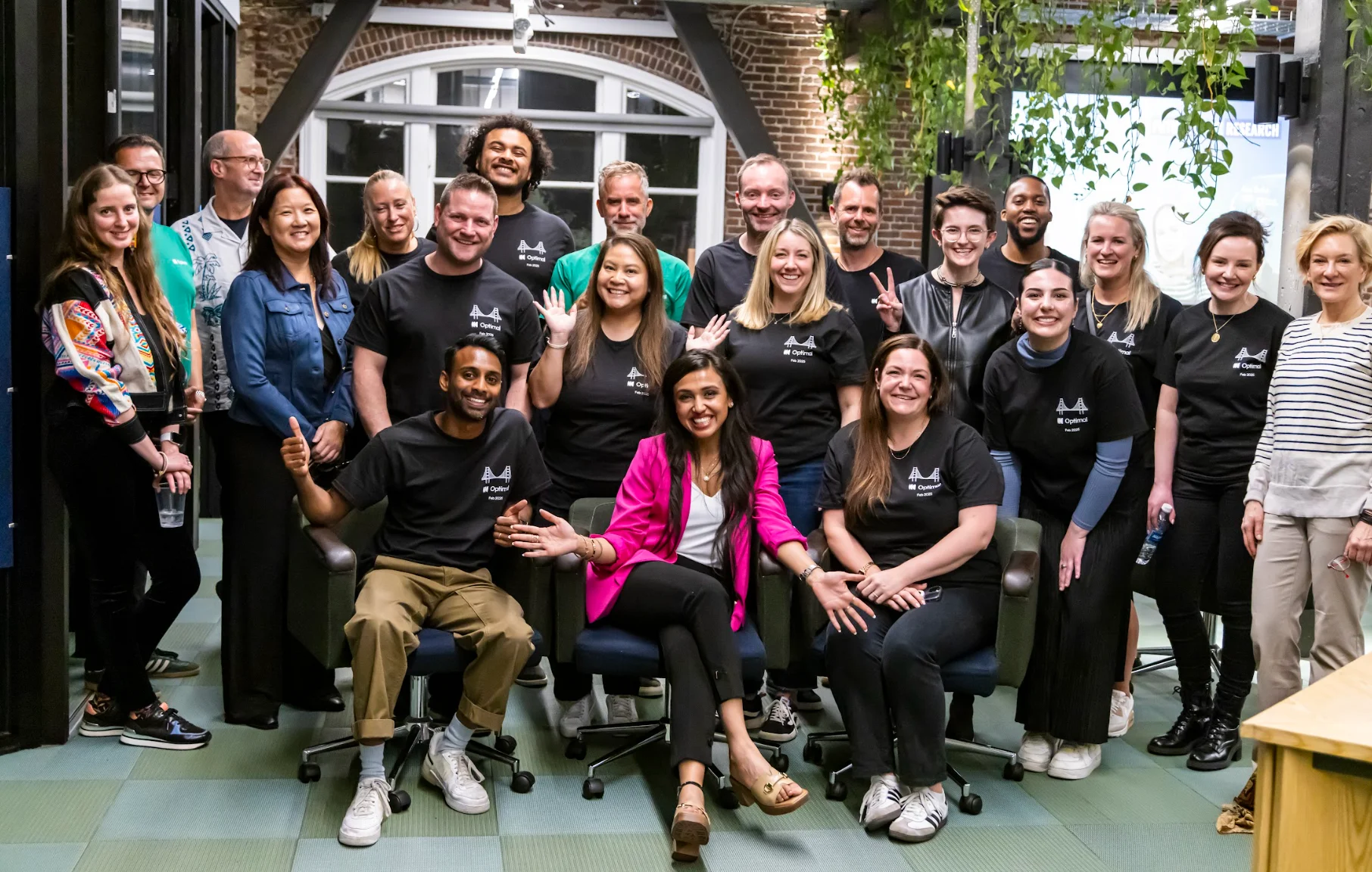
As we close out 2025, we’ve been reflecting on what we’ve achieved together and where we’re headed next.
We’re proud to have supported customers in 45+ countries and nearly 400 cities, powering insights for teams at LEGO, Google, Apple, Nike, and many more. Over the last 12 months alone, more than 1.2 million participants completed studies on Optimal, shaping decisions that lead to better, more intuitive products and experiences around the world.
We also strengthened and brought our community together. We attended 10 industry events, launched 4 leadership circle breakfasts for senior leaders in UX, product and design, and hosted 19 webinars, creating spaces to exchange ideas, share best practices, and explore the future of our changing landscape across topics like AI, automation, and accessibility.
But the real story isn't in the numbers. It's in what we built to meet this moment.
This year, we introduced a completely refreshed Optimal experience - a new Home and Studies interface designed to remove friction and help teams move faster. Clean, calm, intentional. Built not just to look modern, but to feel effortless.
2025 was a milestone year: it marked the most significant expansion of the Optimal platform we think we’ve ever accomplished, with an introduction of automation powered by AI.
A transformative way to accelerate insights from interviews and videos through automated highlight reels, instant transcripts, summaries, and AI chat, eliminating days and weeks of manual work.
Test designs early and often. Capture the nuance of user interactions with screen, audio, and/or video recording.
Watch real people interact with any website and web app to see what’s actually happening. Your direct window into reality.
We also continued enhancing our core toolkit, adding display logic to surveys and launching a new study creation flow to help teams move quickly and confidently across the platform.
The next era of research isn't about replacing humans with AI. It’s about making room for the work humans do best. In 2025, we were intentional with where we added AI to Optimal, guided by our core principle to automate your research. Our ever-growing AI toolkit helps you:
AI handles the tedious parts so you can focus on the meaningful ones.
2025 built out our foundation. The next will raise the bar.
We're entering a phase where research and insights becomes:
To everyone who ran a study, shared feedback, or pushed us to do better: thank you. You make Optimal what it is. Here’s to an even faster, clearer, more impactful year of insights.
Onwards and upwards.
