


Optimal vs Lyssna: Why Enterprise Teams Need Enterprise-Ready Platforms
The choice between comprehensive research platforms and tools designed for smaller teams becomes increasingly critical as research and product teams work to scale their user insight capabilities. This decision impacts not only immediate research outcomes but also long-term strategic planning and organizational growth. While platforms like Lyssna focus on rapid feedback collection and quick turnaround times which are valuable for teams needing fast validation, Optimal delivers the depth, reliability, and enterprise features that the world's biggest brands require to make strategic product decisions.
Why do teams choose Optimal instead of Lyssna?
Comprehensive Insights vs. Speed-Only Focus
Optimal's Comprehensive Approach: Optimal combines speed with depth, delivering rapid study launch alongside AI-powered analysis, detailed reporting, and enterprise-grade insights that transform user feedback into actionable business intelligence. This includes live site testing capabilities that let you test actual websites and web apps without code, enabling continuous optimization post-launch.
Lyssna's Speed Focus: In contrast, Lyssna optimizes for quick feedback collection with simple testing workflows, but lacks AI-powered analysis, advanced reporting, and the sophisticated insights enterprise research programs require for strategic decision-making.
Trusted by Global Brands: Optimal serves enterprise clients including Lego, Nike, and Amazon with SOC 2 compliance, global security protocols, and dedicated enterprise support that meets Fortune 500 requirements.
Limited Enterprise Features: Lyssna operates as a testing tool rather than an enterprise platform, lacking the compliance, security, and support infrastructure global brands require for mission-critical research programs.
Participant Quality and Global Reach
Global Participant Network: Optimal's 10+ million verified participants across 150+ countries enable sophisticated audience targeting, global market research, and reliable recruitment for any demographic or geographic requirement.
Limited Panel Reach: Lyssna's small participant panel restricts targeting options and geographic coverage, particularly for niche audiences or international research requirements.
Verified Participant Quality: Optimal implements comprehensive fraud prevention, advanced screening protocols, and quality assurance processes that ensure participant authenticity and criteria matching for reliable research results.
Quality Control Issues: Users report that Lyssna participants often don't match requested criteria, compromising study validity and requiring additional screening overhead.
Advanced Features and Platform Capabilities
AI-Powered Insights: Optimal includes sophisticated AI analysis tools that automatically generate insights, identify patterns, and create actionable recommendations from research data. Our new Interviews tool exemplifies this innovation, upload interview videos and let AI automatically surface key themes, generate smart highlight reels with timestamped evidence, and produce actionable insights in hours instead of weeks.
Manual Analysis Required: Lyssna provides basic reporting without integrated AI tools, requiring teams to manually analyze results and generate insights from raw data.
Full-Service Flexibility: Optimal provides both self-service and white-glove managed recruitment services, accommodating varying team resources and research complexity with dedicated support for challenging recruitment scenarios.
Self-Service Only: Lyssna operates exclusively as a self-service platform without managed recruitment options for teams requiring specialized audience targeting or complex demographic requirements.
Sophisticated Yet Accessible: Optimal balances powerful functionality with intuitive design, providing guided templates and automation features that enable complex research without overwhelming users.
Simple but Limited: While Lyssna offers a straightforward interface, this simplicity comes with functional limitations that restrict test design flexibility and advanced research capabilities.
When to Choose Lyssna
Lyssna may suffice for teams with:
Basic testing needs without strategic implications
Limited budgets prioritizing low cost over comprehensive features
Simple research requirements without compliance needs
Acceptance of limited participant quality and geographic reach
When to Choose Optimal
Optimal becomes essential for:
Strategic Research Programs: When user insights drive business strategy
Global Organizations: Requiring international research capabilities
Quality-Critical Studies: Where participant verification and data integrity matter
Enterprise Compliance: Organizations with security and compliance requirements
Advanced Analysis Needs: Teams requiring AI-powered insights and sophisticated reporting
Scalable Research Operations: Growing programs needing comprehensive platform capabilities
Why Enterprises Need to Prioritize Enterprise Research Excellence
While Lyssna serves basic testing needs, enterprise research requires the depth, reliability, and global reach that only comprehensive platforms provide. Optimal delivers speed without sacrificing the sophisticated capabilities enterprise teams need for strategic decision-making. Don't compromise research quality for simple, quick tools.
In our Value of UX Research report, nearly 70% of participants identified analysis and synthesis as the area where AI could make the biggest impact.
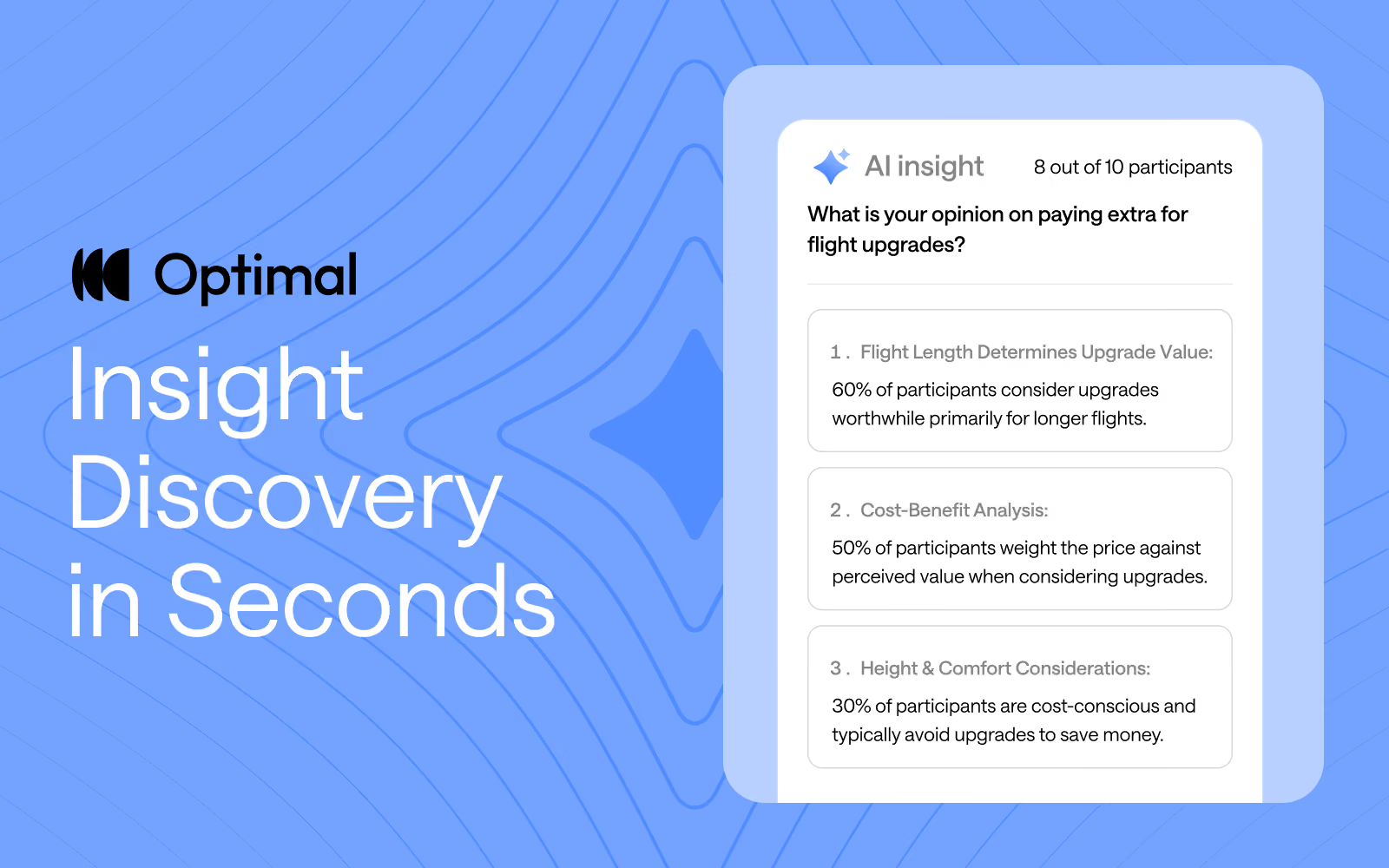
At Optimal, we're all about cutting the busywork so you can spend more time on meaningful insights and action. That’s why we’ve built automated Insights, powered by AI, to instantly surface key themes from your survey responses.
No extra tools. No manual review. Just faster insights to help you make quicker, data-backed decisions.
What You’ll Get with Automated Insights
Instant insight discovery Spot patterns instantly across hundreds of responses without reading every single one. Get insights served up with zero manual digging or theme-hunting.
Insights grounded in real participant responses We show the numbers behind every key takeaway, including percentage and participant count, so you know exactly what’s driving each insight. And when participants say it best, we pull out their quotes to bring the insights to life.
Zoom in for full context Want to know more? Easily drill down to the exact participants behind each insight for open text responses, so you can verify, understand nuances, and make informed decisions with confidence.
Segment-specific insights Apply any segment to your data and instantly uncover what matters most to that group. Whether you’re exploring by persona, demographic, or behavior, the themes adapt accordingly.
Available across the board From survey questions to pre- and post-study, and post-task questions, you’ll automatically get Insights across all question types, including open text questions, matrix, ranking, and more.
Automate the Busywork, Focus on the Breakthroughs
Automated Insights are just one part of our ever-growing AI toolkit at Optimal. We're making it easier (and faster) to go from raw data to real impact, such as our AI Simplify tool to help you write better survey questions, effortlessly. Our AI assistant suggests clearer, more effective wording to help you engage participants and get higher-quality data.
Ready to level up your UX research? Log into your account to get started with these newest capabilities or sign up for a free trial to experience them for yourselves.
Many smaller product teams find newer research tools like Ballpark attractive due to their promises of being able to provide simple and quick user feedback tools. However, larger teams conducting UX research that drives product strategy need platforms capable of delivering actionable insights rather than just surface-level metrics. While Ballpark provides basic testing functionality that works for simple validation, Optimal offers the research depth, comprehensive analysis capabilities, and strategic intelligence that teams require when making critical product decisions.
Why Choose Optimal over Ballpark?
Surface-Level Feedback vs. Strategic Research Intelligence
Ballpark's Shallow Analysis: Ballpark focuses on collecting quick feedback through basic surveys and simple preference tests, but lacks the analytical depth needed to understand why users behave as they do or what actions to take based on findings.
Optimal's Strategic Insights: Optimal transforms user feedback into strategic intelligence through advanced analytics, behavioral analysis, and AI-powered insights that reveal not just what happened, but why it happened and what to do about it.
Limited Research Methodology: Ballpark's toolset centers on simple feedback collection without comprehensive research methods like advanced card sorting, tree testing, or sophisticated user journey analysis.
Complete Research Arsenal: Optimal provides the full spectrum of research methodologies needed to understand complex user behaviors, validate design decisions, and guide strategic product development.
Quick Metrics vs. Actionable Intelligence
Basic Data Collection: Ballpark provides simple metrics and basic reporting that tell you what happened but leave teams to figure out the 'why' and 'what next' on their own.
Intelligent Analysis: Optimal's AI-powered analysis doesn't just collect data—it identifies patterns, predicts user behavior, and provides specific recommendations that guide product decisions.
Limited Participant Insights: Ballpark's 3 million participant panel provides basic demographic targeting but lacks the sophisticated segmentation and behavioral profiling needed for nuanced research.
Deep User Understanding: Optimal's 100+ million verified participants across 150+ countries enable precise targeting and comprehensive user profiling that reveals deep behavioral insights and cultural nuances.
Startup Risk vs. Enterprise Reliability
Unproven Stability: As a recently founded startup with limited funding transparency, Ballpark presents platform stability risks and uncertain long-term viability for enterprise research investments.
Proven Enterprise Reliability: Optimal has successfully launched over 100,000 studies with 99.9% uptime guarantee, providing the reliability and stability enterprise organizations require.
Limited Support Infrastructure: Ballpark's small team and basic support options cannot match the dedicated account management and enterprise support that strategic research programs demand.
Enterprise Support Excellence: Optimal provides dedicated account managers, 24/7 enterprise support, and comprehensive onboarding that ensures research program success.
When to Choose Optimal
Optimal is the best choice for teams looking for:
Actionable Intelligence: When teams need insights that directly inform product strategy and design decisions
Behavioral Understanding: Projects requiring deep analysis of why users behave as they do
Complex Research Questions: Studies that demand sophisticated methodologies and advanced analytics
Strategic Product Decisions: When research insights drive major feature development and business direction
Comprehensive User Insights: Teams needing complete user understanding beyond basic preference testing
Competitive Advantage: Organizations using research intelligence to outperform competitors
Enterprise teams frequently encounter pressure from leadership to adopt consolidated platforms like Qualtrics that promise to handle multiple functions including PX, EX, and CX, in a single solution for all user feedback needs. While these multidisciplinary platforms may seem appealing from a procurement perspective, they often fall short for specialized use cases. UX and product teams typically find that purpose-built platforms like Optimal deliver superior results and stronger ROI. These specialized solutions offer the depth of functionality teams actually need while maintaining significantly reduced complexity and cost compared to enterprise-wide platforms that try to be everything to everyone.
Why Choose Optimal over Qualtrics?
Specialist Research Platforms Outperform Generalist Platforms
Purpose-Built Research Features: Specialized platforms eliminate feature bloat while providing deep capabilities in their area of focus, enabling teams to achieve better results.
Feature Overload: In contrast, enterprise platforms like Qualtrics provide hundreds of features across multiple use cases, creating complexity and inefficiency for research and product teams looking for user insight to drive their decisions.
Research Team Optimization: Purpose-built research platforms optimize specifically for product and research team workflows, participant experience, and user insight quality.
Multi-Department Compromise: Enterprise platforms often represent compromises across multiple departments, resulting in tools that serve everyone to some degree but no one team really well.
What does this look like when you compare Qualtrics to Optimal?
Optimal's UX Research Focus: Built specifically for UX and product research, Optimal eliminates unnecessary complexity while providing deep capabilities for user testing, prototype validation, and product insight that UX teams actually use. Optimal includes comprehensive capabilities like live site testing (test actual websites and web apps without code), advanced prototype testing with Figma integration, and AI-powered Interviews that transform hours of video analysis into automated insights with key themes, highlight reels, and timestamped evidence.
Qualtrics' Broad Scope Challenge: Qualtrics serves customer experience (CX), employee experience (EX), and product experience (PX) across entire enterprises. This broad scope creates feature overload that overwhelms UX research teams who need focused, efficient tools. They are a "jack of all trades, master of none".
Streamlined Implementation and Transparent Costs
Transparent UX Research Pricing: Optimal offers straightforward, flat-rate pricing focused on UX research capabilities without forcing teams to subsidize enterprise modules irrelevant to their workflow.
License Costs: In contrast, Qualtrics is the most expensive tool on the market with complex modular licensing that forces teams to pay for CX and EX capabilities they don't need for UX research.
Get Started in Minutes: Optimal's intuitive design enables teams to launch studies in minutes, no complex set up, no engineering support required.
Professional Services Requirements: Qualtrics implementations often require expensive professional services, extended onboarding periods, and ongoing consulting to achieve success.
In addition to feature complexity, platforms like Qualtrics often come with high costs for the features your team doesn't really need. While some of these larger, multi-department platforms may appear cost-effective because they offer tool consolidation, the total cost of ownership often includes substantial professional services, extended training periods, and ongoing support requirements that specialized teams end up absorbing, despite utilizing only a fraction of available capabilities.
For the Best User Insights Specialization Beats Generalization
While Qualtrics serves enterprise survey needs across multiple departments, UX research teams achieve better results with purpose-built platforms that eliminate unnecessary features while providing clear ROI. Optimal delivers 90% of Qualtrics' enterprise platform value with 10% of the complexity.
User research excellence requires tools designed specifically for UX workflows. Smart research and product teams choose platforms that enhance your research impact rather than adding implementation overhead and workflow friction.