January 29, 2026
5 min

Optimal 3.0: Built to Challenge the Status Quo

A year ago, we looked at the user research market and made a decision.

We saw product teams shipping faster than ever while research tools stayed stuck in time. We saw researchers drowning in manual work, waiting on vendor emails, stitching together fragmented tools. We heard "should we test this?" followed by "never mind, we already shipped."

The dominant platforms got comfortable. We didn't.

Today, we're excited to announce Optimal 3.0, the result of refusing to accept the status quo and building the fresh alternative teams have been asking for.

The Problem: Research Platforms Haven't Evolved

The gap between product velocity and research velocity has never been wider. The situation isn't sustainable. And it's not the researcher's fault. The tools are the problem. They’re: 

  • Built for specialists only - Complex interfaces that gatekeep research from the rest of the team
  • Fragmented ecosystems - Separate tools for recruitment, testing, and analysis that don't talk to each other
  • Data in silos - Insights trapped study-by-study with no way to search across everything
  • Zero integration - Platforms that force you to abandon your workflow instead of fitting into it

These platforms haven't changed because they don't have to, so we set out to challenge them.

Our Answer: A Complete Ecosystem for Research Velocity

Optimal 3.0 isn't an incremental update to the old way of doing things. It's a fundamental rethinking of what a research platform should be.

Research For All, Not Just Researchers.

For 18 years, we've believed research should be accessible to everyone, not just specialists. Optimal 3.0 takes that principle further.

Unlimited seats. Zero gatekeeping.

Designers can validate concepts without waiting for research bandwidth. PMs can test assumptions without learning specialist tools. Marketers can gather feedback without procurement nightmares. Research shouldn't be rationed by licenses or complexity. It should be a shared capability across your entire team.

A Complete Ecosystem in One Place.

Stop stitching together point solutions.Optimal 3.0 gives you everything you need in one platform:

Recruitment Built In Access millions of verified participants worldwide without the vendor tag. Target by demographics, behaviors, and custom screeners. Launch studies in minutes, not days. No endless email chains. No procurement delays.

Learn more about Recruitment

Testing That Adapts to You

  • Live Site Testing: Test any URL, your production site, staging, or competitors, without code or developer dependencies
  • Prototype Testing: Connect Figma and go from design to insights in minutes
  • Mobile Testing: Native screen recordings that capture the real user experience
  • Enhanced Traditional Methods: Card sorting, tree testing, first-click tests, the methodologically sound foundations we built our reputation on

Learn more about Live Site Testing

AI-Powered Analysis (With Control) Interview analysis used to take weeks. We've reduced it to minutes.

Our AI automatically identifies themes, surfaces key quotes, and generates summaries, while you maintain full control over the analysis.

As one researcher told us: "What took me 4 weeks to manually analyze now took me 5 minutes."

This isn't about replacing researcher judgment. It's about amplifying it. The AI handles the busywork, tagging, organizing, timestamping. You handle the strategic thinking and judgment calls. That's where your value actually lives.

Learn more about Optimal Interviews

Chat Across All Your Data Your research data is now conversational.

Ask questions and get answers instantly, backed by actual video evidence from your studies. Query across multiple Interview studies at once. Share findings with stakeholders complete with supporting clips.

Every insight comes with the receipts. Because stakeholders don't just need insights, they need proof.

A Dashboard Built for Velocity See all your studies, all your data, in one place. Track progress across your entire team. Jump from question to insight in seconds. Research velocity starts with knowing what you have.

Explore the new dashboard

Integration Layer

Optimal 3.0 fits your workflow. It doesn't dominate it. We integrate with the tools you already use, Figma, Slack, your existing tech stack, because research shouldn't force you to abandon how you work.

What Didn't Change: Methodological Rigor

Here's what we didn't do: abandon the foundations that made teams trust us.

Card sorting, tree testing, first-click tests, surveys, the methodologically sound tools that Amazon, Google, Netflix, and HSBC have relied on for years are all still here. Better than ever.

We didn't replace our roots. We built on them.

18 years of research methodology, amplified by modern AI and unified in a complete ecosystem.

Why This Matters Now

Product development isn't slowing down. AI is accelerating everything. Competitors are moving faster. Customer expectations are higher than ever.

Research can either be a bottleneck or an accelerator.

The difference is having a platform that:

  • Makes research accessible to everyone (not just specialists)
  • Provides a complete ecosystem (not fragmented point solutions)
  • Amplifies judgment with AI (instead of replacing it)
  • Integrates with workflows (instead of forcing new ones)
  • Lets you search across all your data (not trapped in silos)

Optimal 3.0 is built for research that arrives before the decision is made. Research that shapes products, not just documents them. Research that helps teams ship confidently because they asked users first.

A Fresh Alternative

We're not trying to be the biggest platform in the market.

We're trying to be the best alternative to the clunky tools that have dominated for years.

Amazon, Google, Netflix, Uber, Apple, Workday, they didn't choose us because we're the incumbent. They chose us because we make research accessible, fast, and actionable.

"Overall, each release feels like the platform is getting better." — Lead Product Designer at Flo

"The one research platform I keep coming back to." — G2 Review

What's Next

This launch represents our biggest transformation, but it's not the end. It's a new beginning.

We're continuing to invest in:

  • AI capabilities that amplify (not replace) researcher judgment
  • Platform integrations that fit your workflow
  • Methodological innovations that maintain rigor while increasing speed
  • Features that make research accessible to everyone

Our goal is simple: make user research so fast and accessible that it becomes impossible not to include users in every decision.

See What We've Built

If you're evaluating research platforms and tired of the same old clunky tools, we'd love to show you the alternative.

Book a demo or start a free trial

The platform that turns "should we?" into "we did."

Welcome to Optimal 3.0.

Share this article
Author
Optimal
Workshop

Related articles

View all blog articles
Learn more
1 min read

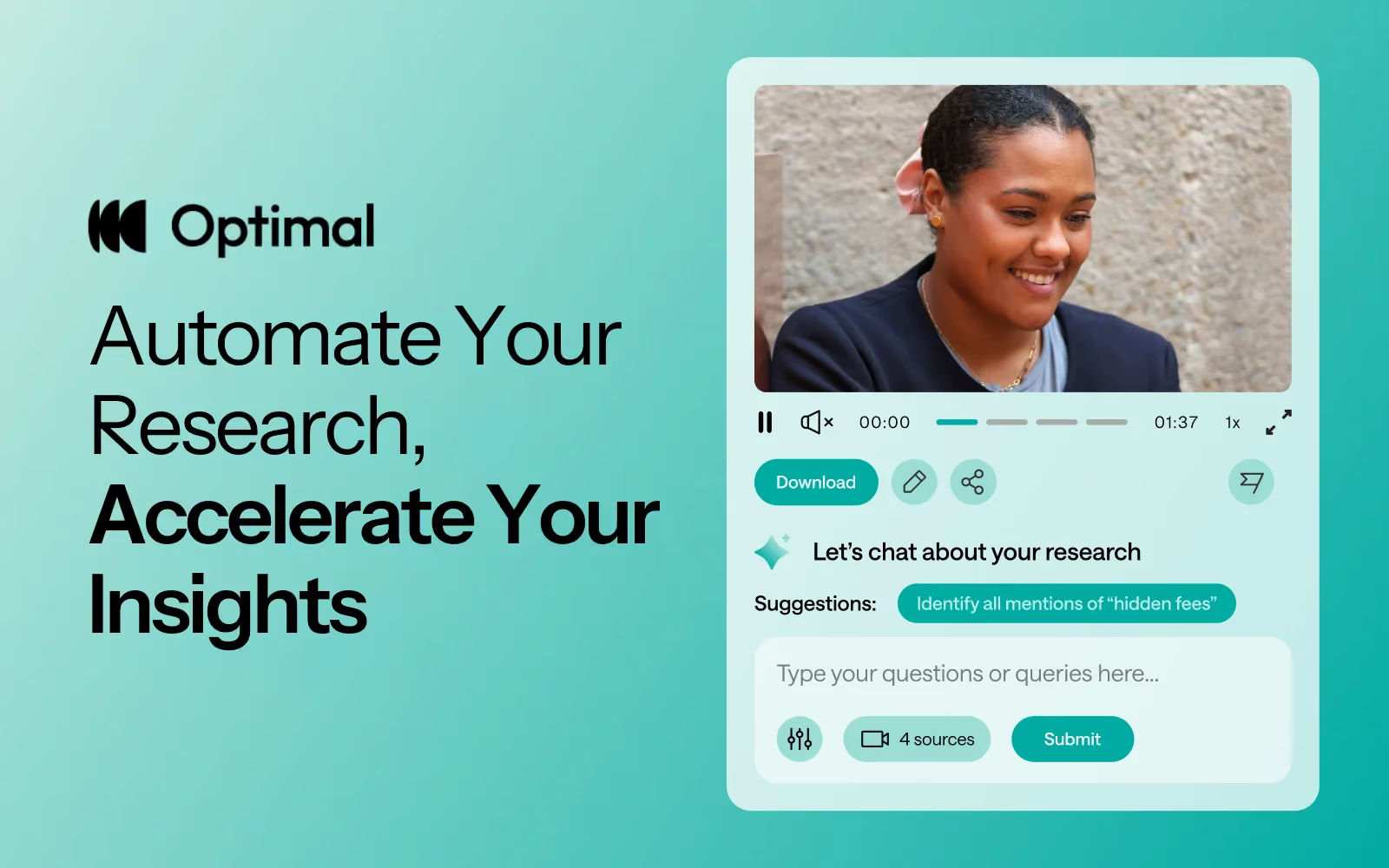
Introducing Optimal’s New Interviews Tool: Automate Your Research, Accelerate Your Insights

At Optimal, we know the reality of user research: you've just wrapped up a fantastic interview session, your head is buzzing with insights, and then... you're staring at hours of video footage that somehow needs to become actionable recommendations for your team.

User interviews and usability sessions are treasure troves of insight, but the reality is reviewing hours of raw footage can be time-consuming, tedious, and easy to overlook important details. Too often, valuable user stories never make it past the recording stage.


That's why we’re excited to announce the launch of Interviews, a brand-new tool that saves you time with AI and automation, turns real user moments into actionable recommendations, and provides the evidence you need to shape decisions, bring stakeholders on board, and inspire action.

Interviews, Reimagined

We surveyed more than 100 researchers, designers, and product managers, conducted discovery interviews, tested prototypes, and ran feedback sessions to help guide the discovery and development of Optimal Interviews.

The result? What once took hours of video review now takes minutes. With Interviews, you get:

  • Instant clarity: Upload your interviews and let AI automatically surface key themes, pain points, opportunities, and other key insights.
  • Deeper exploration: Ask follow-up questions and anything with AI chat. Every insight comes with supporting video evidence, so you can back up recommendations with real user feedback.
  • Automatic highlight reels: Generate clips and compilations that spotlight the takeaways that matter.
  • Real user voices: Turn insight into impact with user feedback clips and videos. Share insights and download clips to drive product and stakeholder decisions.

Groundbreaking AI at Your Service

This tool is powered by AI designed for researchers, product owners, and designers. This isn’t just transcription or summarization, it’s intelligence tailored to surface the insights that matter most. It’s like having a personal AI research assistant, accelerating analysis and automating your workflow without compromising quality. No more endless footage scrolling.


The AI used for Interviews as well as all other AI with Optimal is backed by AWS Amazon Bedrock, ensuring that your AI insights are supported with industry-leading protection and compliance.

Evolving Optimal Interviews

A big thank you to our early access users! Your feedback helped us focus on making Optimal Interviews even better. Here's what's new:

  • Speed and easy access to insights: More video clips, instant download, and bookmark options to make sharing findings faster than ever.
  • Privacy: Disable video playback while still extracting insights from transcripts and get PII redaction for English audio alongside transcripts and insights.
  • Trust: Our enhanced, best-in-class AI chat experience lets teams explore patterns and themes confidently.
  • Expanded study capability: You can now upload up to 20 videos per Interviews study.


What’s Next: The Future of Moderated Interviews in Optimal

This new tool is just the beginning. Our vision is to help you manage the entire moderated interview process inside Optimal, from recruitment to scheduling to analysis and sharing.

Here’s what’s coming:

  • View your scheduled sessions directly within Optimal. Link up with your own calendar.
  • Connect seamlessly with Zoom, Google Meet, or Teams.

Imagine running your full end-to-end interview workflow, all in one platform. That’s where we’re heading, and Interviews is our first step.

Ready to Explore?


Interviews is available now for our latest Optimal plans with study limits. Start transforming your footage into minutes of clarity and bring your users’ voices to the center of every decision. We can’t wait to see what you uncover.

Get started with Interviews.

Learn more
1 min read

A Breakthrough Year for Optimal: Reflecting on 2025

As we close out 2025, we’ve been reflecting on what we’ve achieved together and where we’re headed next. 

We’re proud to have supported customers in 45+ countries and nearly 400 cities, powering insights for teams at LEGO, Google, Apple, Nike, and many more. Over the last 12 months alone, more than 1.2 million participants completed studies on Optimal, shaping decisions that lead to better, more intuitive products and experiences around the world.

We also strengthened and brought our community together. We attended 10 industry events, launched 4 leadership circle breakfasts for senior leaders in UX, product and design, and hosted 19 webinars, creating spaces to exchange ideas, share best practices, and explore the future of our changing landscape across topics like AI, automation, and accessibility.

But the real story isn't in the numbers. It's in what we built to meet this moment.

Entering a New Era for Insights


This year, we introduced a completely refreshed Optimal experience - a new Home and Studies interface designed to remove friction and help teams move faster. Clean, calm, intentional. Built not just to look modern, but to feel effortless.

Optimal: From Discovery to Delivery


2025 was a milestone year:
it marked the most significant expansion of the Optimal platform we think we’ve ever accomplished, with an introduction of automation powered by AI.

Interviews

A transformative way to accelerate insights from interviews and videos through automated highlight reels, instant transcripts, summaries, and AI chat, eliminating days and weeks of manual work.

Prototype Testing

Test designs early and often. Capture the nuance of user interactions with screen, audio, and/or video recording.

Live Site Testing

Watch real people interact with any website and web app to see what’s actually happening. Your direct window into reality.

We also continued enhancing our core toolkit, adding display logic to surveys and launching a new study creation flow to help teams move quickly and confidently across the platform.

AI: Automate the Busywork, Focus on the Breakthroughs

The next era of research isn't about replacing humans with AI. It’s about making room for the work humans do best. In 2025, we were intentional with where we added AI to Optimal, guided by our core principle to automate your research. Our ever-growing AI toolkit helps you:

  • accelerate your analysis and uncover key insights with automated insights
  • transcribe interviews 
  • refine study questions for clarity
  • dig deeper with AI chat 

AI handles the tedious parts so you can focus on the meaningful ones.

Looking Ahead: Raising the Bar for UX Research & Insights

2025 built out our foundation. The next will raise the bar.

We're entering a phase where research and insights becomes:

  • faster to run
  • easier to communicate
  • available to everyone on your team
  • and infinitely more powerful with AI woven throughout your workflow

To everyone who ran a study, shared feedback, or pushed us to do better: thank you. You make Optimal what it is. Here’s to an even faster, clearer, more impactful year of insights.


Onwards and upwards.

Learn more
1 min read

Top User Research Platforms 2025

User research software isn't what it used to be. The days of insights being locked away in specialist UX research teams are fading fast, replaced by a world where product managers, designers, and even marketers are running their own usability testing, prototype validation, and user interviews. The best UX research platforms powering this shift have evolved from complex enterprise software into tools that genuinely enable teams to test with users, analyze results, and share insights faster.

This isn't just about better software, it's about a fundamental transformation in how organizations make decisions. Let's explore the top user research tools in 2025, what makes each one worth considering, and how they're changing the research landscape.


What Makes a UX Research Platform All-in-One?


The shift toward all-in-one UX research platforms reflects a deeper need: teams want to move from idea to insight without juggling multiple tools, logins, or data silos. A truly comprehensive research platform combines several key capabilities within a unified workflow.

The best all-in-one platforms integrate study design, participant recruitment, multiple research methods (from usability testing to surveys to interviews to navigation testing to prototype testing), AI-powered analysis, and insight management in one cohesive experience. This isn't just about feature breadth, it's about eliminating the friction that prevents research from influencing decisions. When your entire research workflow lives in one platform, insights move faster from discovery to action.

What separates genuine all-in-one solutions from feature-heavy tools is thoughtful integration. The best platforms ensure that data flows seamlessly between methods, participants can be recruited consistently across study types, and insights build upon each other rather than existing in isolation. This integrated approach enables both quick validation studies and comprehensive strategic research within the same environment.

1. Optimal: Best End-to-End UX Research Platform


Optimal has carved out a unique position in the UX research landscape: it’s powerful enough for enterprise teams at Netflix, HSBC, Lego, and Toyota, yet intuitive enough that anyone, product managers, designers, even marketers, can confidently run usability studies. That balance between depth and accessibility is hard to achieve, and it's where Optimal shines.

Unlike fragmented tool stacks, Optimal is a complete User Insights Platform that supports the full research workflow. It covers everything from study design and participant recruitment to usability testing, prototype validation, AI-assisted interviews, and a research repository. You don't need multiple logins or wonder where your data lives, it's all in one place.

Two recent features push the platform even further:

  • Live Site Testing: Run usability studies on your actual live product, capturing real user behavior in production environments.

  • Interviews: AI-assisted analysis dramatically cuts down time-to-insight from moderated sessions, without losing the nuance that makes qualitative research valuable.


One of Optimal's biggest advantages is its pricing model. There are no per-seat fees, no participant caps, and no limits on the number of users. Pricing is usage-based, so anyone on your team can run a study without needing a separate license or blowing your budget. It's a model built to support research at scale, not gate it behind permissioning.

Reviews on G2 reflect this balance between power and ease. Users consistently highlight Optimal's intuitive interface, responsive customer support, and fast turnaround from study to insight. Many reviewers also call out its AI-powered features, which help teams synthesize findings and communicate insights more effectively. These reviews reinforce Optimal's position as an all-in-one platform that supports research from everyday usability checks to strategic deep dives.

The bottom line? Optimal isn't just a suite of user research tools. It's a system that enables anyone in your organization to participate in user-centered decision-making, while giving researchers the advanced features they need to go deeper.

2. UserTesting: Remote Usability Testing


UserTesting built its reputation on one thing: remote usability testing with real-time video feedback. Watch people interact with your product, hear them think aloud, see where they get confused. It's immediate and visceral in a way that heat maps and analytics can't match.

The platform excels at both moderated and unmoderated usability testing, with strong user panel access that enables quick turnaround. Large teams particularly appreciate how fast they can gather sentiment data across UX research studies, marketing campaigns, and product launches. If you need authentic user reactions captured on video, UserTesting delivers consistently.

That said, reviews on G2 and Capterra note that while video feedback is excellent, teams often need to supplement UserTesting with additional tools for deeper analysis and insight management. The platform's strength is capturing reactions, though some users mention the analysis capabilities and data export features could be more robust for teams running comprehensive research programs.

A significant consideration: UserTesting operates on a high-cost model with per-user annual fees plus additional session-based charges. This pricing structure can create unpredictable costs that escalate as your research volume grows, teams often report budget surprises when conducting longer studies or more frequent research. For organizations scaling their research practice, transparent and predictable pricing becomes increasingly important.

3. Maze: Rapid Prototype Testing


Maze understands that speed matters. Design teams working in agile environments don't have weeks to wait for findings, they need answers now. The platform leans into this reality with rapid prototype testing and continuous discovery research, making it particularly appealing to individual designers and small product teams.

Its Figma integration is convenient for quick prototype tests. However, the platform's focus on speed involves trade-offs in flexibility as users note rigid question structures and limited test customization options compared to more comprehensive platforms. For straightforward usability tests, this works fine. For complex research requiring custom flows or advanced interactions, the constraints become more apparent.

User feedback suggests Maze excels at directional insights and quick design validation. However, researchers looking for deep qualitative analysis or longitudinal studies may find the platform limited. As one G2 reviewer noted, "perfect for quick design validation, less so for strategic research." The reporting tends toward surface-level metrics rather than the layered, strategic insights enterprise teams often need for major product decisions.

For teams scaling their research practice, some considerations emerge. Lower-tier plans limit the number of studies you can run per month, and full access to card sorting, tree testing, and advanced prototype testing requires higher-tier plans. For teams running continuous research or multiple studies weekly, these study caps and feature gates can become restrictive. Users also report prototype stability issues, particularly on mobile devices and with complex design systems, which can disrupt testing sessions. Originally built for individual designers, Maze works well for smaller teams but may lack the enterprise features, security protocols, and dedicated support that large organizations require for comprehensive research programs.

4. Dovetail: Research Centralization Hub

Dovetail has positioned itself as the research repository and analysis platform that helps teams make sense of their growing body of insights. Rather than conducting tests directly, Dovetail shines as a centralization hub where research from various sources can be tagged, analyzed, and shared across the organization. Its collaboration features ensure that insights don't get buried in individual files but become organizational knowledge.

Many teams use Dovetail alongside testing platforms like Optimal, creating a powerful combination where studies are conducted in dedicated research tools and then synthesized in Dovetail's collaborative environment. For organizations struggling with insight fragmentation or research accessibility, Dovetail offers a compelling solution to ensure research actually influences decisions.

6. Lookback: Moderated User Interviews


Lookback specializes in moderated user interviews and remote testing, offering a clean, focused interface that stays out of the way of genuine human conversation. The platform is designed specifically for qualitative UX work, where the goal is deep understanding rather than statistical significance. Its streamlined approach to session recording and collaboration makes it easy for teams to conduct and share interview findings.

For researchers who prioritize depth over breadth and want a tool that facilitates genuine conversation without overwhelming complexity, Lookback delivers a refined experience. It's particularly popular among UX researchers who spend significant time in one-on-one sessions and value tools that respect the craft of qualitative inquiry.

7. Lyssna: Quick and lite design feedback


Lyssna (formerly UsabilityHub) positions itself as a straightforward, budget-friendly option for teams needing quick feedback on designs. The platform emphasizes simplicity and fast turnaround, making it accessible for smaller teams or those just starting their research practice.

The interface is deliberately simple, which reduces the learning curve for new users. For basic preference tests, first-click tests, and simple prototype validation, Lyssna's streamlined approach gets you answers quickly without overwhelming complexity.

However, this simplicity involves significant trade-offs. The platform operates primarily as a self-service testing tool rather than a comprehensive research platform. Teams report that Lyssna lacks AI-powered analysis, you're working with raw data and manual interpretation rather than automated insight generation. The participant panel is notably smaller (around 530,000 participants) with limited geographic reach compared to enterprise platforms, and users mention quality control issues where participants don't consistently match requested criteria.

For organizations scaling beyond basic validation, the limitations become more apparent. There's no managed recruitment service for complex targeting needs, no enterprise security certifications, and limited support infrastructure. The reporting stays at a basic metrics level without the layered analysis or strategic insights that inform major product decisions. Lyssna works well for simple, low-stakes testing on limited budgets, but teams with strategic research needs, global requirements, or quality-critical studies typically require more robust capabilities.

Emerging Trends in User Research for 2025


The UX and user research industry is shifting in important ways:

Live environment usability testing is growing. Insights from real users on live sites are proving more reliable than artificial prototype studies. Optimal is leading this shift with dedicated Live Site Testing capabilities that capture authentic behavior where it matters most.

AI-powered research tools are finally delivering on their promise, speeding up analysis while preserving depth. The best implementations, like Optimal's Interviews, handle time-consuming synthesis without losing the nuanced context that makes qualitative research valuable.

Research democratization means UX research is no longer locked in specialist teams. Product managers, designers, and marketers are now empowered to run studies. This doesn't replace research expertise; it amplifies it by letting specialists focus on complex strategic questions while teams self-serve for straightforward validation.

Inclusive, global recruitment is now non-negotiable. Platforms that support accessibility testing and global participant diversity are gaining serious traction. Understanding users across geographies, abilities, and contexts has moved from nice-to-have to essential for building products that truly serve everyone.

How to Choose the Right Platform for Your Team


Forget feature checklists. Instead, ask:

Do you need qualitative vs. quantitative UX research? Some platforms excel at one, while others like Optimal provide robust capabilities for both within a single workflow.

Will non-researchers be running studies (making ease of use critical)? If this is your goal, prioritize intuitive interfaces that don't require extensive training.

Do you need global user panels, compliance features, or AI-powered analysis? Consider whether your industry requires specific certifications or if AI-assisted synthesis would meaningfully accelerate your workflow.

How important is integration with Figma, Slack, Jira, or Notion? The best platform fits naturally into your existing stack, reducing friction and increasing adoption across teams.


Evaluating All-in-One Research Capabilities

When assessing comprehensive research platforms, look beyond the feature list to understand how well different capabilities work together. The best all-in-one solutions excel at data continuity, participants recruited for one study can seamlessly participate in follow-up research, and insights from usability tests can inform survey design or interview discussion guides.

Consider your team's research maturity and growth trajectory. Platforms like Optimal that combine ease of use with advanced capabilities allow teams to start simple and scale sophisticated research methods as their needs evolve, all within the same environment. This approach prevents the costly platform migrations that often occur when teams outgrow point solutions.

Pay particular attention to analysis and reporting integration. All-in-one platforms should synthesize findings across research methods, not just collect them. The ability to compare prototype testing results with interview insights, or track user sentiment across multiple touchpoints, transforms isolated data points into strategic intelligence.

Most importantly, the best platform is the one your team will actually use. Trial multiple options, involve stakeholders from different disciplines, and evaluate not just features but how well each tool fits your team's natural workflow.

The Bottom Line: Powering Better Decisions Through Research


Each of these platforms brings strengths. But Optimal stands out for a rare combination: end-to-end research capabilities, AI-powered insights, and usability testing at scale in an all-in-one interface designed for all teams, not just specialists.

With the additions of Live Site Testing capturing authentic user behavior in production environments, and Interviews delivering rapid qualitative synthesis, Optimal helps teams make faster, better product decisions. The platform removes the friction that typically prevents research from influencing decisions, whether you're running quick usability tests or comprehensive mixed-methods studies.

The right UX research platform doesn't just collect data. It ensures user insights shape every product decision your team makes, building experiences that genuinely serve the people using them. That's the transformation happening at the moment; Research is becoming central to how we build, not an afterthought.

Seeing is believing

Explore our tools and see how Optimal makes gathering insights simple, powerful, and impactful.