Subscribe to OW blog for an instantly better inbox
Oops! Something went wrong while submitting the form.

Articles and Podcasts on Customer Service, AI and Automation, Product, and more
.webp)
Great research has never been about speed alone. It’s about asking the right questions, understanding the context behind them, and uncovering insights that help teams make better decisions.
Optimal's AI Interviewer is designed to support that process. It’s designed to work alongside researchers and teams, so you can move faster without losing the depth and human nuance that makes research valuable.
Before building AI Interviewer, we spoke with and surveyed researchers, designers, and product teams to how they approach interviews today and where AI could genuinely help.
What we heard was consistent:
AI isn’t useful if it ignores how your team works. So instead of building a generic interviewer, we focused on building an AI Interviewer that fits into your current workflows and keeps researchers and teams in the driver's seat.
Here’s what we learned and how we brought it to life with Optimal’s AI Interviewer.
The best interviews start with a clear understanding of what you’re trying to uncover. With the AI Interviewer, you can add your research goals, audience details, company and product context, and additional context you want the AI to consider. This means the AI doesn’t just ask questions; it understands what you’re trying to learn and helps guide conversations in the right direction.
The same context also powers AI insights, helping ensure summaries, key themes, and citations are relevant, accurate, and aligned with what you're trying to learn.
One of the concerns with AI-led interviews is not having enough control. We’ve designed the AI Interviewer with this in mind.
For each question, you can choose how deeply you would like the AI Interviewer to probe and follow-up. You decide when deeper exploration is valuable, how the conversation flows, and the AI can then carry this out on your behalf.
AI Interviewer helps remove some of the barriers that make qualitative research difficult to scale. Use it to:
This isn’t about replacing researchers. It’s about removing operational work so you can focus on higher-value work, like synthesis, storytelling, and decision-making.
Every session comes with recordings, key summaries, and AI-generated insights with clear detailed evidence. Instead of reviewing hours of footage, you can quickly find what matters and confidently back it up. Review insights across your full study, or dive deeper into individual sessions and specific questions.
On the roadmap: Once your interviews are complete, you can use AI Chat to go further with your data and explore patterns across sessions, ask follow-up questions, and validate assumptions with real evidence.
Let’s address the elephant in the room. AI-led interviews aren’t something everyone is immediately comfortable with, and that’s fair. There are real limitations.
Some research scenarios require human sensitivity and judgment. Nuance, emotion, and edge cases still benefit from a human touch. Vulnerable populations and complex topics should always be handled with care. Optimal values a human-in-the-loop approach and know an AI Interviewer isn’t always suitable. With that in mind, we made sure that:
The AI Interviewer supports your work. It doesn’t replace your expertise.
AI Interviewer is now available in early access, and we’re continuing to learn from the teams using it. If you’re looking to scale your research without scaling your workload, run interviews across time zones, and spend less time on logistics and more time on insights, we’d love for you to try it.
👉 Book a demo to see how it fits into your workflow.
Already with Optimal? Register your interest for early access.

Taxonomy is one of those terms that can feel intimidating at first, especially when most definitions relate to classifying plants and animals. But in UX and information architecture, taxonomy has a very different – and incredibly important – meaning. Whether the concept is new to you or you’re looking to strengthen your IA foundations, this guide will demystify taxonomy and show how it supports better navigation, clearer labeling, and more intuitive user experiences.
In information architecture, taxonomy refers to how information is grouped, classified and labeled within a shared information environment. The overarching structure of that shared information environment is the information architecture (IA) and we find our way around it using the navigation. Think of an IA as a house. The taxonomy determines which pieces of furniture belong in each room and we navigate around the house via doorways and hallways. It all fits together to create one shared environment.
For a website architecture example, think of an online shoe store. The shoes might be organized and labelled by color, size, style, season or collection – that’s the taxonomy. The overall picture of where those groups of shoes live is the IA and in our pursuit of new shoes, we might navigate that structure via a navigation bar at the top of the page. In the amazing Grand Taxonomy of Rap Names visualization below, we can see how the information is categorized, connected and labeled through the lines and the colors. There’s no structure or hierarchy to it yet; that would be the next step in the process to build the IA.
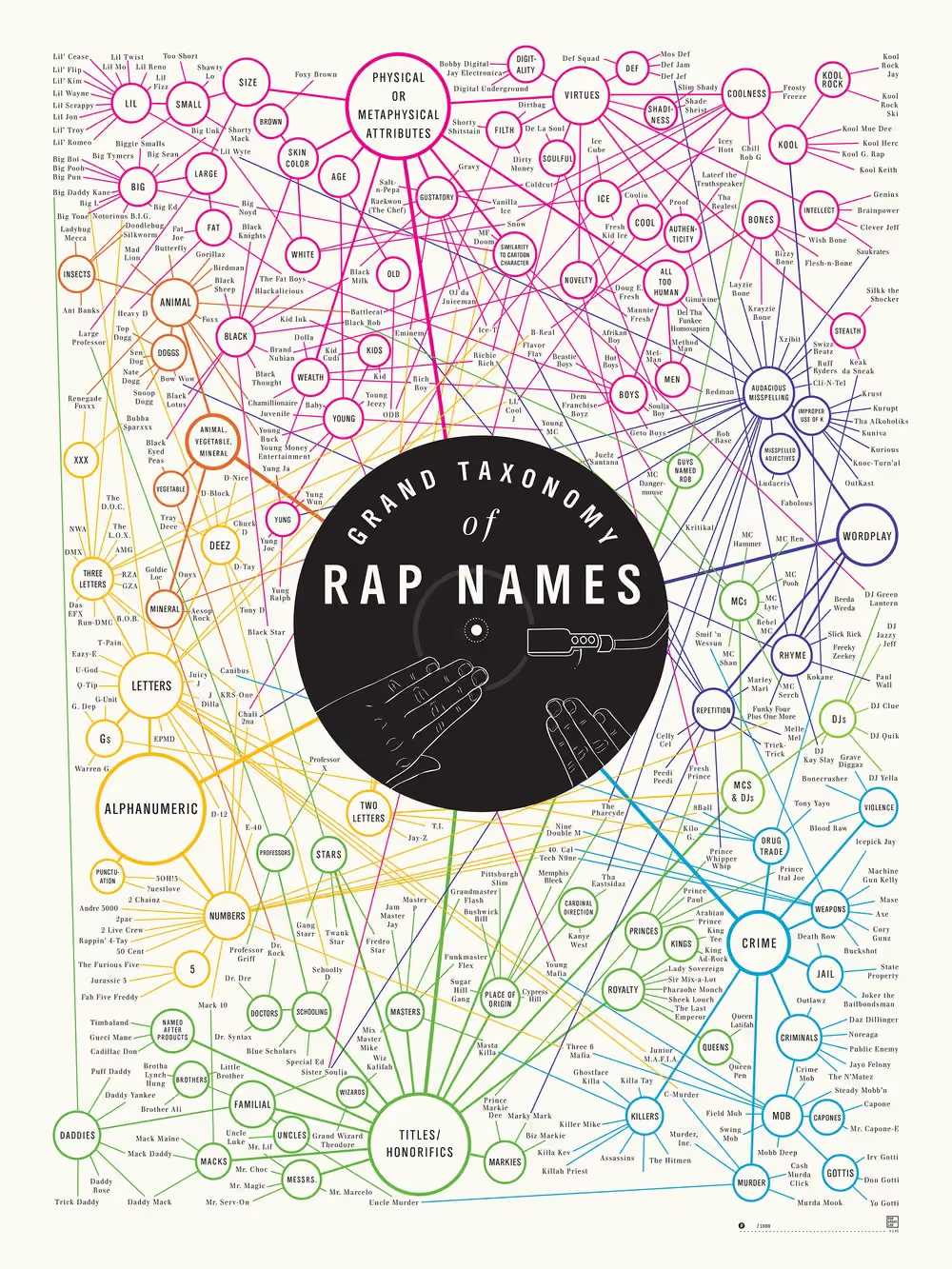
There are so many different ways to carve information up into a taxonomy and the key drivers for determining that are your content and, of course, your users. Your taxonomy needs to make sense to your users.You may be starting from scratch with a new website or you may have inherited a taxonomy that for whatever reason just isn’t fit for purpose. The first step when creating an initial taxonomy is to do a comprehensive audit of your content. Ask yourself, is your content relevant? Is it up-to-date? Is it all necessary? Are there opportunities to delete or condense content? Once you have your content sorted, you’re ready to move on to the next step of running a card sort with users. Running a card sort early in your taxonomy creation process will allow you to build it up from an evidence based foundation. There’s no point guessing then testing and potentially going back to square one, when you can co-create with your users and then test that informed approach to validate and further evolve your thinking.When you’re designing your card sort, you’ll need to decide if you’re going to do an open, closed or hybrid sort. Here’s a very high level look at what each type involves:
This early in the taxonomy creation process, it’s best to start out with an open card sort. Not only will this tell you how your users expect your content to be grouped, but will also provide insight into the language and labels that they would expect that content to be associated with. You never know, an open card sort may even surface something you hadn’t considered. At this stage of the process, it’s important to be open to ideas and new possibilities and an open card sort will do just that. Once you’ve settled on the type of card sort you’ll be running, you’ll need to test which can be done through a tool such as Optimal's Card Sorting. It enables you to run unmoderated card sorts remotely (or print out cards for a moderated/in-person card sort!). After your participants have completed your card sort, you can access the benefits of Optimal's powerful result analysis functions.
Learn more about running a card sort and more through our 101 guide.
After you’ve run your initial open card sort with users, you should have everything you need to create the first iteration of your taxonomy. Consider everything you learned during the card sort and cross reference that with your business goals and any tech constraints you might be facing. Don’t stress too much about nailing it this time around, remember this is the first iteration and as you test more and learn more, you can make changes. Build out your taxonomy in Post-it notes with a team and then whack it into a spreadsheet to make future testing and iteration activities easier.
Now that you have the first iteration of your taxonomy, it’s time to have a go at structuring those groups into an IA and running a tree test. A tree test works like a card sort but in reverse – it allows you to test your thinking by working backwards. Optimal’s Tree Testing is an online tree testing tool that helps you assess the findability of your content without any visual design elements. All you need are clear objectives for what you’d like to learn more about and a spreadsheet version of your draft IA (told you it would come in handy!).
Learn more about Tree Testing and tree testing through our equally handy 101 guide.
Another way to test your taxonomy thinking is to run another card sort. However this time, a hybrid or a closed card sort might be more suitable. A closed card sort would be useful if you’ve got evidence to suggest that your group labels are making sense to users but you’re not 100% sure what belongs in each group. A hybrid sort will let you go one step further and tell you if your content does in fact fit within those labels and if not you’ll also pick up some new ideas to iterate your taxonomy further.
Developing a taxonomy is much like any other design process: involve your users early, test your assumptions, and continuously refine your structure as your product and content evolve. Taxonomies aren’t limited to digital experiences – we encounter them everywhere, from libraries to supermarkets – and they all serve the same purpose: helping people find what they need quickly and understand how information relates.
In information architecture, it’s the role of UX designers and information architects to shape these systems so they feel intuitive, scalable, and aligned with real user mental models. When grounded in user research and iterated over time, a strong taxonomy becomes the foundation of clear navigation, meaningful labels, and a more discoverable, user-friendly experience.
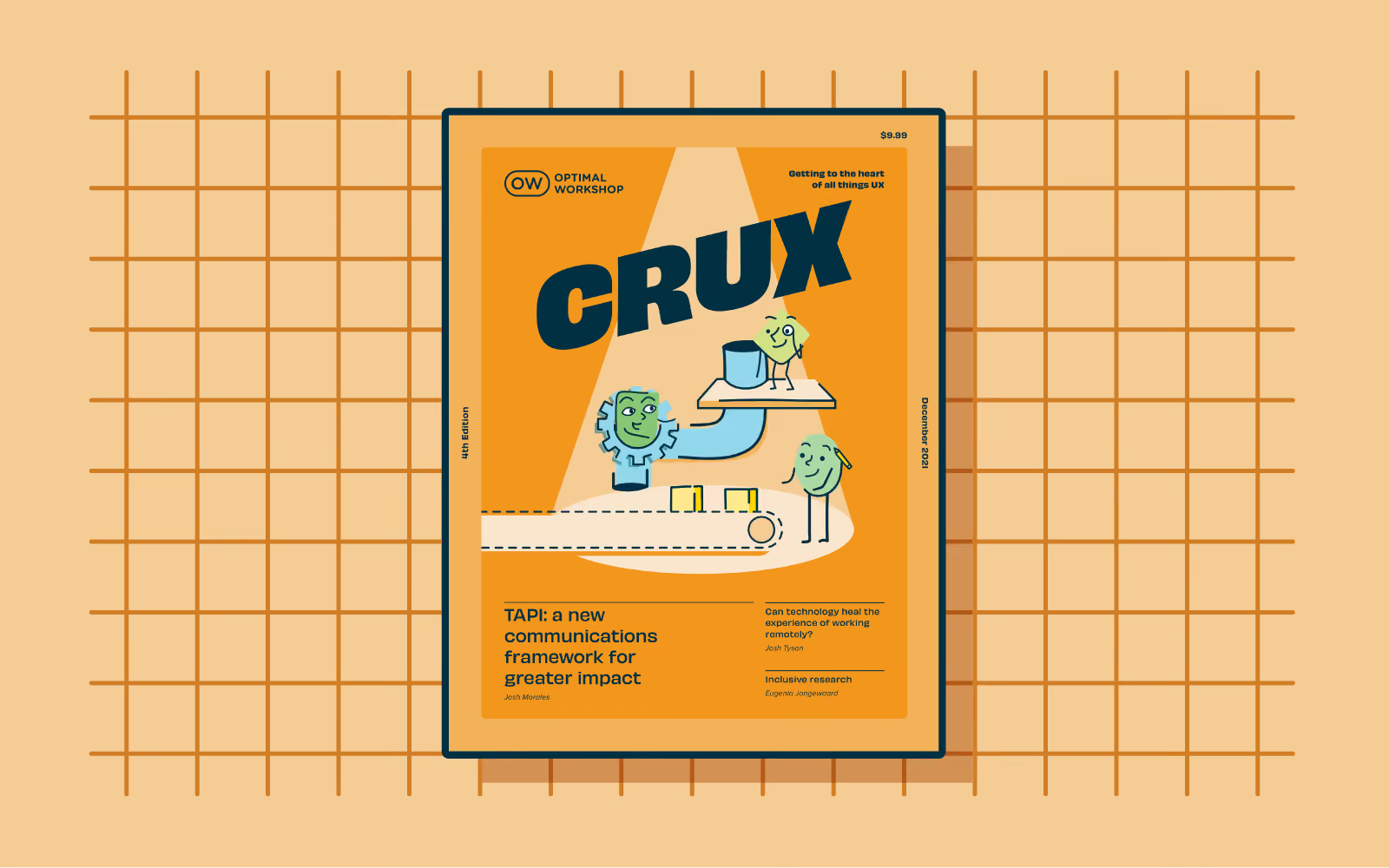
As the fourth issue of CRUX goes to press the demand for usability continues to grow, along with the rise of the digital experience economy. Sharing a sense of community among UXers is more important than ever. That’s why we’re so proud to bring you our latest issue of CRUX, celebrating people and perspectives from the UX community.
CRUX #4 has a great line-up of contributors, all experts in their fields who jumped at the opportunity to share their thoughts and ideas with us - and of course more importantly - you.
This issue we’ve focussed on collaboration and invited our contributors to bring their thoughts and ideas on communication and teamwork to the table. They’ve come up with some compelling reading that inspires, surprises and at times challenges current thinking and offers fresh perspectives.
"In a word: your findings virtually do not exist if you don’t communicate them well."
“Designers are just as vulnerable to the blindspots and errors of cognitive bias as the people who use our products. After all, we're humans,too.”
“As we live in a world of rapid digital transformation we can't continue to design in the same way we designed before. We should start designing for inclusion. For that to happen we need to shift our mindset towards inclusive research.”
Do you have a burning idea to share or a conversation you’re dying to kickstart that’s of interest to the world of UX? Now’s your chance. We’re already on the lookout for contributors for our first edition of CRUX for 2022. To find out more please drop us a line
But for now, get comfortable and settle in for a good read. Welcome to CRUX #4.
Having access to the specialist subscription-based tools you need to do your work is a reasonable thing to expect. But what if you’re relying on someone else’s SaaS account to access what you need? Sounds like a good solution but think again. It’s risky - even fraught. Here are 3 good reasons to avoid shared login credentials and why you need your own.
If you don’t know who’s signed up and using the subscriptions your organization pays for and holds, how can you protect their data once they’ve gone? As the account holder, you’re responsible for keeping the personal data of anyone accessing your subs safe and secure. That’s not only the right thing to do - it’s pretty important from a legal perspective too.
In today’s data-driven world safeguards around privacy and security are essential. You only need to look at the fallout from serious data breaches around the world to see the damage they can do. There’s a myriad of privacy laws around personal data out there but they’re based on the universal principle of protecting personal data. One of the better-known laws is GDPR the EU’s data protection law.
The General Data Protection Regulation (GDPR) regulates and protects the processing of the personal information of EU citizens and residents by establishing rules on how organizations such as companies and governments can process this personal data. It’s important to note the GDPR applies to those handling the data whether they’re EU-based organizations or not.
Avoid encouraging shared logins in your organization to ensure peace of mind that you’re doing everything you can to keep people’s personal data safe and secure - as well as keeping on the right side of the law.
Having single logins rather than shared logins saves time and energy and makes the whole administration smoother and easier for everyone.
For instance, maybe you need to delete data as part of honoring GDPR rules. This could be tricky and time consuming if there are multiple users on one email as a generic email isn’t specific to a person.
Generic email addresses also make it harder for SaaS providers to understand your account activity and implement the changes you want or need. For example, customers often ask to retrieve information for account billing. Having multiple employees using a single login can make this problematic. It can be a real struggle to identify the right owners or users.
And if the ‘champion’ of the tool leaves your organization and you want to retrieve information on the account, your SaaS provider won't be able to do this without proof you’re the real owner of this account.
Another added benefit ,(which your IT & security team will thank you for), of having a personal login, is the way it makes setting up functionality such as single-sign-on (SSO) so easy. Given the way single sign-on works, shared emails just don’t cut it anymore. Also if your organization uses SSO it means you’ll be able to log into tools more quickly and easily.
When things go wrong or you just need help using products or tools from your friendly SaaS it’s important for them and for you, that they’re in the best position to support you. Supporting people is a big part of the job and generic emails make it harder to connect with customers and create the people to people relationships that enable the best outcome when problems arise or training or help is needed.
You may be surprised to hear what a blocker multiple users on a single email can be. For instance, generic email addresses can make it harder for us to get to the right person and communicate with you. We won’t know if you have another email active in the system we can use to help you.
We’ve given you 3 good reasons not to account share - still, need convincing?
What about getting the right plan to meet your organization’s needs - so you don’t need to share in the first place? There could be all kinds of reasons why you’ve ended up having to account share: maybe a workmate signed up, shared it, and got you hooked too. Or your organization has grown and you need more subs. Whatever the reason there’s no need to account share - get in touch and sound us out to find a better, safer solution.
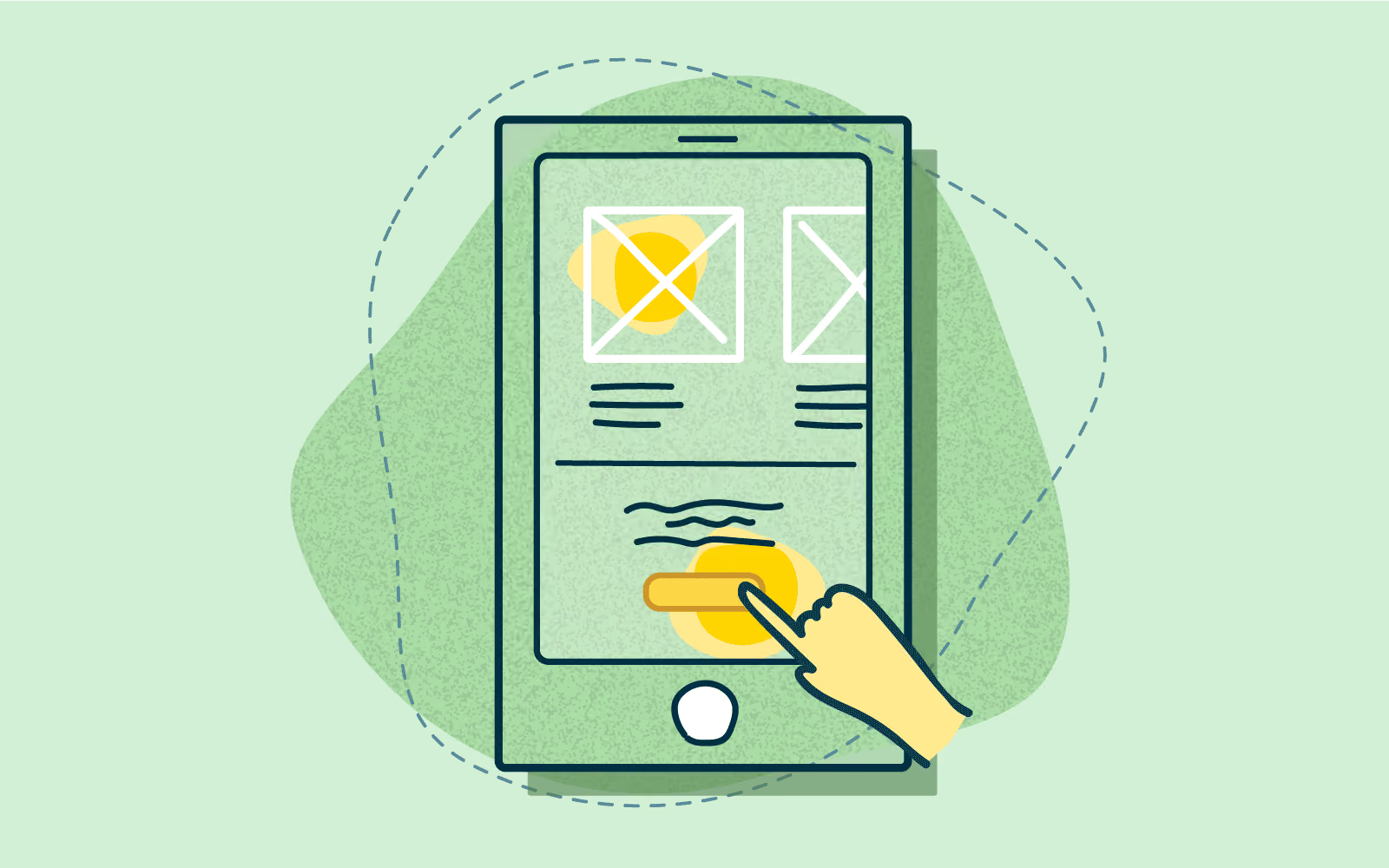
Mobile app testing with users before, during and beyond the design process is essential to ensuring product success. As UX designers we know how important usability is for interaction design, but testing early and often on mobile can sometimes be a challenge. This is where usability testing tools like Chalkmark (our first-click testing tool) can make a big difference.
First-click testing on mobile apps allows you to rapidly test ideas and ensure your design supports user goals before you invest time and money in further design work and development. It helps you determine whether you’re on the right track and whether your users are too — people are 2 to 3 times as likely to successfully complete their task if they got their first click right.
Read on for our top tips for mobile testing with Chalkmark shared through an example of a study we recently ran on Airbnb and TripAdvisor’s mobile apps.
There’s 2 ways that you might approach mobile app testing with Chalkmark: remotely or in person. Chalkmark is great for remote testing because it allows you to gain insights quickly as well as reach people anywhere in the world as the study is simply shared via a link. You might recruit participants via your social networks or email lists or you could use a recruitment service to target specific groups of people. The tool is also flexible enough to work just as well for moderated and in-person research studies. You might pop your study onto a mobile device and hit the streets for some guerrilla testing or you might incorporate it into a usability testing session that you’ve already got planned. There’s no right or wrong way to do it — it really depends on the needs of your project and the resources you have available.
For our Airbnb and TripAdvisor mobile app study example, we decided to test remotely and recruited 30 US based participants through the Optimal Workshop recruitment service.
Chalkmark works by presenting participants with a real-world scenario based task and asking them to complete it simply by clicking on a static image of a design. That image could be anything from a rough sketch of an idea, to a wireframe, to a screenshot of your existing product. Anything that you would like to gather your user’s first impressions on — if you can create an image of it, you can Chalkmark it.
To build your study, all you have to do is upload your testing images and come up with some tasks for your participants to complete. Think about the most common tasks a user would need to complete while using your app and base your mobile testing tasks around those. For our Airbnb and TripAdvisor study, we decided to use 3 tasks for each app and tested both mobile apps together in one study to save time. Task order was randomized to reduce bias and we used screenshots from the live apps for testing.
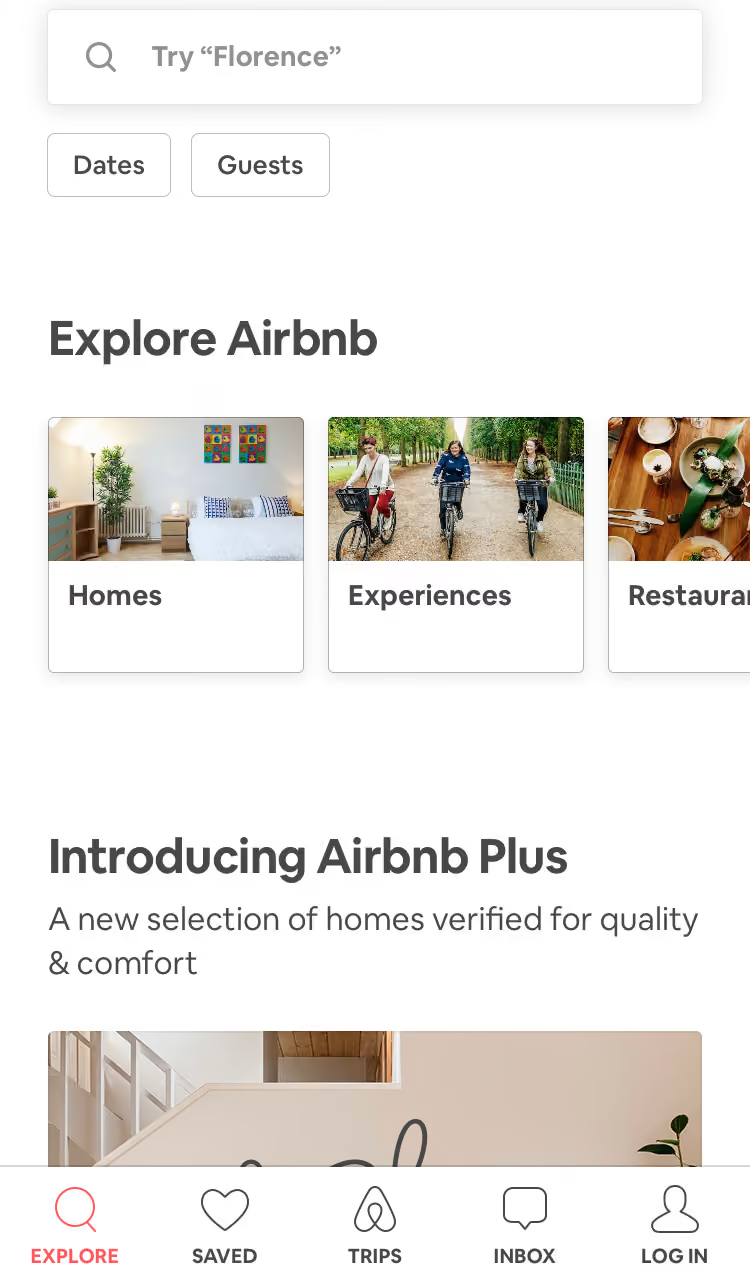
For Airbnb, we focused our mobile testing efforts on the three main areas of their service offering: Homes, Experiences and Restaurants. We wanted to see if people understood the images and labels used and also if there were any potential issues with the way Airbnb presents these three options as horizontally scrollable tiles where the third one is only partially shown in that initial glance.
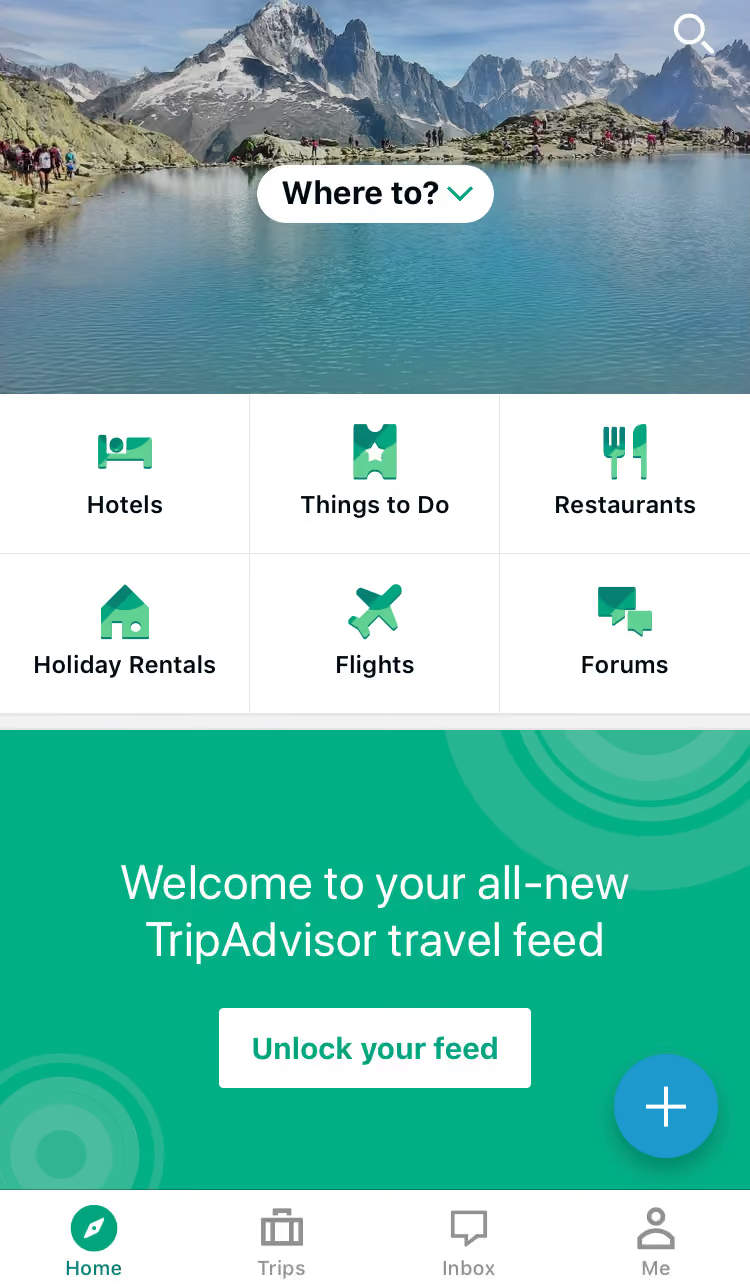
For TripAdvisor, we were curious to see if the image-only icons on the sticky global navigation menu that appears when the page is scrolled made sense to users. We chose three of these icons to test: Holiday Rentals, Things To Do and Forums.
Our Chalkmark study had a total of 6 tasks — 3 for each app — and we tested both mobile apps together to save time.
Our tasks for this study were:
1. You’ll be spending the holidays with your family in Montreal this year and a friend has recommended you book yourself into an axe throwing workshop during your trip.
2. Where would you go to do this? (Airbnb)
3. You’ve heard that Airbnb has a premium range of places to stay that have been checked by their team to ensure they’re amazing. Where would you go to find out more? (Airbnb)
4. You’re staying with your parents in New York for the week and would like to surprise them by taking them out to dinner but you’re not sure where to take them. Where would you go to look for inspiration? (Airbnb)
5. You’re heading to New Zealand next month and have so many questions about what it’s like! You’d love to ask the online community of locals and other travellers about their experiences. Where would you go to do this? (TripAdvisor)
6. You’re planning a trip to France and would prefer to enjoy Paris from a privately owned apartment instead of a hotel. Where would you go to find out what your options are? (TripAdvisor)
7. You’re currently on a working holiday in Melbourne and you find yourself with an unexpected day off. You’re looking for ideas for things to do. Where would you go to find something like this? (TripAdvisor)
Task order was randomized to reduce bias and we used screenshots from the live apps for testing.All images used for testing were the size of a single phone screen because we wanted to see if they could find their way without needing to scroll. As with everything else, you don’t have to do it this way — you could make the image longer and test a larger section of your design or you could focus on a smaller section. As a testing tool, Chalkmark is flexible and scalable.
We also put a quickly mocked up frame around each image that loosely resembled a smart phone because without it, the image looked like part of it had been cropped out which could have been very distracting for participants! This frame also provided context that we were testing a mobile app.
Chalkmark makes it really easy to make sense of your research through clickmaps and some really handy task results data. These 2 powerful analysis features provide a well-rounded and easy to digest picture of where those valuable first clicks landed so that you can evolve your design quickly and confidently.
A clickmap is a visualization of where your participants clicked on your testing image during the study. It has different views showing heatmaps and actual click locations so you can see exactly where they fell. Clickmaps help you to understand if your participants were on the right track or, if they weren’t, where they went instead.The task results tab in Chalkmark shows how successful your participants were and how long it took them to complete the task. To utilize the task results functionality, all you have to do is set the correct clickable areas on the images you tested with — just click and drag and give each correct area a meaningful name that will then appear alongside the rest of the task results. You can do this during the build process or anytime after the study has been completed. This is very useful if you happen to forget something or are waiting on someone else to get back to you while you set up the test!
For our Airbnb and TripAdvisor study, we set the correct areas on the navigational elements (the tiles, the icons etc) and excluded search. While searching for something isn’t necessarily incorrect, we wanted to see if people could find their way by navigating. For Airbnb, we discovered that 83% of our participants were able to correctly identify where they would need to go to book themselves into an axe throwing workshop. With a median task completion time of 4.89 seconds, this task also had the quickest completion time in the entire study. These findings show that the label and image being used for the ‘Experiences’ section of the app appears to be working quite well.
We also found that 80% of participants were able to find where they’d need to go to access Airbnb Plus. Participants had two options and could go via the ‘Homes’ tile (33%) or through the ‘Introducing Airbnb Plus’ image (47%) further down. Of the remaining participants, 10% clicked on the ‘Introducing Airbnb Plus’ heading, however at the time of testing, this area was not clickable. It’s not a huge deal because these participants were on the right track and would have likely found the right spot to click fairly quickly anyway. It’s just something to consider around user expectations and perhaps making that heading clickable might be worth exploring further.
83% of our participants were able to figure out where to go to find a great restaurant on the Airbnb app which is awesome! An additional 7% would have searched for it which isn’t wrong, but remember, we were testing those navigational tiles. It’s interesting to note that most people selected the tiles — likely indicating they felt they were given enough information to complete the task without needing to search.
For our TripAdvisor tasks, we uncovered some very interesting and actionable insights. We found that 63% of participants were able to correctly identify the ‘Forums’ icon as the place to go for advice from other community members. While 63% is a good result, it does indicate some room for improvement and the possibility that the ‘Forums’ icon might not be reasonating with users as well as it could be. For the remaining participants, 10% clicked on ‘Where to?’ which prompts the user to search for specific locations while 7% clicked on the more general search option that would allow them to search all the content on the app.
63% of participants were able to correctly identify the ‘Holiday Rentals’ icon on the TripAdvisor app when looking for a privately owned apartment rather than a hotel to enjoy Paris from, while 20% of participants appear to have been tripped up by the ‘Hotel’ icon itself.
With 1 in 5 people in this study potentially not being able to distinguish between or determine the meaning behind each of the 2 icons, this is something that might merit further exploration. In another one of the TripAdvisor app’s tasks in this study, 43% of participants were unable to correctly identify the ‘Things To Do’ icon as a place to find inspiration for activities.Where to from here?
If this were your project, you might look at running a quick study to see what people think each of the 6 icons represent. You could slip it into some existing moderated research you had planned or you might run a quick image card sort to see what your users would expect each icon to relate to. Running a study testing all 6 at the same time would allow you to gain insights into how users perceive the icons quickly and efficiently.
Overall, both of these apps tested very well in this study and with a few minor tweaks and iterations that are part of any design process, they could be even better!
Now that you’ve seen an example of mobile testing in Chalkmark, why not try it out for yourself with your app? It’s fast and easy to run and we have lots of great resources to help you on your way including sample studies that allow you to interactively explore both the participant’s and the researcher’s perspective.
Further readingCreate and analyze a first-click test for freeView a first-click test as a participantView first-click test results as a researcherRead our first-click testing 101 guideRead more case studies and research stories to see first-click testing in action
Originally published on 29 March 2019
Please note: This tool is a work in progress and isn’t yet available to all Optimal Workshop customers. If you’d like to opt in to the beta, pop down to the bottom of this article to find out more.
The ability to collect robust and trustworthy qualitative analysis is a must for any team who conducts user research. But so often, the journey to getting those juicy insights is time-consuming and messy. With so many artefacts – usually spread across multiple platforms and mediums – trying to unearth the insights you set out to get can feel overwhelming.
Since launching Reframer in 2019, we’ve had some great feedback from our users and the community. This feedback has led to the development of the beta version of Reframer v2 – in which we’ve expanded the note taking and tagging capabilities, as well as building a more powerful and flexible analysis functionality: affinity mapping.
Simply put, Reframer v2 is a workflow that houses your data and insights all in one place. Yes, that’s right! No more context switching between various platforms or tabs. It’s an end-to-end qualitative analysis workflow that allows you to capture, code, group and visualize your data.
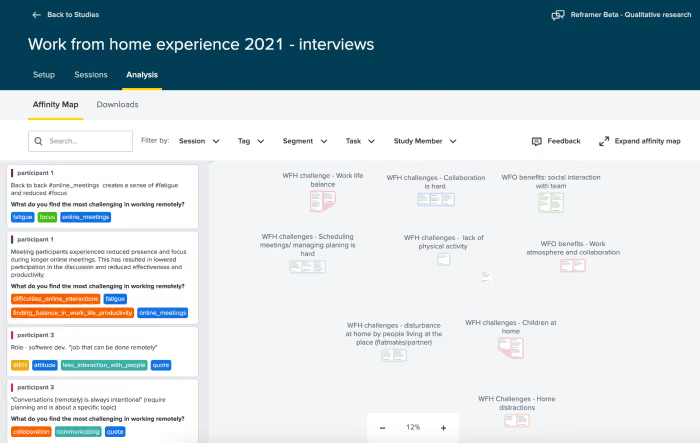
We’ve put a lot of focus into making sure that the analysis side of things is easy to learn and understand, regardless of your experience level. It’s also more flexible and better suited to qualitative research with data sets both big and small.
The main difference is the analysis workflow. Reframer’s tag-based theme builder has been replaced with an affinity map-based workflow in v2 beta.
The rest of the workflow remains mostly the same, though there are a couple of key differences.
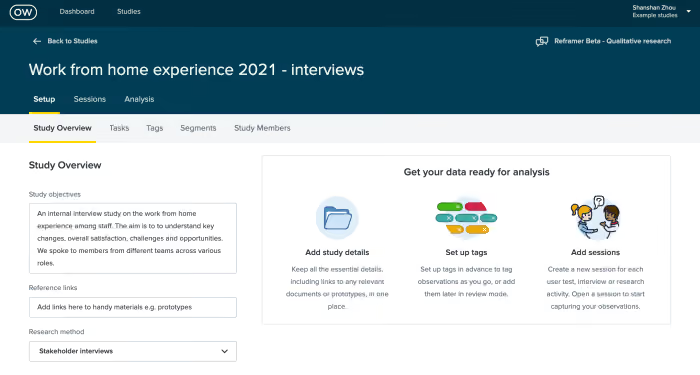
While the activities within the set up and capture phase remain the same, we’ve updated the user interface to better reflect the qualitative research workflow.
All set up related actions (study overview, tasks, tags, segments, and study members) now live together under one tab – ‘Setup’.
You’ll find your sessions and all the observation data you’ve collected in the ‘Sessions’ tab.
For now, we’ve disabled the ability to invite guest notetakers who don’t hold an Optimal Workshop license. That’s not to say this won’t be reintroduced at some stage in the future, though. And of course, your team members who do have a license will be able to collaborate, take notes and analyze data.
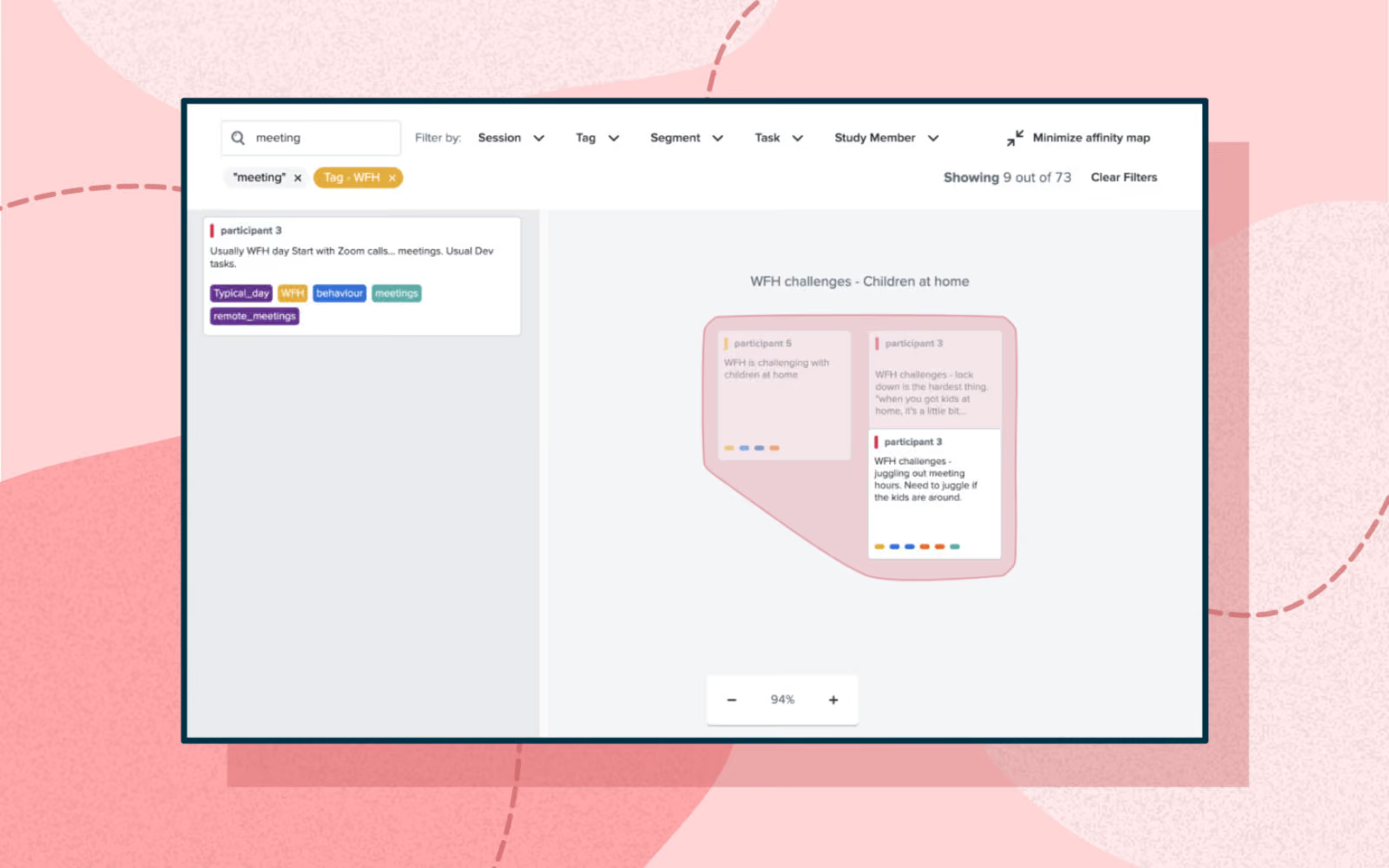
The biggest (and the best) difference between Reframer and v2 beta is the analysis workflow. In Reframer, themes are created by combining filters and tags. In Reframer v2 beta, themes are created by grouping observations in the affinity map.
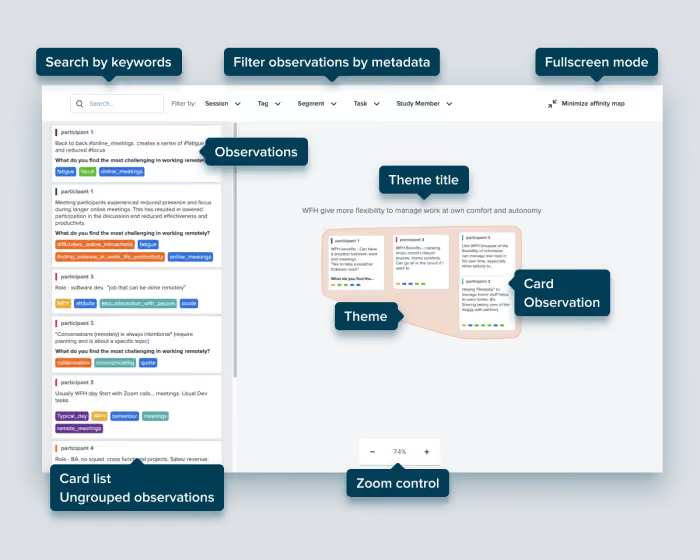
Affinity mapping is a flexible and visual way to quickly group, organize and make sense of qualitative data. It’s a popular method amongst research practitioners of all experience levels, though it’s usually conducted in a standalone tool outside of where the raw data is captured, organized, tagged and stored.
Reframer v2 beta makes affinity mapping more powerful and user-friendly than ever – giving you the ability to search and filter your data, and have your observations, tags, and themes all connected and stored in one place.
It means that Reframer v2 is still very much a work in progress and isn’t yet available to all Optimal Workshop users. We’re continuing to develop new functionality that will complete the qualitative data analysis workflow and, if you’re part of the beta, you can expect to see new features and changes being rolled out in the coming months.
There may be a few bugs along the way, and we know the current name doesn’t exactly roll off the tongue so standby for a rebrand of the tool name once it’s ready for general consumption!
Want to help us make Reframer v2 beta really, really great? We’d love that. We here at Optimal Workshop rely on your thoughts, opinions and feedback to build and update our tools so they benefit those who matter most: you.
If you’d like to opt into the beta, sign up here.
And if you’d like to get down into the nitty gritty about the what, why and how of Reframer v2 beta, check out our Help Center articles here.

Want to do great user research? Maybe you already have tonnes of quantitative research done through testing, surveys and checking. Data galore! Now you really want to get under the skin of your users, understand the why behind their decisions. Getting human-centric with products can mean creating better performing, stronger and more intuitive products that provide an awesome user experience (UX). An in-depth understanding of your users and how they tick can mean the difference between designing products that just work and products that intuitively speak your users language, make them happy, engaged and keep them coming back.
This is where qualitative research comes into play. Understanding how your users tick becomes clearer through user interviews. Interviewing users will provide human insights that make all the difference, the nuance that pulls your product or interface out of the fray and into the light.
How do you interview confidently? Whether this is your first foray into the world of user interviewing or wanting to step up your game, there are a few common pitfalls along the way. We cover off 7 of the most common mistakes, and how to avoid them, helping you avoid these on your way to interview greatness!
There are several ways of doing qualitative user research. Here we will talk about in-person user interviews. Great user interviewing is a skill in itself. And relies on great prep, quality participants and excellent analysis of the results. But don’t be put off, all of this can be learned, and with the right environment and tools can be simple to implement. Want to find out more in detail about how to conduct an interview? Take a look here.
Even if you’re an old hand we’re not all gifted interviewing experts, it’s okay if you lack expertise. In fact, totally nailing interview technique is almost impossible thanks to a ton of different factors. It's your job to keep what you can under control, and record the interview well in the moment for later analysis. Keeping safe all those lovely human centric insights you unearth.
Here are seven practical user research interview mistakes you could be making, and how to fix them:
It can be intimidating doing any sort of user research. Particularly when you need to find participants. And a random selection, not just those down the hall in the next office (though sometimes they can be great). And getting a large enough pool of participants that make the data meaningful, and the insights impactful.
Not to worry, there are ways to find a giant pool of reliable interview participants. Either dive into existing users that you are familiar with, and they with you. Or get in touch with us to recruit a small or large sample of participants.
Interviews are two-way streets, so if you’re hoping to encourage anyone to be open and honest in an interview setting you’ll need to do your homework on the person you’re interviewing. This may not always be applicable if you’re looking for a truly random sample of people. Understanding a little more about your participants should help the conversation flow, and when you do go off-script, it is natural and curiosity driven.
Everything about your user interview environment affects the outcome of the interview. Your participants need to feel confident and comfortable. The space needs to remove as many distractions as possible. A comfortable workstation, laptop that works, and even the air conditioning at a good temperature can all play a part in providing a relaxed environment. So when it comes to the interview they are able to demonstrate and explain their behaviour or decisions on their own terms.
Of course, in this modern day, the availability of remote and virtual interviewing has changed the game slightly. Allowing your participants to be in their own environment can be beneficial. Be careful to take note of what you can see about their space. Is it crowded, dim, busy or noisy? If you don’t have full control over the environment be sure to note this in a factual way.
Good note-taking is a skill in its own right and it’s important to have someone skilled at it. Bringing a dedicated note-taker into the user interviews also frees you up to focus on your participant and your interviewing. Allowing the conversation to flow. Leaving the note-taker to focus on marking down all of the relevant points of interest.
Deciding to audio (and/or video) record the interview is a great option. When choosing this option, recording can be possibly the most important aspect of the interview setup process. Being able to focus on the interview without worrying about your recording equipment is key. Make sure that your recording equipment is high quality and in a central position to pick up everything you discuss - don’t trip at the first hurdle and be left with unusable data.
A dedicated note-taker can still be of value in the room, they can monitor the recording and note any environmental or contextual elements of the interview process. Taking the stress off of you for the recording set up, and any adjustments.
Another option is Reframer. It’s a great recording tool that can free you up to focus on your participant and the interview. Reframer will audio record your interview,auto time-stamp and provide a standardized format for recording all of your interviews. Post analysis becomes simple and quick. And even quicker to share the data and insights.
Lack of preparation can be a fatal error for any user research and user interviews are no different. Interviews are a qualitative research method, and your questions don’t need to be as strict as those in a quantitative questionnaire, for example. However, you will still need a standardised script to regulate your user interviews and make sure all of your participants are asked the same set of questions. Always leaving plenty of room to go off script to get under the skin of why your participant interacts with your product in a particular way!
Qualitative data is unstructured, which can make it hard to organize and analyze. Recording and including all of your interviews on one platform so you can analyze the insights and conclusions together makes it easier to review. Reframer can do all of this in one place allowing all of your organizational stakeholders access to the data.
Don’t miss anything in your interviews, you put in the time, the effort and the investment into doing them. Make sure that they are recorded, available and analyzed in one place. For the team to see, use and report against.
User interviews can be intimidating, to organise, to prep for and even finding your participants can be hard. But user interviews needn’t be too much of a headache. With the Optimal Workshop platform, we take the pain out of the process with participant selection, recording, analyzing and reporting.
If you want a single platform to record, analyze and store your data, take a look at Optimal Workshop and Reframer. And get interviewing!
