Optimal Blog
Articles and Podcasts on Customer Service, AI and Automation, Product, and more
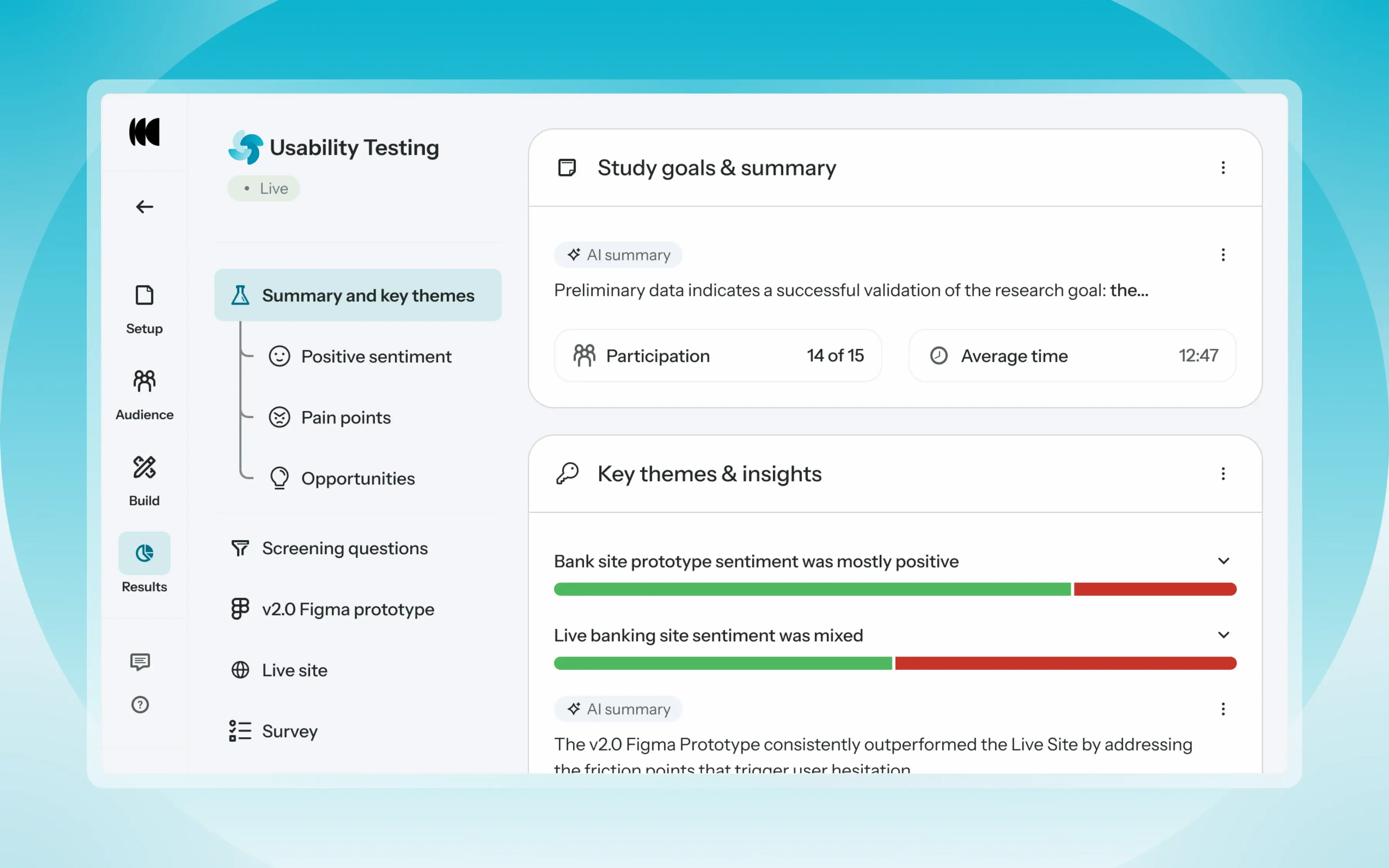
The pace of product development has never been faster, and the cost of building on assumptions has never been higher. At Optimal, we've spent nearly two decades helping teams get closer to their users, and what we're seeing right now is a fundamental shift in how research gets done. More teams are running research than ever before and timelines to act on findings are tighter, while the expectations for what research needs to deliver keep rising.
That shift is exactly what's driving Optimal 3.0, our most ambitious reinvention of the platform yet, designed to give every team the speed, depth, and flexibility that modern research demands. Today's release is the next step in that journey.
Optimal's new mixed-methods research tool tears down the boundaries between methods. It brings prototype testing, live site testing, and surveys into a single, end-to-end study workflow. And grounded in our product principles: speed to insights, access for all, and communication.
A Unified Way to Test Usability
True multi-method research
Optimal’s new Usability Testing tool marks the next step in the evolution of Optimal 3.0, giving teams the flexibility to evaluate experiences in whatever form they exist today.
- Early-stage ideas and concepts
- Interactive prototypes
- AI-generated or experimental flows
- Live production experiences
- Competitor or benchmark sites
- Surveys and structured feedback
Combine prototype testing, AI prototype testing, live site testing, and surveys in a single study. Test multiple prototypes side by side, compare different live URLs, or mix prototype and live site tasks together all in one workflow. Research can now mirror how products actually evolve, from early concept to shipped experience.
Richer qualitative insight collection
New speak-aloud question types, custom message blocks, auto-generated transcripts and insights, citations and highlight clips help you capture the context and reasoning behind every action. AI-assisted analysis then helps you make sense of it all fast and communicate with impact.
A redesigned results and insights layer
Review a study overview surfacing key themes, pain points, and sentiment analysis combining insights across all your study methods along with detailed results, task analysis and recordings, transcripts, key quotes, and automatically generated citations and video clips.
Coming soon: you can also use AI Chat to chat with your data directly, asking questions and pulling new insights and evidence across all your qualitative and quantitative inputs.
Six ways to put it to work
- Compare design variations in a single study, such as multiple navigation layouts, checkout flows, or onboarding concepts
- Explore early-stage concepts before committing to build
- Benchmark current live experience vs a redesigned prototype
- Test staging vs production, or two campaign landing pages
- Validate end-to-end journeys from concept to live experiences
- Compare your experience against competitors
Why this matters
Modern product development is no longer linear. Teams continuously move between:
- Discovery and validation
- Design and iteration
- Prototype and production
- Concept and reality
Traditional usability testing tools were not built for this fluidity. Optimal’s Usability Testing brings the flexibility to match how teams actually work today.
By combining multiple methods into a single study and pairing it with AI-powered synthesis, Usability Testing helps teams reduce setup and analysis time, recruit once, capture richer qualitative context, compare experiences more easily, move faster from feedback to action, and tell clearer, more compelling insight stories.
Learn how to get started with Usability Testing in Optimal and accelerate your path from idea to insight. Book a meeting, start exploring in your account, or join our live training webinar on June 24th to see it in action.
Topics
Research Methods
Popular
All topics
Latest
4 options for running a card sort
This morning Ieavesdroppeda conversation between Amy Worley (@worleygirl) and The SemanticWill™ (@semanticwill) on "the twitters".Aside from recommending two books by Donna Spencer (@maadonna), I asked Nicole Kaufmann, one of the friendly consultants at Optimal Usability, if she had any advice for Amy about reorganising 404 books into categories that make more sense.I don't know Amy's email address and this is much too long for a tweet. In any case I thought it might be helpful for someone else too so here's what Nicole had to say:In general I would recommend having at least three sources of information (e.g. 1x analytics + 1 open card sort + 1 tree test, or 2 card sorts + 1 tree test) in order to come up with a useful and reliable categorisation structure.Here are four options for how you could consider approaching it (starting with my most preferred to least preferred):

Option A
- Pick the 20-25 cards you think will be the most difficult and 20-25 cards that you think will be the easiest to sort and test those in one open card sort.
- Based on the results create one or two sets of categories structures which you can test in a one or two closed card sorts. Consider replacing about half of the tested cards with new ones.
- Based on the results of those two rounds of card sorting, create a categorisation structure and pick a set of difficult cards which you can turn into tasks which you can test in a tree test.
- Plus: Categorisation is revised between studies. Relative easy analysis.
- Minus: Not all cards have been tested. Depending on the number of studies needs about 80-110 participants. Time intensive.
Option B
- Pick the 20-25 cards you think will be the most difficult and 20-25 cards that you think will be the easiest to sort and test those in one open card sort.
- Based on the results do a closed card sort(s) excluding the easiest cards and adding some new cards which haven't been tested before.
- Plus: Card sort with reasonable number of cards, only 40-60 participants needed, quick to analyse.
- Minus: Potential bias and misleading results if the wrong cards are picked.
Option C
- Create your own top level categories (5-8) (could be based on a card sort) and assign cards to these categories, then pick random cards within those categories and set up a card sort for each (5-8).
- Based on the results create a categorisation structure and a set of task which will be tested in a tree test.
- Plus: Limited set of card sorts with reasonable number of cards, quick to analyse. Several sorts for comparison.
- Minus: Potential bias and misleading results if the wrong top categories are picked. Potentially different categorisation schemes/approaches for each card sort, making them hard to combine into one solid categorisation structure.
Option D
- Approach: Put all 404 cards into 1 open card sort, showing each participant only 40-50 cards.
- Plus: All cards will have been tested
- Do a follow up card sort with the most difficult and easiest cards (similar to option B).
- Minus: You need at least 200-300 completed responses to get reasonable results. Depending on your participant sources it may take ages to get that many participants.

Digitalization and Customer-Centricity in the Utilities Sector
The utilities industry stands at a pivotal crossroads. With new generations of digitally-savvy consumers and mounting environmental pressures, the traditional utility business model is rapidly evolving. For UX professionals in this space, embracing digitalization isn't just about implementing new technologies, it's about fundamentally reimagining the customer experience to place users at the center of every decision.
The Changing Utility Landscape
Several forces are driving the urgent need for digital transformation in the utilities sector:
- Rising customer expectations: Today's consumers, accustomed to seamless digital experiences from retailers and service providers, expect the same from their utility companies.
- Environmental imperatives: The global push toward sustainability requires smarter resource management and customer engagement around conservation efforts.
- Generational shifts: Younger consumers interact with service providers differently, preferring digital touchpoints and self-service options.
- Competitive pressures: In deregulated markets, utilities that offer superior digital experiences gain a competitive advantage.
Defining Customer-Centric Digitalization
True customer-centricity in the utilities sector means more than simply adding digital channels, it requires a holistic approach that delivers value at every interaction point:
Digital Touchpoints That Matter
Successful utility digitalization focuses on creating meaningful customer connections across multiple channels:
- Mobile-first account management: Intuitive apps and responsive websites that allow customers to monitor usage, pay bills, and request services from any device.
- Self-service portals: Comprehensive knowledge bases and troubleshooting tools that empower customers to find answers and resolve issues independently.
- Smart home integration: Connecting utility services with smart home ecosystems to offer unprecedented convenience and control over resource usage.
- Personalized communications: Tailored outreach that reflects individual preferences, usage patterns, and needs rather than generic mass messaging.
- Interactive educational resources: Engaging digital content that helps customers understand their consumption and make informed decisions.
Technology Investments with Impact
For UX professionals advising on technology investments, prioritize solutions that directly enhance the customer experience:
High-Value Digital Investments
- Customer data platforms: Systems that unify customer information across touchpoints to create comprehensive profiles that inform personalization efforts.
- Advanced analytics: Tools that transform usage data into actionable insights for both customers and the business.
- Omnichannel communication systems: Platforms that ensure consistent experiences whether a customer reaches out via app, website, phone, or in person.
- IoT and smart metering infrastructure: Technologies that enable real-time monitoring and proactive service management.
- User experience research tools: Solutions that gather continuous feedback to drive ongoing experience improvements.
Implementation Strategies for Success
To maximize the impact of digitalization efforts, consider these strategic approaches:
- Begin with customer journey mapping: Thoroughly document every touchpoint in the customer lifecycle to identify pain points and opportunities for digital enhancement.
- Adopt human-centered design practices: Involve actual customers in the design process through testing, feedback sessions, and co-creation workshops.
- Implement agile delivery methods: Release digital improvements incrementally, gathering user feedback to refine features before full-scale deployment.
- Invest in internal digital literacy: Ensure staff across the organization understand and can leverage new digital capabilities to better serve customers.
- Measure what matters: Develop metrics that track not just adoption of digital tools but their impact on customer satisfaction and business outcomes.
Optimal is your Partner in Customer-Centric Digitalization
For utilities serious about creating exceptional digital experiences, Optimal's suite of UX research tools provides invaluable support throughout the digitalization journey:
Discovering Customer Needs with Card sorting
Before building new digital interfaces, understand how customers naturally organize information:
- Run card sorting exercises to determine how users expect utility services to be categorized
- Identify terminology that resonates with customers versus industry jargon that creates confusion
- Create information architectures that match customers' mental models, resulting in more intuitive navigation
Validating Navigation Structures with Tree testing
For complex utility portals with multiple services and functions:
- Test the navigability of your website structure before investing in development
- Identify where customers expect to find specific functions like usage monitoring, bill payment, or service requests
- Optimize menu structures to ensure customers can complete common tasks efficiently
Perfecting Page Layouts with First-click testing
When designing critical utility service interfaces:
- Test where users first click when trying to complete high-priority tasks
- Ensure important functions like outage reporting or emergency contacts are immediately discoverable
- Validate that key actions stand out visually on both desktop and mobile interfaces
Gathering Voice of Customer with Surveys
To ensure digitalization efforts address genuine customer needs:
- Run targeted surveys to understand customer preferences for digital versus traditional service channels
- Identify specific pain points in current service delivery that digitalization should address
- Segment feedback by customer type to develop targeted digital strategies for different user groups
Analyzing with Qualitative insights
During user testing of new digital platforms:
- Capture rich, contextual observations of how customers interact with digital interfaces
- Identify recurring themes in customer feedback that reveal improvement opportunities
- Transform qualitative insights into actionable design recommendations
Looking Ahead: The Future of Utility Customer Experience
The digitalization journey is ongoing. Forward-thinking utilities are already exploring:
- Predictive service models that address potential issues before customers experience problems
- AR/VR applications for helping customers visualize energy-saving home improvements
- Voice-activated service interfaces that make utility management effortless
- Blockchain-based solutions for peer-to-peer energy trading in communities
Optimal is Creating a Foundation for Digital Success
The path to successful digitalization in utilities requires a deep understanding of customer needs, expectations, and behaviors. Optimal's integrated platform provides the research foundation needed to build truly customer-centric digital experiences:
- Begin with discovery: Use Card sorting and Surveys to understand how customers conceptualize utility services and what they value most in digital interactions.
- Validate before building: Test information architectures with Tree testing to ensure customers can navigate intuitively through your digital services.
- Refine the experience: Use First-click testing to perfect interface designs and identify where users naturally look for key functions.
- Learn continuously: Implement Qualitative insights to gather ongoing feedback that inform continuous improvements to your digital experience.
Conclusion
For UX professionals in the energy and utilities sector, the mandate is clear: digitalization is no longer optional but essential for meeting customer expectations and addressing environmental challenges. By investing strategically in technologies that enhance the customer experience at every touchpoint, and using robust UX research platforms like Optimal to guide these investments, utilities can transform their relationship with consumers from basic service providers to valued partners in resource management.
The most successful utilities will be those that view digitalization not merely as a technology upgrade but as a fundamental shift toward customer-centricity, placing the user's needs, preferences, and experiences at the heart of every business decision. With Optimal as your research partner, you can ensure your digitalization efforts truly deliver on the promise of exceptional customer experiences.

Optimal vs Dovetail: Why Smart Product Teams Choose Unified Research Workflows

UX, product and design teams face growing challenges with tool proliferation, relying on different options for surveys, usability testing, and participant recruitment before transferring data into analysis tools like Dovetail. This fragmented workflow creates significant data integration issues and reporting bottlenecks that slow down teams trying to conduct smart, fast UX research. The constant switching between platforms not only wastes time but also increases the risk of data loss and inconsistencies across research projects. Optimal addresses these operational challenges by unifying the entire research workflow within a single platform, enabling teams to recruit participants, run tests and studies, and perform analysis without the complexity of managing multiple tools.
Why Choose Optimal over Dovetail?
Unified Research Operations vs. Fragmented Workflow
Optimal's Streamlined Workflow: Optimal eliminates tool chain management by providing recruitment, testing, and analysis in one platform, enabling researchers to move seamlessly from study design to actionable insights.
Dovetail's Tool Chain Complexity: In contrast, Dovetail requires teams to coordinate multiple platforms, one for recruitment, another for surveys, a third for usability testing, then import everything for analysis, creating workflow bottlenecks and coordination overhead.
Optimal's Focused Research Flow: Optimal's unified interface keeps researchers in flow state, moving efficiently through research phases without context switching or tool coordination.
Context Switching Inefficiency: Dovetail users constantly switch between different tools with different interfaces, learning curves, and data formats, fragmenting focus and slowing research velocity.
Integrated Intelligence vs. Data Silos
Consistent Data Standards: Optimal's unified platform ensures consistent data collection standards, formatting, and quality controls across all research methods, delivering reliable insights from integrated data sources.
Fragmented Data Sources: Dovetail aggregates data from multiple external sources, but this fragmentation can create inconsistencies, data quality issues, and gaps in analysis that compromise insight reliability.
Automated Data Integration: Optimal automatically captures and integrates data across all research activities, enabling real-time analysis and immediate insight generation without manual data management.
Manual Data Coordination: Dovetail teams spend significant time importing, formatting, and reconciling data from different tools before analysis can begin, delaying insight delivery and increasing error risk.
Comprehensive Research Capabilities vs. Analysis-Only Focus
Complete End-to-End Research Platform: Optimal provides a full suite of native research capabilities including live site testing, prototype testing, card sorting, tree testing, surveys, and more, all within a single platform. Optimal's live site testing allows you to test actual websites and web apps with real users without any code requirements, enabling continuous optimization post-launch.
Dovetail Requires External Tools: Dovetail focuses primarily on analysis and requires teams to use separate tools for data collection, adding complexity and cost to the research workflow.
AI-Powered Interview Analysis: Optimal's new Interviews tool transforms how teams extract insights from user research. Upload interview videos and let AI automatically surface key themes, generate smart highlight reels, create timestamped transcripts, and produce actionable insights in hours instead of weeks. Every insight comes with supporting video evidence, making it easy to back up recommendations with real user feedback.
Dovetail's Manual Analysis Process: While Dovetail offers analysis features, teams must still coordinate external interview tools and manually import data before analysis can begin, creating additional workflow steps.
Global Research Capabilities vs. Limited Data Collection
Global Participant Network: Optimal's 10+ million verified participants across 150+ countries provide comprehensive recruitment capabilities with advanced targeting and quality assurance for any research requirement.
No Native Recruitment: Dovetail's beta participant recruitment add-on lacks the scale and reliability enterprise teams need, forcing dependence on external recruitment services with additional costs and complexity.
Complete Research ROI: Optimal delivers immediate value through integrated data collection and analysis capabilities, ensuring consistent ROI regardless of external research dependencies.
Analysis-Only Value: Dovetail's value depends entirely on research volume from external sources, making ROI uncertain for teams with moderate research needs or budget constraints.
Dovetail Challenges:
Dovetail may slow teams because of challenges with:
- Multi-tool coordination requiring significant project management overhead
- Data fragmentation creating inconsistencies and quality control challenges
- Context switching between platforms disrupting research flow and focus
- Manual data import and formatting delaying insight delivery
- Complex tool chain management requiring specialized technical knowledge
When Optimal is the Right Choice
Optimal becomes essential for:
- Streamlined Workflows: Teams needing efficient research operations without tool coordination overhead
- Research Velocity: Projects requiring rapid iteration from hypothesis to validated insights
- Data Consistency: Studies where integrated data standards ensure reliable analysis and conclusions
- Focus and Flow: Researchers who need to maintain deep focus without platform switching
- Immediate Insights: Teams requiring real-time analysis and instant insight generation
- Resource Efficiency: Organizations wanting to maximize researcher productivity and minimize tool management
Ready to move beyond basic feedback to strategic research intelligence? Experience how Optimal's analytical depth and comprehensive insights drive product decisions that create competitive advantage.

Optimal vs Ballpark: Why Research Depth Matters More Than Surface-Level Simplicity

Many smaller product teams find newer research tools like Ballpark attractive due to their promises of being able to provide simple and quick user feedback tools. However, larger teams conducting UX research that drives product strategy need platforms capable of delivering actionable insights rather than just surface-level metrics. While Ballpark provides basic testing functionality that works for simple validation, Optimal offers the research depth, comprehensive analysis capabilities, and strategic intelligence that teams require when making critical product decisions.
Why Choose Optimal over Ballpark?
Surface-Level Feedback vs. Strategic Research Intelligence
- Ballpark's Shallow Analysis: Ballpark focuses on collecting quick feedback through basic surveys and simple preference tests, but lacks the analytical depth needed to understand why users behave as they do or what actions to take based on findings.
- Optimal's Strategic Insights: Optimal transforms user feedback into strategic intelligence through advanced analytics, behavioral analysis, and AI-powered insights that reveal not just what happened, but why it happened and what to do about it.
- Limited Research Methodology: Ballpark's toolset centers on simple feedback collection without comprehensive research methods like advanced card sorting, tree testing, or sophisticated user journey analysis.
- Complete Research Arsenal: Optimal provides the full spectrum of research methodologies needed to understand complex user behaviors, validate design decisions, and guide strategic product development.
Quick Metrics vs. Actionable Intelligence
- Basic Data Collection: Ballpark provides simple metrics and basic reporting that tell you what happened but leave teams to figure out the 'why' and 'what next' on their own.
- Intelligent Analysis: Optimal's AI-powered analysis doesn't just collect data—it identifies patterns, predicts user behavior, and provides specific recommendations that guide product decisions.
- Limited Participant Insights: Ballpark's 3 million participant panel provides basic demographic targeting but lacks the sophisticated segmentation and behavioral profiling needed for nuanced research.
- Deep User Understanding: Optimal's 100+ million verified participants across 150+ countries enable precise targeting and comprehensive user profiling that reveals deep behavioral insights and cultural nuances.
Startup Risk vs. Enterprise Reliability
- Unproven Stability: As a recently founded startup with limited funding transparency, Ballpark presents platform stability risks and uncertain long-term viability for enterprise research investments.
- Proven Enterprise Reliability: Optimal has successfully launched over 100,000 studies with 99.9% uptime guarantee, providing the reliability and stability enterprise organizations require.
- Limited Support Infrastructure: Ballpark's small team and basic support options cannot match the dedicated account management and enterprise support that strategic research programs demand.
- Enterprise Support Excellence: Optimal provides dedicated account managers, 24/7 enterprise support, and comprehensive onboarding that ensures research program success.
When to Choose Optimal
Optimal is the best choice for teams looking for:
- Actionable Intelligence: When teams need insights that directly inform product strategy and design decisions
- Behavioral Understanding: Projects requiring deep analysis of why users behave as they do
- Complex Research Questions: Studies that demand sophisticated methodologies and advanced analytics
- Strategic Product Decisions: When research insights drive major feature development and business direction
- Comprehensive User Insights: Teams needing complete user understanding beyond basic preference testing
- Competitive Advantage: Organizations using research intelligence to outperform competitors
Ready to move beyond basic feedback to strategic research intelligence? Experience how Optimal's analytical depth and comprehensive insights drive product decisions that create competitive advantage.

Optimal vs Useberry: Why Strategic Research Requires More Than Basic Prototype Testing

Smaller research teams frequently gravitate toward lightweight tools like Useberry when they need quick user feedback. However, as product teams scale and tackle more complex challenges, they require platforms that can deliver both rapid insights and strategic depth. While Useberry offers basic prototype testing capabilities that work well for simple user feedback collection, Optimal provides the comprehensive feature set and flexible participant recruitment options that leading organizations depend on to make informed product and design decisions.
Why Choose Optimal over Useberry?
Rapid Feedback vs. Comprehensive Research Intelligence
- Useberry's Basic Approach: Useberry focuses on simple prototype testing with basic click tracking and minimal analysis capabilities, lacking the sophisticated insights and enterprise features required for strategic research programs.
- Optimal's Research Excellence: Optimal combines rapid study deployment with comprehensive research methodologies, AI-powered analysis, and enterprise-grade insights that transform user feedback into strategic business intelligence.
- Limited Research Depth: Useberry provides surface-level metrics without advanced statistical analysis, AI-powered insights, or comprehensive reporting capabilities that enterprise teams require for strategic decision-making.
- Strategic Intelligence Platform: Optimal delivers deep research capabilities with advanced analytics, predictive modeling, and AI-powered insights that enable data-driven strategy and competitive advantage.
Enterprise Scalability
- Constrained Participant Options: Useberry offers limited participant recruitment with basic demographic targeting, restricting research scope and limiting access to specialized audiences required for enterprise research.
- Global Research Network: Optimal's 100+ million verified participants across 150+ countries enable sophisticated targeting, international market validation, and reliable recruitment for any audience requirement.
- Basic Quality Controls: Useberry lacks comprehensive participant verification and fraud prevention measures, potentially compromising data quality and research validity for mission-critical studies.
- Enterprise-Grade Quality: Optimal implements advanced fraud prevention, multi-layer verification, and quality assurance protocols trusted by Fortune 500 companies for reliable research results.
Key Platform Differentiators for Enterprise
- Limited Methodology Support: Useberry focuses primarily on prototype testing with basic surveys, lacking the comprehensive research methodology suite enterprise teams need for diverse research requirements.
- Complete Research Platform: Optimal provides full-spectrum research capabilities including advanced card sorting, tree testing, surveys, prototype validation, and qualitative insights with integrated analysis across all methods.
- Basic Security and Support: Useberry operates with standard security measures and basic support options, insufficient for enterprise organizations with compliance requirements and mission-critical research needs.
- Enterprise Security and Support: Optimal delivers SOC 2 compliance, enterprise security protocols, dedicated account management, and 24/7 support that meets Fortune 500 requirements.
When to Choose Optimal vs. Useberry
Useberry may be a good choice for teams who are happy with:
- Basic prototype testing needs without comprehensive research requirements
- Limited participant targeting without sophisticated segmentation
- Simple metrics without advanced analytics and AI-powered insights
- Standard security needs without enterprise compliance requirements
- Small-scale projects without global research demands
When Optimal Enables Research Excellence
Optimal becomes essential for:
- Strategic Research Programs: When insights drive product strategy and business decisions
- Enterprise Organizations: Requiring comprehensive security, compliance, and support infrastructure
- Global Market Research: Needing international participant access and cultural localization
- Advanced Analytics: Teams requiring AI-powered insights, statistical modeling, and predictive analysis
- Quality-Critical Studies: Where participant verification and data integrity are paramount
- Scalable Operations: Growing research programs needing enterprise-grade platform capabilities
Ready to transform research from basic feedback to strategic intelligence? Experience how Optimal's enterprise platform delivers the comprehensive capabilities and global reach your research program demands.

Optimal vs UXtweak: Why Enterprise Teams Need Comprehensive Research Platforms

The decision between specialized UX testing tools and comprehensive user insight platforms fundamentally shapes how teams generate, analyze, and act on user feedback. This choice affects not only immediate research capabilities but also long-term strategic planning and organizational impact. While UXTweak focuses primarily on basic usability testing with straightforward functionality, Optimal provides the robust capabilities, global participant reach, and advanced analytics infrastructure that the world's biggest brands rely on to build products users genuinely love. Optimal's platform enables teams to conduct sophisticated research, integrate insights across departments, and deliver actionable recommendations that drive meaningful business outcomes.
Why Choose Optimal over UXtweak?
Strategic User Research vs. Basic Testing
Optimal's Research Leadership: Optimal delivers complete research capabilities combining rapid study deployment with AI-powered insights, advanced participant targeting, and enterprise-grade analytics that transform user feedback into actionable business intelligence. This includes comprehensive live site testing that allows you to test actual websites and web apps without code, enabling continuous optimization and real-time user insights post-launch.
UXtweak's Limited Scope: In contrast, UXTweak operates primarily as a basic usability testing tool with simple click tracking and heat maps, lacking the sophisticated AI-powered analysis and comprehensive insights enterprise research programs demand for strategic impact.
Enterprise-Ready Platform: Optimal serves Fortune 500 clients including Lego, Nike, and Amazon with SOC 2 compliance, enterprise security protocols, and dedicated support infrastructure that scales with organizational growth.
Scalability Constraints: UXTweak's basic infrastructure and limited feature set restrict growth potential, making it unsuitable for enterprise teams requiring sophisticated research operations and global deployment capabilities.
Participant Quality and Advanced Analytics
Global Research Network: Optimal's 10+ million verified participants across 150+ countries enable sophisticated audience targeting, international market research, and reliable recruitment for any demographic or geographic requirement.
Limited Panel Access: UXTweak provides minimal participant recruitment options with basic targeting capabilities, restricting teams to simple demographic filters and limiting research scope for complex audience requirements.
AI-Powered Intelligence: Optimal includes sophisticated AI analysis tools that automatically generate insights, identify patterns, create statistical models, and deliver actionable recommendations that drive strategic decisions. Our new Interviews tool transforms research analysis, upload interview videos and let AI automatically surface key themes, generate smart highlight reels with timestamped evidence, and produce actionable insights in hours instead of weeks, eliminating manual analysis bottlenecks.
Surface-Level Analysis: UXTweak delivers basic click tracking and simple metrics without integrated AI tools or advanced statistical analysis, requiring teams to manually interpret raw data for insights.
Feature Depth and Platform Capabilities
Complete Research Suite: Optimal provides full-spectrum research capabilities including advanced card sorting, tree testing, prototype validation, surveys, and qualitative insights with integrated AI analysis across all methodologies.
Basic Tool Limitations: UXtweak offers elementary testing capabilities focused on simple click tracking and basic surveys, lacking the comprehensive research tools enterprise teams need for strategic product decisions.
Automated Research Operations: Optimal streamlines research workflows with automated participant matching, AI-powered analysis, integrated reporting, and seamless collaboration tools that accelerate insight delivery.
Manual Workflow Dependencies: UXtweak requires significant manual effort for study setup, participant management, and data analysis, creating workflow inefficiencies that slow research velocity and impact delivery timelines.
Where UXtweak Falls Short
UXtweak may be a good choice for teams who are looking for:
- Basic testing needs without strategic research requirements
- Simple demographic targeting without sophisticated segmentation
- Manual analysis workflows without AI-powered insights
- Limited budget prioritizing low cost over comprehensive capabilities
- Small-scale projects without enterprise compliance needs
When Optimal Delivers Strategic Value
Optimal becomes essential for:
- Strategic Research Programs: When user insights drive business strategy and product decisions
- Global Organizations: Requiring international research capabilities and market validation
- Quality-Critical Studies: Where participant verification, advanced analytics, and data integrity matter
- Enterprise Compliance: Organizations with security, privacy, and regulatory requirements
- Advanced Research Needs: Teams requiring AI-powered insights, statistical analysis, and comprehensive reporting
- Scalable Operations: Growing programs needing enterprise-grade platform capabilities and support
Ready to see how leading brands including Lego, Netflix and Nike achieve better research outcomes? Experience how Optimal's platform delivers user insights that adapt to your team's growing needs.