
October 15, 2026
—
3 minutes

Meet Optimal's AI Interviewer: Scale Your Research Without Scaling Your Workload

Great research has never been about speed alone. It’s about asking the right questions, understanding the context behind them, and uncovering insights that help teams make better decisions.

‍

Optimal's AI Interviewer is designed to support that process. It’s designed to work alongside researchers and teams, so you can move faster without losing the depth and human nuance that makes research valuable.

‍

‍

Shaped by discovery

‍

Before building AI Interviewer, we spoke with and surveyed researchers, designers, and product teams to how they approach interviews today and where AI could genuinely help.

‍

What we heard was consistent:

‍

  • Interviews are powerful, but time-intensive
  • Scaling across time zones is challenging
  • Synthesising conversations can take longer than running them
  • And most importantly, context matters

‍

AI isn’t useful if it ignores how your team works. So instead of building a generic interviewer, we focused on building an AI Interviewer that fits into your current workflows and keeps researchers and teams in the driver's seat.

‍

Here’s what we learned and how we brought it to life with Optimal’s AI Interviewer.

‍
‍

Context matters

‍

The best interviews start with a clear understanding of what you’re trying to uncover. With the AI Interviewer, you can add your research goals, audience details, company and product context, and additional context you want the AI to consider. This means the AI doesn’t just ask questions; it understands what you’re trying to learn and helps guide conversations in the right direction.

‍

The same context also powers AI insights, helping ensure summaries, key themes, and citations are relevant, accurate, and aligned with what you're trying to learn.

‍

‍

Control the conversation

‍

One of the concerns with AI-led interviews is not having enough control. We’ve designed the AI Interviewer with this in mind.

‍

For each question, you can choose how deeply you would like the AI Interviewer to probe and follow-up. You decide when deeper exploration is valuable, how the conversation flows, and the AI can then carry this out on your behalf.
‍

‍

Scale your research without losing depth

‍

AI Interviewer helps remove some of the barriers that make qualitative research difficult to scale. Use it to:

‍

  • Scale research without hiring additional moderators
  • Run interviews across different geographies and time zones
  • Keep research moving, even when your team is offline
  • Encourage more honest, candid feedback with an AI interviewer that participants may find easier to open up to

‍

This isn’t about replacing researchers. It’s about removing operational work so you can focus on higher-value work, like synthesis, storytelling, and decision-making.

‍

‍

Richer insights, backed by evidence

‍

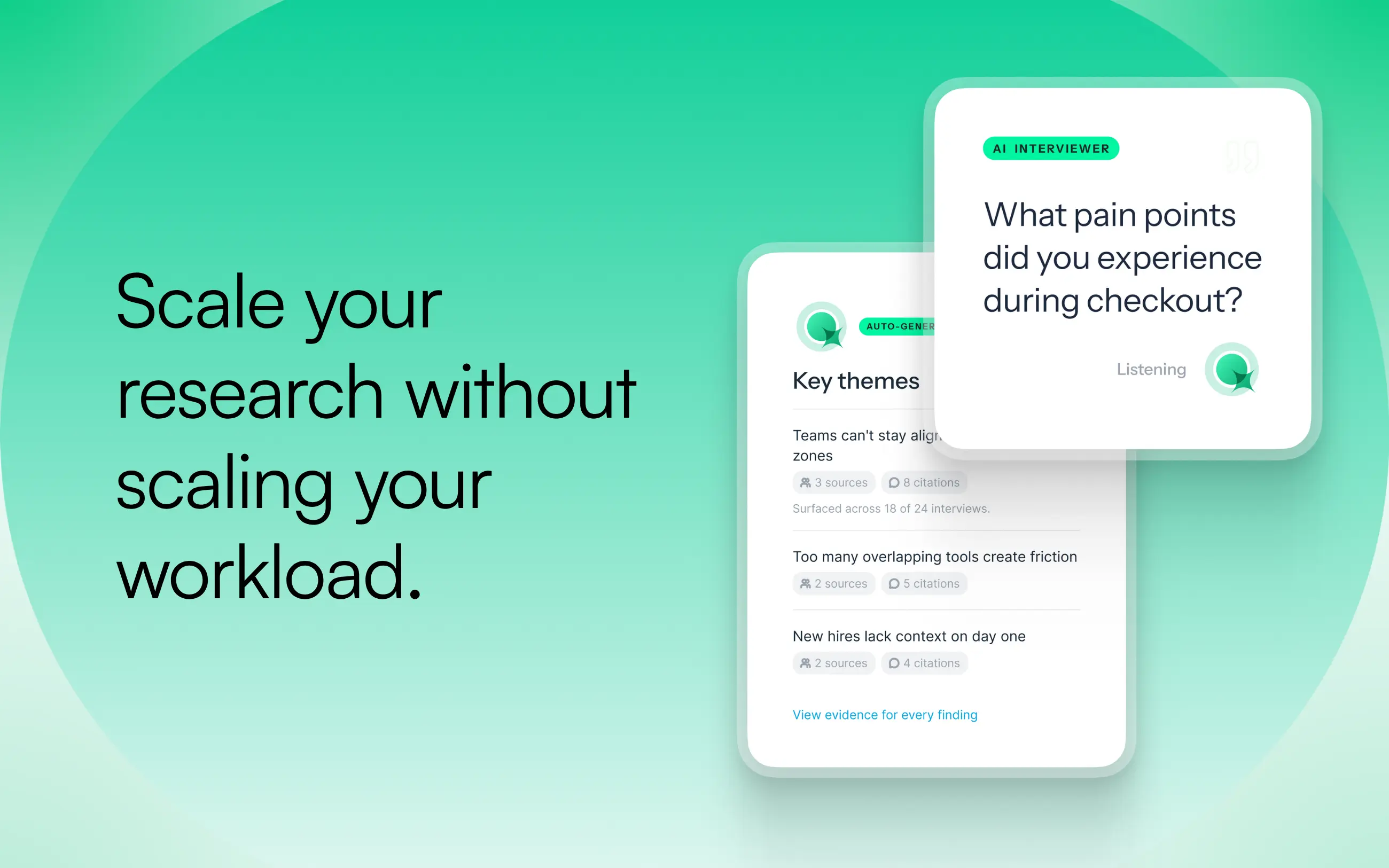
Every session comes with recordings, key summaries, and AI-generated insights with clear detailed evidence. Instead of reviewing hours of footage, you can quickly find what matters and confidently back it up. Review insights across your full study, or dive deeper into individual sessions and specific questions.

‍

On the roadmap: Once your interviews are complete, you can use AI Chat to go further with your data and explore patterns across sessions, ask follow-up questions, and validate assumptions with real evidence.
‍

‍

Humans in the loop, by design

‍

Let’s address the elephant in the room. AI-led interviews aren’t something everyone is immediately comfortable with, and that’s fair. There are real limitations. 

‍

Some research scenarios require human sensitivity and judgment. Nuance, emotion, and edge cases still benefit from a human touch. Vulnerable populations and complex topics should always be handled with care. Optimal values a human-in-the-loop approach and know an AI Interviewer isn’t always suitable. With that in mind, we made sure that:

‍

  • You define the context
  • You control the structure
  • You decide when and how to use it

‍

The AI Interviewer supports your work. It doesn’t replace your expertise.
‍

‍

Early access: help shape what comes next

‍

AI Interviewer is now available in early access, and we’re continuing to learn from the teams using it. If you’re looking to scale your research without scaling your workload, run interviews across time zones, and spend less time on logistics and more time on insights, we’d love for you to try it.

‍

👉 Book a demo to see how it fits into your workflow.

‍

Already with Optimal? Register your interest for early access.

‍

Share this article
Author
Optimal
Workshop

Related articles

View all blog articles
Learn more
1 min read

The Future of AI-Powered Research Is Here: Introducing Optimal's Model Context Protocol (MCP)

Nearly 18 years ago, Optimal helped define what UX research could be, pioneering practices and tools that would become industry standard and change how teams worldwide better understand their users. As the industry has evolved, so has Optimal, expanding the platform, advancing participant recruitment, and building Optimal Intelligence AI to accelerate insight to action.
‍

Now, we’re at the edge of another major shift. With the launch of the Model Context Protocol (MCP), we’re entering a new realm, moving from traditional research workflows to AI-powered intelligence.
‍

‍

What is MCP (Model Context Protocol)?


Research data is one of the most valuable assets in any organization, but until now, it has been scattered across studies and reports, time-consuming to search and synthesize, and different to search or reuse. MCP now changes that for research teams. 
‍

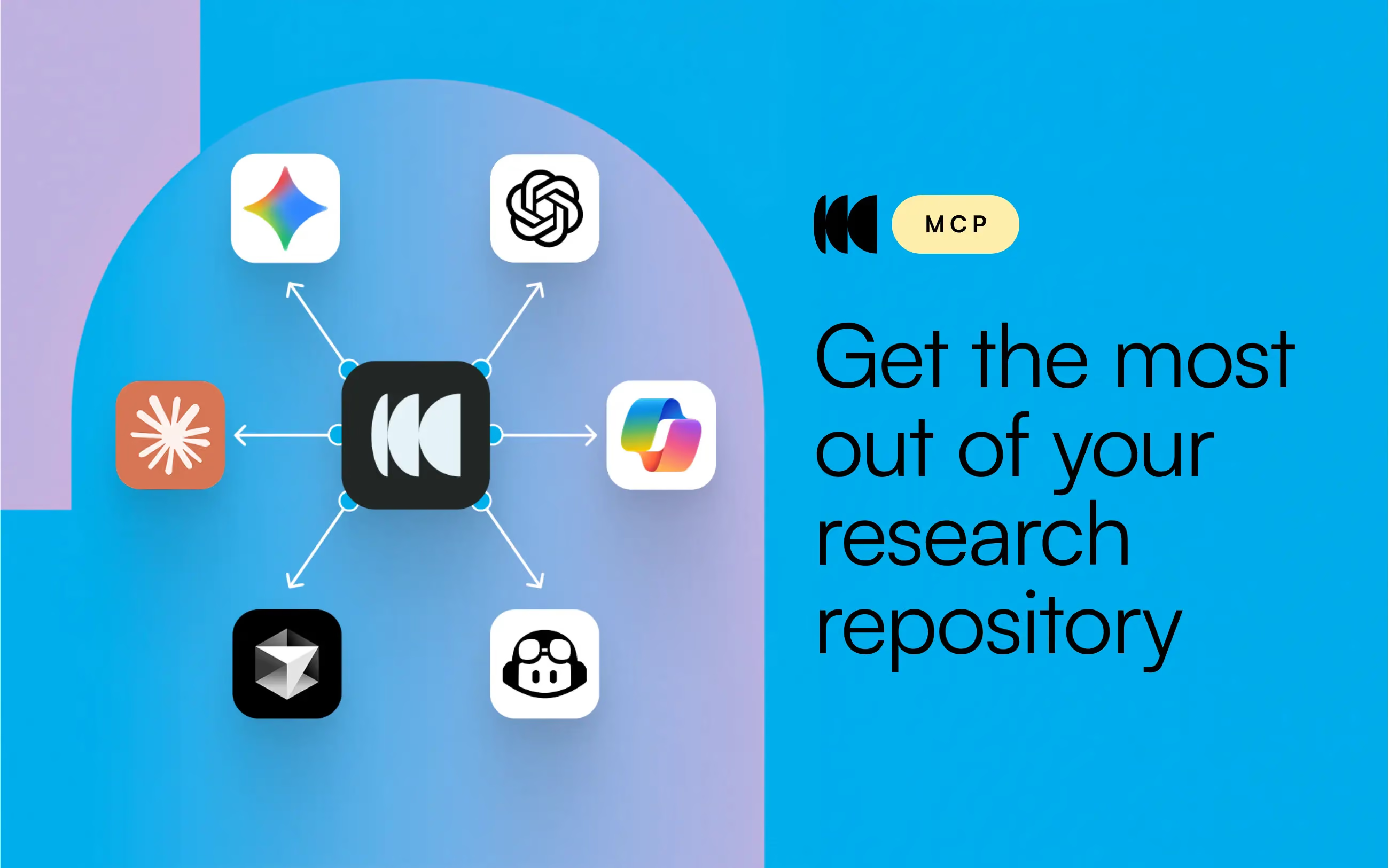
Model Context Protocol (MCP) enables you to connect your Optimal research directly to AI tools, like ChatGPT, Claude, or Cursor, to explore and analyze your data seamlessly. Insights can go beyond data downloads, dashboards, or static reports. Access your insights and explore further with natural conversation.
‍

Get instant insights for questions like: 
‍

  • “Based on all the research I’ve run in Optimal, what are the biggest UX opportunities for our product?” 
  • “What usability issues have been identified by studies conducted in the past 3 months?”
  • “What themes appear across onboarding studies?”
  • “What research already exists about navigation improvements?”
    ‍
    ‍

What MCP Unlocks (Beyond Search)


With MCP-connected tools, you can:
‍

  • Analyze studies: Understand patterns, findings, and trends across research automatically.
  • Cross-study synthesis: Identify recurring themes across multiple studies in seconds.
  • Pull key insights: Extract findings from individual studies without manual review.
  • Search & explore research: Filter studies by creator, title, participant group, or timeframe.
  • Analyze transcript insights & sessions: Surface usability issues, pain points, and behavioral patterns.
  • Turn insights into deliverables: Automatically format findings into summaries and stakeholder-ready outputs. Get more ideas here.
  • Connect with other tools & workflows: Use MCP along with your AI tool's existing integrations to create alerts and automate next steps e.g. create a Slack notification when a participant completes a study, share milestones, create a JIRA ticket and follow-up tasks.
    ‍
    ‍

From Early UX Research to AI-Native Intelligence


The evolution is clear.


We started by helping teams understand users through early UX research methods.
We helped formalize how research is conducted, analyzed, and shared.
‍

And now, with MCP in Optimal, we’re helping teams move beyond analysis altogether toward conversational, AI-driven research intelligence.
‍

Log in to Optimal, connect with your AI tools, and get the most value from your research or book a demo to start building your research repository with Optimal.
Learn more
1 min read

Meet Optimal's AI Interviewer: Scale Your Research Without Scaling Your Workload

Great research has never been about speed alone. It’s about asking the right questions, understanding the context behind them, and uncovering insights that help teams make better decisions.

‍

Optimal's AI Interviewer is designed to support that process. It’s designed to work alongside researchers and teams, so you can move faster without losing the depth and human nuance that makes research valuable.

‍

‍

Shaped by discovery

‍

Before building AI Interviewer, we spoke with and surveyed researchers, designers, and product teams to how they approach interviews today and where AI could genuinely help.

‍

What we heard was consistent:

‍

  • Interviews are powerful, but time-intensive
  • Scaling across time zones is challenging
  • Synthesising conversations can take longer than running them
  • And most importantly, context matters

‍

AI isn’t useful if it ignores how your team works. So instead of building a generic interviewer, we focused on building an AI Interviewer that fits into your current workflows and keeps researchers and teams in the driver's seat.

‍

Here’s what we learned and how we brought it to life with Optimal’s AI Interviewer.

‍
‍

Context matters

‍

The best interviews start with a clear understanding of what you’re trying to uncover. With the AI Interviewer, you can add your research goals, audience details, company and product context, and additional context you want the AI to consider. This means the AI doesn’t just ask questions; it understands what you’re trying to learn and helps guide conversations in the right direction.

‍

The same context also powers AI insights, helping ensure summaries, key themes, and citations are relevant, accurate, and aligned with what you're trying to learn.

‍

‍

Control the conversation

‍

One of the concerns with AI-led interviews is not having enough control. We’ve designed the AI Interviewer with this in mind.

‍

For each question, you can choose how deeply you would like the AI Interviewer to probe and follow-up. You decide when deeper exploration is valuable, how the conversation flows, and the AI can then carry this out on your behalf.
‍

‍

Scale your research without losing depth

‍

AI Interviewer helps remove some of the barriers that make qualitative research difficult to scale. Use it to:

‍

  • Scale research without hiring additional moderators
  • Run interviews across different geographies and time zones
  • Keep research moving, even when your team is offline
  • Encourage more honest, candid feedback with an AI interviewer that participants may find easier to open up to

‍

This isn’t about replacing researchers. It’s about removing operational work so you can focus on higher-value work, like synthesis, storytelling, and decision-making.

‍

‍

Richer insights, backed by evidence

‍

Every session comes with recordings, key summaries, and AI-generated insights with clear detailed evidence. Instead of reviewing hours of footage, you can quickly find what matters and confidently back it up. Review insights across your full study, or dive deeper into individual sessions and specific questions.

‍

On the roadmap: Once your interviews are complete, you can use AI Chat to go further with your data and explore patterns across sessions, ask follow-up questions, and validate assumptions with real evidence.
‍

‍

Humans in the loop, by design

‍

Let’s address the elephant in the room. AI-led interviews aren’t something everyone is immediately comfortable with, and that’s fair. There are real limitations. 

‍

Some research scenarios require human sensitivity and judgment. Nuance, emotion, and edge cases still benefit from a human touch. Vulnerable populations and complex topics should always be handled with care. Optimal values a human-in-the-loop approach and know an AI Interviewer isn’t always suitable. With that in mind, we made sure that:

‍

  • You define the context
  • You control the structure
  • You decide when and how to use it

‍

The AI Interviewer supports your work. It doesn’t replace your expertise.
‍

‍

Early access: help shape what comes next

‍

AI Interviewer is now available in early access, and we’re continuing to learn from the teams using it. If you’re looking to scale your research without scaling your workload, run interviews across time zones, and spend less time on logistics and more time on insights, we’d love for you to try it.

‍

👉 Book a demo to see how it fits into your workflow.

‍

Already with Optimal? Register your interest for early access.

‍

Header graphic for the article 'Simplify Your Workflow with the Interviews Scheduler & Seamless...'
Learn more
1 min read

Simplify Your Workflow with the Interviews Scheduler & Seamless Calendar & Video Integrations

Coordinating user interviews shouldn’t feel like a full-time job. Between juggling calendars, chasing confirmations, and sending reminders, scheduling can be the hidden bottleneck in research velocity and quietly consume the time you actually want to spend talking to customers. 
‍

If you want to run more interviews and generate insights more consistently, simplifying your scheduling process is one of best ways to remove friction and streamline your workflow.
‍

‍

‍

Save time and streamline your workflow

‍

What does a simpler workflow look like? 

With a tool like Optimal’s Interviews Scheduler, you can:
‍

  • Invite participants via a booking link or email
  • View upcoming and completed sessions in one place
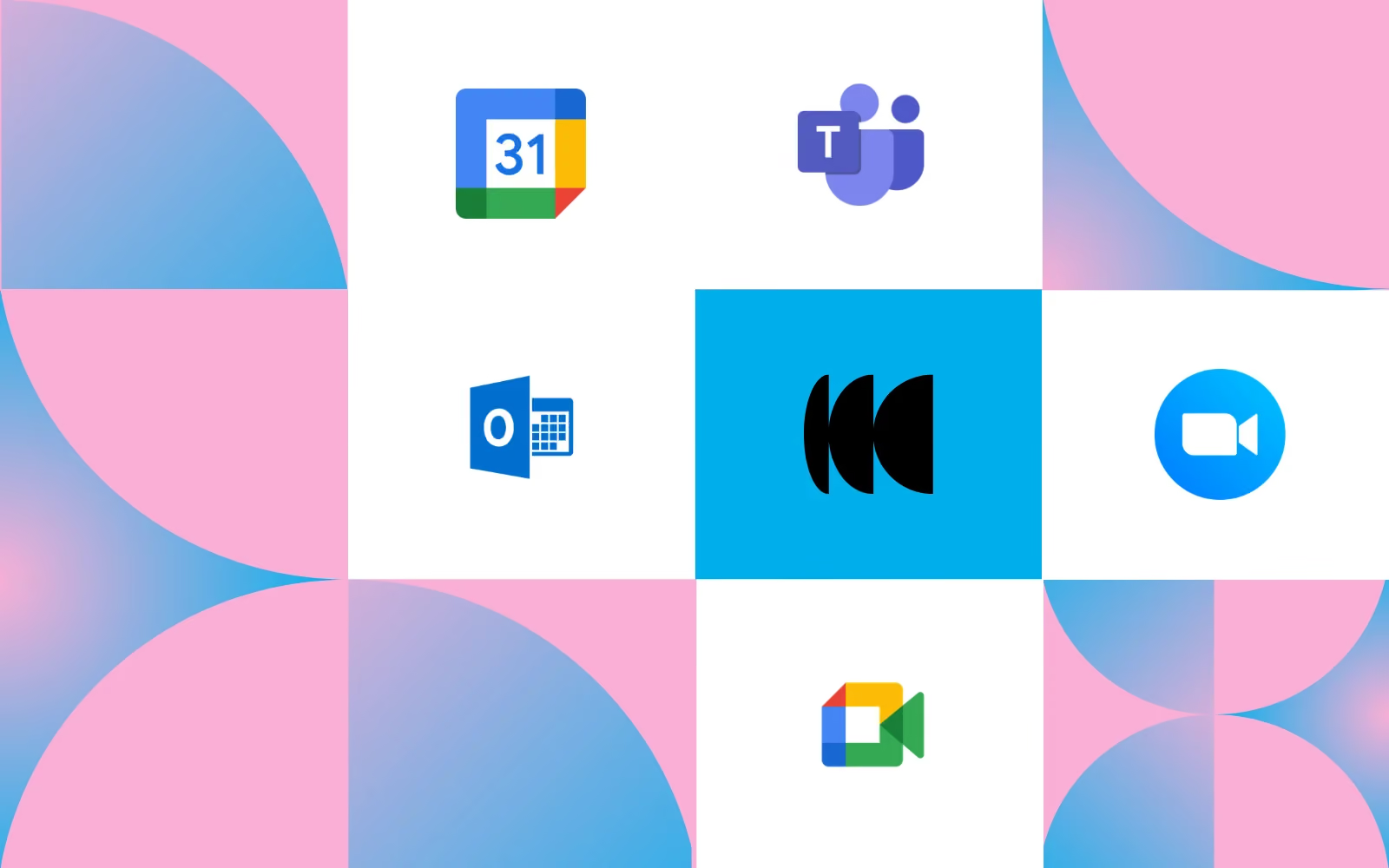
  • Connect with tools you already use like Google Calendar, Microsoft Outlook, Google Meet, Zoom, and Microsoft Teams.
  • Let participants reschedule themselves. No back-and-forth emails.
  • Add collaborators and automatically notify everyone of changes.
  • Set session limits and calendar buffers.
  • Automate email invites, reminders, confirmations, and thank-you messages.
    ‍

It’s everything you need to manage interviews without the chaos.
‍
‍

‍

Calendar integrations: Avoid conflicts and save time


With the Interviews Scheduler, you can sync your availability with Google Calendar and Microsoft Outlook in real time. Connect your own calendar or your team’s to ensure every busy slot is accounted for. Avoid double bookings, block out busy times, and keep everything in one place. 


Once set up, your availability automatically updates, and participants can book directly into open slots, eliminating the back-and-forth. Plus, depending on your preferences, your sessions will either sync directly to your calendar or come through as an .ics file in the confirmation email, saving you one more step.
‍

‍
‍

Seamless video conferencing integrations


The Interviews Scheduler integrates directly with Zoom, Microsoft Teams, and Google Meet.


When someone books a session:

  • A video link is automatically generated
  • It’s added to the calendar invite
  • Everyone receives confirmation details
  • Sessions can be automatically recorded


No copying links. No switching between tools.
‍

‍
‍

Built for research teams

‍

The Interviews Scheduler isn’t just about booking time slots. It’s about removing friction from your research workflow.

‍

With integrations at its core, you can:

  • Keep your calendar, video tools, and participants in sync
  • Reduce manual coordination
  • Eliminate scheduling errors
  • Focus on insights instead of admin

‍

Whether you’re running one-off interviews or managing weekly research sprints, the Interviews Scheduler helps you move faster and stay organised.

‍

Ready to give it a try? Log in to your Optimal account and get started or book a demo to learn more.

‍

Seeing is believing

Explore our tools and see how Optimal makes gathering insights simple, powerful, and impactful.