
November 20, 2026
—
5 mins

Making Inclusion Part of How We Work

Better products start with understanding people. That means understanding the people who use them, and also the people who design, build, and make decisions about them.

‍

When teams bring different experiences and perspectives to a problem, there are more opportunities to challenge assumptions and ask better questions. But, it takes the right scaffolding. Channels and structures need to be set up to make it possible for people across teams to collaborate, have their perspectives heard, and have their ideas challenged and built on.

‍

This truly matters in product development, where early assumptions influence research questions, design decisions, and ultimately the end experience people have with a product.

‍

‍

‍

Different perspectives lead to better questions

‍

‍

It starts with who is at the table. In 2025, 29% of C-suite positions in tech were held by women. At Optimal, more than half of our senior leadership team are women, and that shapes how we think about the work.

‍

“Diversity in leadership matters because it expands perspective. It challenges groupthink. It surfaces blind spots. Diversity is often reduced to a numbers conversation, but diversity in leadership is far more powerful when it starts from the ground up. When leaders build teams that bring together different cultures, experiences, perspectives and they actively listen, they amplify those insights and it becomes embedded in how the organisation thinks, not just how it looks.” - Jill McCarthy, Vice President of Operations

‍

Listening is at the heart of our value “In It Together”, leading with kindness, empathy, and respect, listening fully, and lifting others up. One way we embed this value is through innovation days like our annual company hackathons, which give people across the business space to spot opportunities and share freely, try new skills, and turn ideas into action. Cross-functional hackathons bring together people who might not otherwise work side by side, creating opportunities to solve problems from different perspectives. We’ve seen Operations, Engineering, and Finance collaborate to develop breakthrough technology and last year, one idea went from concept to launch in just one week.

‍

‍

‍

Create conditions for people to grow

‍

‍

Inclusive collaboration also depends on who gets the opportunity to develop, take on responsibility, and influence what happens next. If access to mentorship, high-visibility projects, or leadership opportunities depends on informal networks, it’s hard to build a healthy environment for innovation. At Optimal, we support development through regular one-on-ones, coaching, mentoring, and supporting professional development opportunities. And our values shape how we approach this in our day to day work. “Bold & Brave” encourages us to try new things and be honest about where we can improve, and “Own It” asks us to challenge with care, support each other, and commit fully because we’re in this together, building towards a better future and better experiences.

‍

"I started my career in tech when diversity was the exception, not the rule. The mentors and leaders who I looked up to at that time had to work twice as hard as others, but never stopped showing up anyway. Their efforts made it easier for me to find a seat at the table. International Women's day for me is a reminder of how grateful I am for each of those individuals who helped prove that diverse teams make better decisions, build better products and create better businesses and I hope to keep playing my small part in opening doors for the next generation. " - Amberlie Denny, Chief Marketing Officer

‍

‍

‍

Make inclusion part of how you measure success

‍

‍

Inclusion is easy to describe in terms of a value or an intention, but making progress requires looking at what happens in practice. Organizations can start by asking a few straightforward questions about their policies and practices:

‍

  • Whose perspectives shape decisions? Look at who contributes to discussions, whose ideas are explored, whose perspective should be welcomed based on experience, adjacent work, and education.
  • Where might assumptions be going unchallenged? Look at how feedback and new ideas are shared across teams and with external partners. Create opportunities for people to weigh in early, whether through dedicated feedback channels or a 25+ person Slack group for sharing updates, gathering input, and planning work together.
  • How does everyone across levels and the business get opportunities to grow? Examine what policies are in place to encourage skill advancement and professional development.
  • What happens when people raise concerns? Consider what channels they go through, who is involved, and how feedback is addressed.

‍

There is more to product work than execution, it comes from understanding the people we’re building for and learning from the people we build with.

‍

“Building diversity means we can draw on a richer pool of experience, making for better understanding, discussion, and decisions.” - member of Optimal’s senior leadership

‍

At Optimal, that’s something we continuously work to build up, creating space for diverse perspectives to shape how we think, collaborate, and build better products.

‍

Learn more about us and how we approach product innovation at Optimal here.

‍

Share this article
Author
Optimal
Workshop
Topics

Related articles

View all blog articles
Header graphic for the article 'Radical Collaboration: how teamwork really can make the dream work'
Learn more
1 min read

Radical Collaboration: how teamwork really can make the dream work

Natalie and Lulu have forged a unique team culture that focuses on positive outputs (and outcomes) for their app’s growing user base. In doing so, they turned the traditional design approach on its head and created a dynamic and supportive team. 

‍

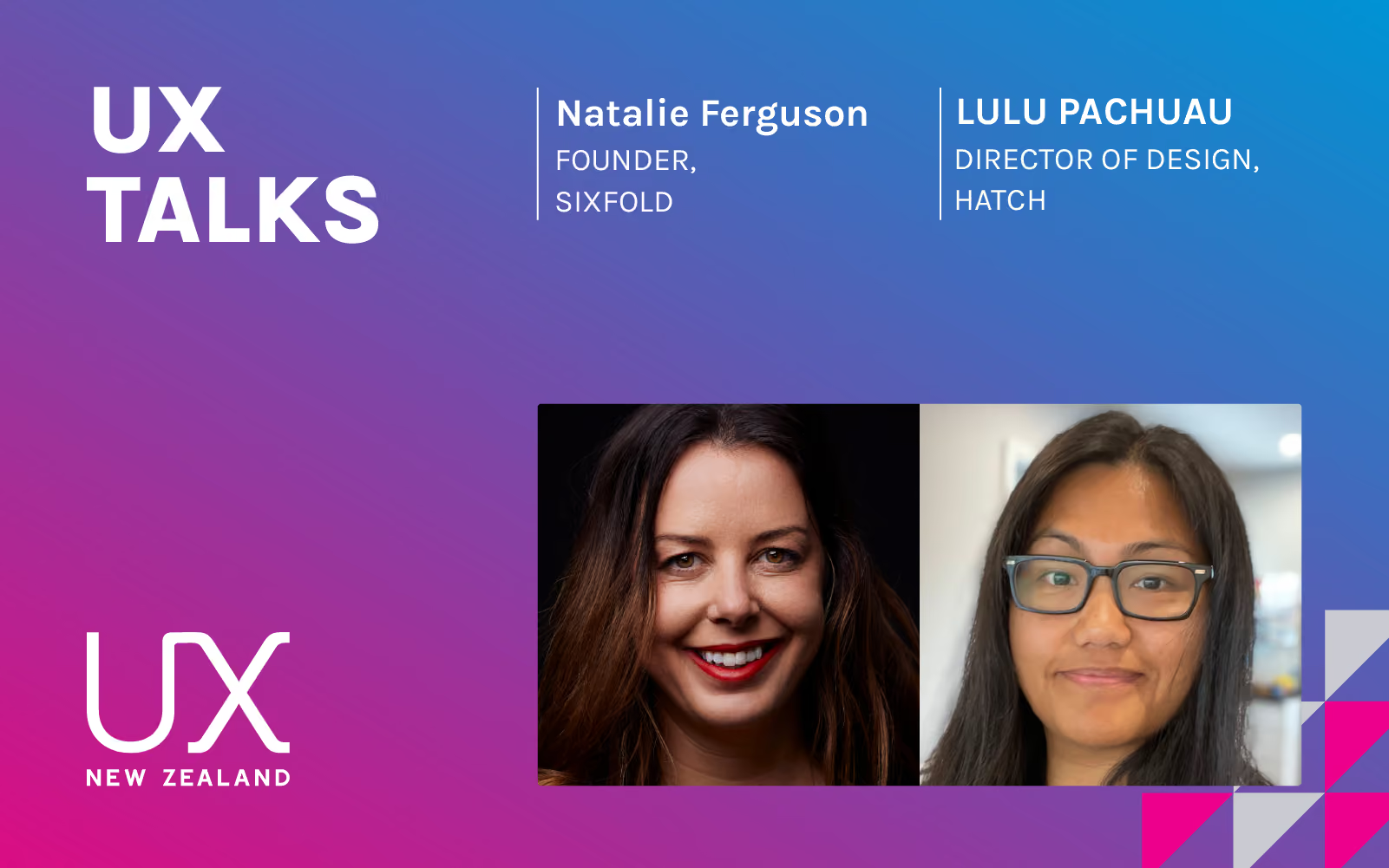
Natalie, Director of Design at Hatch, and Lulu, UX Design Specialist, recently spoke at UX New Zealand, the leading UX and IA conference in New Zealand hosted by Optimal Workshop, on their concept of “radical collaboration”.

‍

In their talk, Nat and Lulu share their experience of growing a small app into a big player in the finance sector, and their unique approach to teamwork and culture which helped achieve it.

‍

Background on Natalie Ferguson and Lulu Pachuau

‍

Over the last two decades, Lulu and Nat have delivered exceptional customer experiences for too many organizations to count. After Nat co-founded Hatch, she begged Lulu to join her on their audacious mission: To supercharge wealth building in NZ. Together, they created a design and product culture that inspired 180,000 Kiwi investors to join in just 4 years.

‍

Contact Details:

‍

Email: natalie@sixfold.co.nz

‍

LinkedIn: https://www.linkedin.com/in/natalieferguson/ and https://www.linkedin.com/in/lulupach/

‍

Radical Collaboration - How teamwork makes the dream work 💪💪💪

‍

Nat and Lulu discuss how they nurtured a team culture of “radical collaboration” when growing the hugely popular app Hatch, based in New Zealand. Hatch allows everyday New Zealanders to quickly and easily trade in the U.S. share market. 

‍

The beginning of the COVID pandemic spelled huge growth for Hatch and caused significant design challenges for the product. This growth meant that the app had to grow from a baby startup to one that could operate at scale - virtually overnight. 

‍

In navigating this challenge, Nat and Lulu coined the term radical collaboration, which aims to “dismantle organizational walls and supercharge what teams achieve”. Radical collaboration has six key pillars, which they discuss alongside their experience at Hatch.

‍

Pillar #1: When you live and breathe your North star

‍

Listening to hundreds of their customers’ stories, combined with their own personal experiences with money, compelled Lulu and Nat to change how their users view money. And so, “Grow the wealth of New Zealanders” became a powerful mission statement, or North Star, for Hatch. The mission was to give people the confidence and the ability to live their own lives with financial freedom and control. Nat and Lulu express the importance of truly believing in the mission of your product, and how this can become a guiding light for any team. 

‍

Pillar #2: When you trust each other so much, you’re happy to give up control

‍

As Hatch grew rapidly, trusting each other became more and more important. Nat and Lulu state that sometimes you need to take a step back and stop fueling growth for growth’s sake. It was at this point that Nat asked Lulu to join the team, and Nat’s first request was for Lulu to be super critical about the product design to date - no feedback was out of bounds. Letting go, feeling uncomfortable, and trusting your team can be difficult, but sometimes it’s what you need in order to drag yourself out of status quo design. This resulted in a brief hiatus from frantic delivery to take stock and reprioritize what was important - something that can be difficult without heavy doses of trust!

‍

Pillar #3: When everyone wears all the hats

‍

During their journey, the team at Hatch heard lots of stories from their users. Many of these stories were heard during “Hatcheversery Calls”, where team members would call users on their sign-up anniversary to chat about their experience with the app. Some of these calls were inspiring, insightful, and heartwarming.

‍

Everyone at Hatch made these calls – designers, writers, customer support, engineers, and even the CEO. Speaking to strangers in this way was a challenge for some, especially since it was common to field technical questions about the business. Nevertheless, asking staff to wear many hats like this turned the entire team into researchers and analysts. By forcing ourselves and our team outside of our comfort zone, we forced each other to see the whole picture of the business, not just our own little piece.

‍

Pillar #4: When you do what’s right, not what’s glam

‍

In an increasingly competitive industry, designers and developers are often tempted to consistently deliver new and exciting features. In response to rapid growth, rather than adding more features to the app, Lulu and Nat made a conscious effort to really listen to their customers to understand what problems they needed solving. 

‍

As it turned out, filing overseas tax returns was a significant and common problem for their customers - it was difficult and expensive. So, the team at Hatch devised a tax solution. This solution was developed by the entire team, with almost no tax specialists involved until the very end! This process was far from glamorous and it often fell outside of standard job descriptions. However, the team eventually succeeded in simplifying a notoriously difficult process and saved their customers a massive headache.

‍

Pillar #5: When you own the outcome, not your output.

‍

Over time Hatch’s user base changed from being primarily confident, seasoned investors, to being first-time investors. This new user group was typically scared of investing and often felt that it was only a thing wealthy people did.

‍

At this point, Hatch felt it was necessary to take a step back from delivering updates to take stock of their new position. This meant deeply understanding their customers’ journey from signing up, to making their first trade. Once this was intimately understood, the team delivered a comprehensive onboarding process which increased the sign-up conversion rate by 10%!

‍

Pillar #6: When you’re relentlessly committed to making it work

‍

Nat and Lulu describe a moment when Allbirds wanted to work with Hatch to allow ordinary New Zealanders to be involved in their IPO launch on the New York stock exchange. Again, this task faced numerous tax and trade law challenges, and offering the service seemed like yet another insurmountable task. The team at Hatch nearly gave up several times during this project, but everyone was determined to get this feature across the line – and they did. As a result, New Zealanders were some of the few regular investors from outside the U.S that were able to take part in Albirds IPO. 

‍

Why it matters 💥

‍

Over four years, Hatch grew to 180,000 users who collectively invested over $1bn. Nat and Lulu’s success underscores the critical role of teamwork and collaboration in achieving exceptional user experiences. Product teams should remember that in the rapidly evolving tech industry, it's not just about delivering the latest features; it's about fostering a positive and supportive team culture that buys into the bigger picture.

‍

The Hatch team grew to be more than team members and technical experts. They grew in confidence and appreciated every moving part of the business. Product teams can draw inspiration from Hatch's journey, where designers, writers, engineers, and even the CEO actively engaged with users, challenged traditional design decisions, and prioritized solving actual user problems. This approach led to better, more user-centric outcomes and a deep understanding of the end-to-end user experience.

‍

Most importantly, through the good times and tough, the team grew to trust each other. The mission weaved its way through each member of the team, which ultimately manifested in positive outcomes for the user and the business.

‍

Nat and Lulu’s concept of radical collaboration led to several positive outcomes for Hatch:

  • It changed the way they did business. Information was no longer held in the minds of a few individuals – instead, it was shared. People were able to step into other people's roles seamlessly. 
  • Hatch achieved better results faster by focusing on the end-to-end experience of the app, rather than by adding successive features. 
  • The team became more nimble – potential design/development issues were anticipated earlier because everyone knew what the downstream impacts of a decision would be.

‍

Over the next week, Lulu and Nat encourage designers and researchers to get outside of their comfort zone and:

  • Visit customer support team
  • Pick up the phone and call a customer
  • Challenge status quo design decisions. Ask, does this thing solve an end-user problem?
‍

Header graphic for the article 'Optimal Workshop’s core values: The foundation of our success 🧱🔥'
Learn more
1 min read

Optimal Workshop's core values: The foundation of our success 🧱🔥

In the fast-paced world of tech startups and scale-ups, having a strong set of core values is crucial for sustainable growth and success. As the CEO of Optimal Workshop, a best-in-class research and insights platform, I've learned firsthand the importance of establishing and nurturing the right company culture. Today, I'd like to share our journey of revisiting and refining our values, and how these principles are shaping our path forward.

‍

‍

The power of values in leadership 🫶

‍

This is my third run as a CEO, following leadership roles at the digital consultancy Tigerspike and the EdTech company Education Perfect. Each time, I've faced the challenge of taking the business to a whole new level. From experience, I've learned that this transformation begins with getting all the right pieces in play for future growth.

‍

At Optimal Workshop, we've been busy laying the groundwork for our next phase of expansion:

‍

1. Forming a new leadership team

2. Launching a fresh brand identity

3. Developing a new strategy and product direction

4. Introducing our refined team values

‍

These elements, particularly our values, are not just words on a wall. They underpin our future way of working and set the standard for the behaviors we expect from every team member. By doing so, we're creating a culture of high performance with solid foundations to build upon and scale globally.

‍

Our core values: The heart of Optimal Workshop 💖

‍

In April 2024, we embarked on a journey to revisit and refine our company values. This process was collaborative and thoughtful, involving input from team members across all levels of the organization. The result is a set of four core values that truly represent who we are and who we aspire to be:

‍

1. Live in our customers' shoes

‍

At Optimal Workshop, we believe that our success is intrinsically tied to the success of our customers. This value emphasizes empathy, understanding, and a customer-centric approach to everything we do. Team members who embody this value:

‍

  • Deeply understand our products and champion user research and data-driven methodologies
  • Go above and beyond to support our customers, ensuring they derive maximum value from our products and services
  • Show a profound understanding of customer pain points and challenges, always seeking ways to enhance the customer experience
  • Prioritize customer satisfaction and strive to provide the highest level of service in all their endeavors

‍

2. Own it

‍

We take pride in our expertise and resilience. This value is about taking initiative, holding ourselves to high standards, and fostering an environment of trust and commitment. An "Own It" mindset means:

‍

  • Demonstrating reliability and accountability, stepping up to challenges and delivering on promises
  • Being solution-focused, supporting others, and finding the best outcomes for all stakeholders
  • Bringing a high level of quality to daily work, advancing projects while maintaining excellent standards
  • Communicating openly and transparently, and professionally challenging the status quo when necessary

‍

3. Game On!

‍

In the dynamic world of tech and user research, adaptability and continuous learning are key. Our "Game On!" value encapsulates our readiness to pivot, our curiosity, and our commitment to constant improvement. Team members who exemplify this value:

‍

  • Demonstrate the ability to change direction quickly and adapt to new circumstances
  • Actively contribute to discussions, ask insightful questions, and share information effectively
  • Continuously learn and challenge the status quo, always seeking innovative ways to improve our processes and offerings

‍

4. In It Together

‍

Last but certainly not least, we believe in the power of collaboration, mutual support, and compassion. This value underscores our commitment to fostering a positive, respectful work environment where everyone can thrive. "In It Together" means:

‍

  • Creating a collaborative work environment and showing respect to all team members and individuals
  • Bringing colleagues and customers together to achieve better results and reach common goals
  • Demonstrating honesty, transparency, and integrity in team settings
  • Speaking openly but respectfully, always listening actively, and being present and ready to participate

‍

Celebrating our values in action 🥳

‍

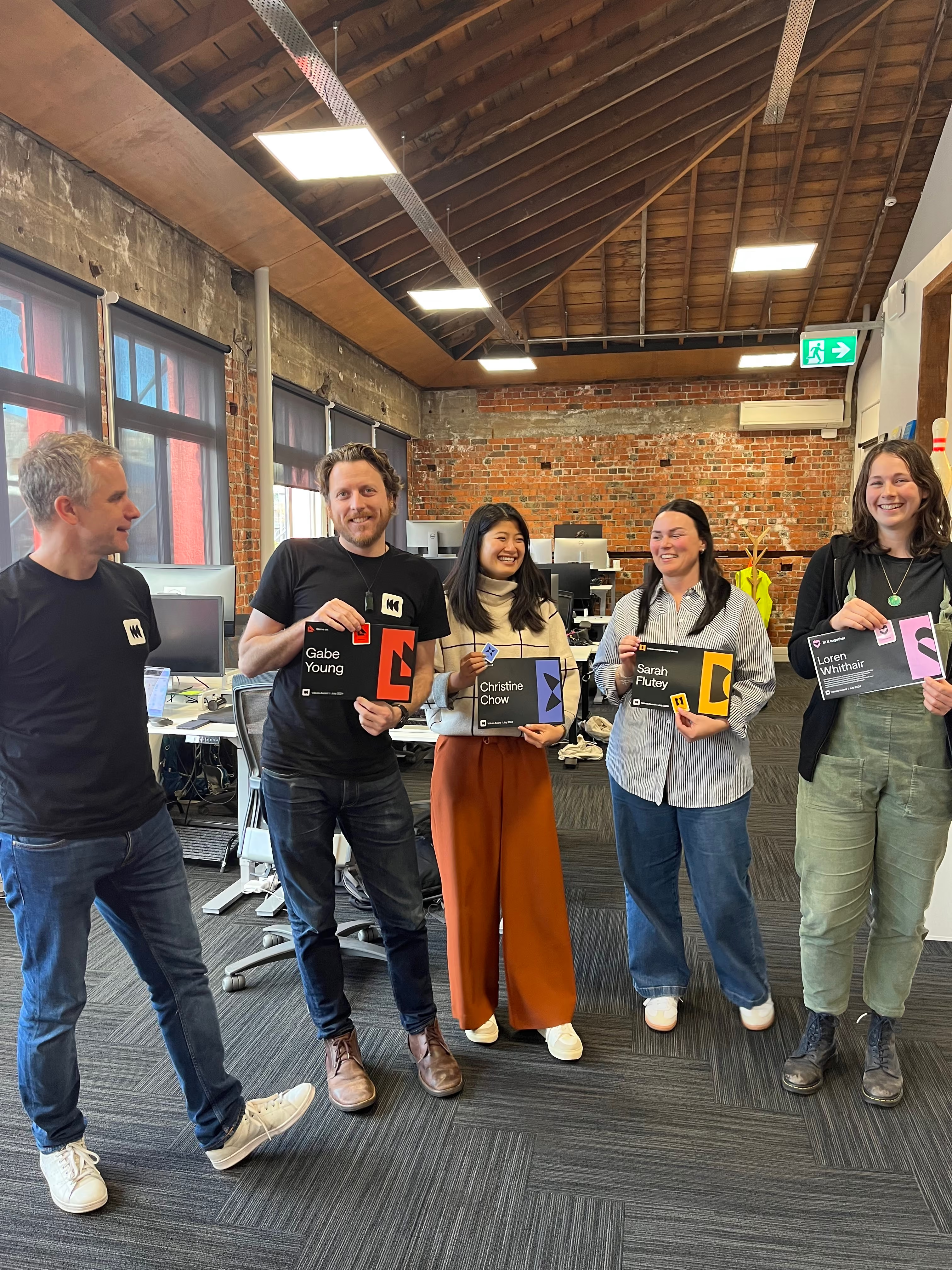
To bring these values to life, we recently celebrated our inaugural Value Awards. It was inspiring to see team members being recognized for exemplifying these principles in their daily work:

‍

‍

These winners have set a great benchmark for all of us to follow, showing how our values translate into tangible actions and outcomes.

‍

Looking ahead 🔭

‍

One of the most crucial lessons I've learned as a CEO is the immense value of establishing clear core values and guidelines early in a company's journey. When these fundamental pieces are in place, scaling becomes not just easier, but significantly faster – especially when it comes to global growth. 

‍

By setting these core values and guidelines early, we've created a strong foundation that will enable Optimal Workshop to scale more efficiently and effectively on a global level, maintaining our identity, culture, and high standards of performance, no matter how large we become or how far we expand geographically.

‍

Here's to the journey ahead – onwards and upwards, across borders and beyond!

Alex Burke

‍

Learn more
1 min read

Making Inclusion Part of How We Work

Better products start with understanding people. That means understanding the people who use them, and also the people who design, build, and make decisions about them.

‍

When teams bring different experiences and perspectives to a problem, there are more opportunities to challenge assumptions and ask better questions. But, it takes the right scaffolding. Channels and structures need to be set up to make it possible for people across teams to collaborate, have their perspectives heard, and have their ideas challenged and built on.

‍

This truly matters in product development, where early assumptions influence research questions, design decisions, and ultimately the end experience people have with a product.

‍

‍

‍

Different perspectives lead to better questions

‍

‍

It starts with who is at the table. In 2025, 29% of C-suite positions in tech were held by women. At Optimal, more than half of our senior leadership team are women, and that shapes how we think about the work.

‍

“Diversity in leadership matters because it expands perspective. It challenges groupthink. It surfaces blind spots. Diversity is often reduced to a numbers conversation, but diversity in leadership is far more powerful when it starts from the ground up. When leaders build teams that bring together different cultures, experiences, perspectives and they actively listen, they amplify those insights and it becomes embedded in how the organisation thinks, not just how it looks.” - Jill McCarthy, Vice President of Operations

‍

Listening is at the heart of our value “In It Together”, leading with kindness, empathy, and respect, listening fully, and lifting others up. One way we embed this value is through innovation days like our annual company hackathons, which give people across the business space to spot opportunities and share freely, try new skills, and turn ideas into action. Cross-functional hackathons bring together people who might not otherwise work side by side, creating opportunities to solve problems from different perspectives. We’ve seen Operations, Engineering, and Finance collaborate to develop breakthrough technology and last year, one idea went from concept to launch in just one week.

‍

‍

‍

Create conditions for people to grow

‍

‍

Inclusive collaboration also depends on who gets the opportunity to develop, take on responsibility, and influence what happens next. If access to mentorship, high-visibility projects, or leadership opportunities depends on informal networks, it’s hard to build a healthy environment for innovation. At Optimal, we support development through regular one-on-ones, coaching, mentoring, and supporting professional development opportunities. And our values shape how we approach this in our day to day work. “Bold & Brave” encourages us to try new things and be honest about where we can improve, and “Own It” asks us to challenge with care, support each other, and commit fully because we’re in this together, building towards a better future and better experiences.

‍

"I started my career in tech when diversity was the exception, not the rule. The mentors and leaders who I looked up to at that time had to work twice as hard as others, but never stopped showing up anyway. Their efforts made it easier for me to find a seat at the table. International Women's day for me is a reminder of how grateful I am for each of those individuals who helped prove that diverse teams make better decisions, build better products and create better businesses and I hope to keep playing my small part in opening doors for the next generation. " - Amberlie Denny, Chief Marketing Officer

‍

‍

‍

Make inclusion part of how you measure success

‍

‍

Inclusion is easy to describe in terms of a value or an intention, but making progress requires looking at what happens in practice. Organizations can start by asking a few straightforward questions about their policies and practices:

‍

  • Whose perspectives shape decisions? Look at who contributes to discussions, whose ideas are explored, whose perspective should be welcomed based on experience, adjacent work, and education.
  • Where might assumptions be going unchallenged? Look at how feedback and new ideas are shared across teams and with external partners. Create opportunities for people to weigh in early, whether through dedicated feedback channels or a 25+ person Slack group for sharing updates, gathering input, and planning work together.
  • How does everyone across levels and the business get opportunities to grow? Examine what policies are in place to encourage skill advancement and professional development.
  • What happens when people raise concerns? Consider what channels they go through, who is involved, and how feedback is addressed.

‍

There is more to product work than execution, it comes from understanding the people we’re building for and learning from the people we build with.

‍

“Building diversity means we can draw on a richer pool of experience, making for better understanding, discussion, and decisions.” - member of Optimal’s senior leadership

‍

At Optimal, that’s something we continuously work to build up, creating space for diverse perspectives to shape how we think, collaborate, and build better products.

‍

Learn more about us and how we approach product innovation at Optimal here.

‍

Seeing is believing

Explore our tools and see how Optimal makes gathering insights simple, powerful, and impactful.