

December 4, 2024
2

Bye-bye Beta 👋🏼 Hello Prototype Testing 🚀

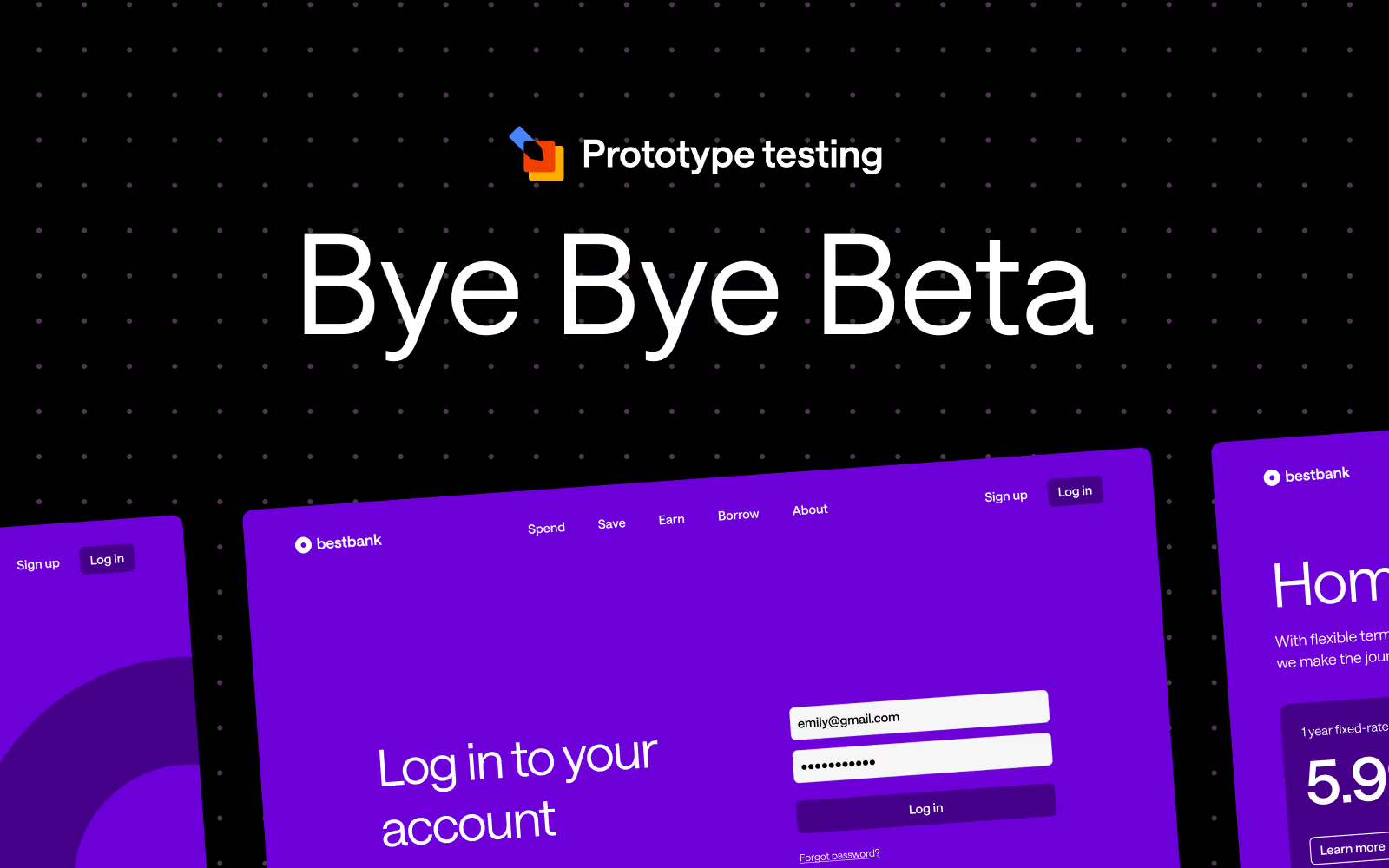
After months of invaluable collaboration with our incredible community, we're thrilled to announce that Prototype Testing has officially graduated from beta and is now available to everyone on the Individual+, Team, and Enterprise plans!

Reflecting on the Beta Journey ⭐

The Prototype Testing Beta was launched with a singular mission: to gather feedback from our community to help shape the future of the tool. Over the past few months, we've been privileged to work alongside a diverse group of customers and UX leaders— who provided invaluable feedback, completed many Usability Tests, and helped us refine the tool.

From the initial rollout to the most recent updates, your input has shaped our decisions, from design tweaks to functional improvements. Together, we’ve tackled challenges, explored creative solutions, and built something that truly aligns with user needs.

Highlights from the Beta 🥳

  • Figma OAuth Integration: One of our most anticipated features, this seamless integration enabled testers to connect their design workflows directly with our platform, paving the way for smoother collaboration.

  • Improved security with password management: A new "Password settings" button allows users to manage stored passwords, which participants receive before starting their Prototype Study. Additionally, users are prompted for a password when importing protected prototypes.

  • Improvements to usability: Your feedback was taken onboard, and we’ve updated the buttons, including "Re-sync to file" and "Change prototype," to improve usability.

  • Results sharing: You can now easily share specific sections (e.g., analysis, tasks, clickmaps) via a URL with your stakeholders in just a few clicks. With the added protection of a password for secure access.
  • Participant data view: To speed up your data analysis and improve your workflows we’ve added task metrics in the "Results > Participants" table, showing tasks completed, skipped, and success percentage.

  • Notes tab in analysis: Users can now take notes directly in the Analysis section for Task Results, Click Maps, Paths, and Questionnaires.

What's next for Prototype Testing ❓

Introducing Video Recording

We're thrilled to announce our most requested feature is coming to Prototype Testing: seamless video recording that captures the full depth of user experiences.

A Frictionless Experience

  • Browser-based recording - no plugins needed
  • Automatic consent management for screen, face, and voice recording
  • Seamless integration with your existing test flow
  • Secure storage and easy access to recordings

Why video changes everything

Video recording transforms your research by:

  • Capturing authentic user reactions and emotions
  • Understanding the "why" behind user behaviors
  • Sharing compelling user stories with stakeholders
  • Building deeper empathy across your team

Beyond video: The road ahead

Your feedback during the beta has shaped an exciting roadmap for 2025 and beyond. While we can't reveal everything just yet, know that every feature and enhancement planned has been inspired by your needs and suggestions.

A thank you from our team 🫶

To our incredible beta participants: your partnership has been invaluable. You've shared your expertise, challenged our assumptions, and helped us build something truly special. Every piece of feedback, every suggestion, and every bug report has contributed to making Prototype Testing a tool that truly serves the UX research community.

Join us on the journey

This is just the beginning of our mission to make expert research accessible to all. Stay tuned for regular updates as we continue to evolve Prototype Testing based on your needs and feedback. Here's to the next chapter of creating exceptional digital experiences together!

Share this article
Author
Sarah
Flutey

Related articles

View all blog articles
Learn more
1 min read

Bye-bye Beta 👋🏼 Hello Prototype Testing 🚀

After months of invaluable collaboration with our incredible community, we're thrilled to announce that Prototype Testing has officially graduated from beta and is now available to everyone on the Individual+, Team, and Enterprise plans!

Reflecting on the Beta Journey ⭐

The Prototype Testing Beta was launched with a singular mission: to gather feedback from our community to help shape the future of the tool. Over the past few months, we've been privileged to work alongside a diverse group of customers and UX leaders— who provided invaluable feedback, completed many Usability Tests, and helped us refine the tool.

From the initial rollout to the most recent updates, your input has shaped our decisions, from design tweaks to functional improvements. Together, we’ve tackled challenges, explored creative solutions, and built something that truly aligns with user needs.

Highlights from the Beta 🥳

  • Figma OAuth Integration: One of our most anticipated features, this seamless integration enabled testers to connect their design workflows directly with our platform, paving the way for smoother collaboration.

  • Improved security with password management: A new "Password settings" button allows users to manage stored passwords, which participants receive before starting their Prototype Study. Additionally, users are prompted for a password when importing protected prototypes.

  • Improvements to usability: Your feedback was taken onboard, and we’ve updated the buttons, including "Re-sync to file" and "Change prototype," to improve usability.

  • Results sharing: You can now easily share specific sections (e.g., analysis, tasks, clickmaps) via a URL with your stakeholders in just a few clicks. With the added protection of a password for secure access.
  • Participant data view: To speed up your data analysis and improve your workflows we’ve added task metrics in the "Results > Participants" table, showing tasks completed, skipped, and success percentage.

  • Notes tab in analysis: Users can now take notes directly in the Analysis section for Task Results, Click Maps, Paths, and Questionnaires.

What's next for Prototype Testing ❓

Introducing Video Recording

We're thrilled to announce our most requested feature is coming to Prototype Testing: seamless video recording that captures the full depth of user experiences.

A Frictionless Experience

  • Browser-based recording - no plugins needed
  • Automatic consent management for screen, face, and voice recording
  • Seamless integration with your existing test flow
  • Secure storage and easy access to recordings

Why video changes everything

Video recording transforms your research by:

  • Capturing authentic user reactions and emotions
  • Understanding the "why" behind user behaviors
  • Sharing compelling user stories with stakeholders
  • Building deeper empathy across your team

Beyond video: The road ahead

Your feedback during the beta has shaped an exciting roadmap for 2025 and beyond. While we can't reveal everything just yet, know that every feature and enhancement planned has been inspired by your needs and suggestions.

A thank you from our team 🫶

To our incredible beta participants: your partnership has been invaluable. You've shared your expertise, challenged our assumptions, and helped us build something truly special. Every piece of feedback, every suggestion, and every bug report has contributed to making Prototype Testing a tool that truly serves the UX research community.

Join us on the journey

This is just the beginning of our mission to make expert research accessible to all. Stay tuned for regular updates as we continue to evolve Prototype Testing based on your needs and feedback. Here's to the next chapter of creating exceptional digital experiences together!

Learn more
1 min read

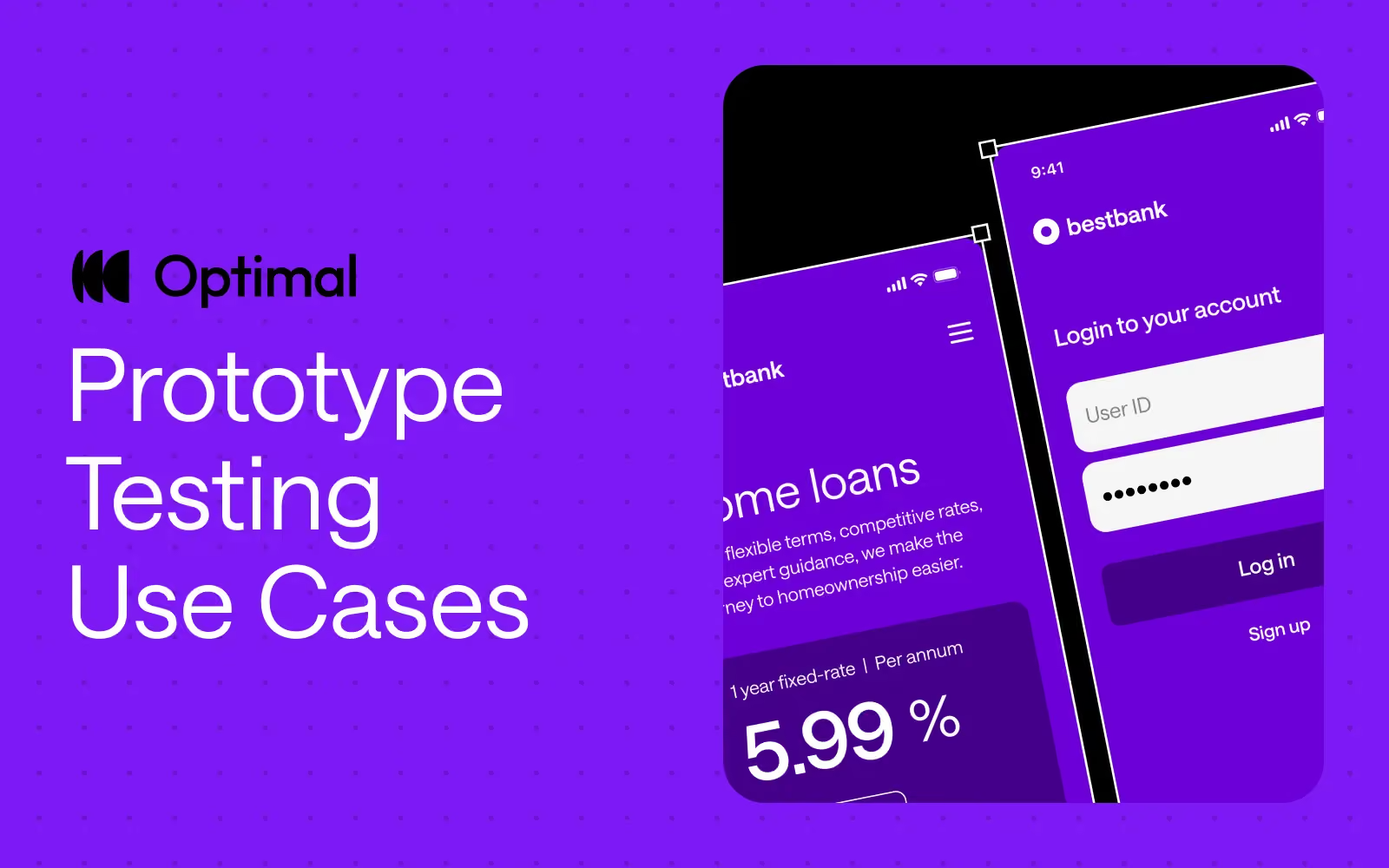
Prototype Testing: Validate Designs Early and Build with Confidence

Investing in prototype testing and user-focused design isn't just about creating better products—it's a proven strategy to save costs, accelerate timelines, and drive customer loyalty. According to Forrester Research, companies that incorporate prototype testing in their design process can reduce development costs by 33% and cut collaboration time by 25%. UX-focused companies also see products hit the market 50% faster and loyalty rise by 240% (Forrester Research, Nielsen Norman Group)!

Whether you're refining user flows, testing new concepts, or optimizing your onboarding experience or conversion flows, prototype testing helps ensure your designs hit the mark—before you invest too heavily in the build.

With those benefits in mind, let's dive into how prototype testing can help you deliver user-centered designs efficiently and effectively. 

Common Use Cases for Prototype Testing

  1. Test Onboarding and Sign-Up Flows
    How intuitive is your onboarding process? Prototype testing can help identify friction points, ensuring users can navigate and complete sign-ups seamlessly. For example, you can simulate different scenarios to determine whether users can easily register, set up accounts, or retrieve forgotten passwords.

  2. A/B Test Email Designs
    Test different layouts, calls-to-action (CTAs), or visual elements in your email prototypes to discover what resonates best with your audience. Measure metrics like click-through rates or time spent engaging with content to refine your design.

  3. Evaluate User Flows and Wireframes
    Whether you're testing a new feature, redesigning a user journey, or validating a wireframe, prototype testing gives you real-world insights. Observe how users interact with your design and identify areas for improvement before you move to development.

  4. Test Concepts
    Before launching a new idea, validate it through prototype testing. Let users interact with your concept to gauge feasibility and potential impact. This can save time and resources by helping you focus on ideas that resonate.

  5. Evaluate Conversion Flows
    Are users completing purchases or achieving desired outcomes? Use prototype testing to analyze conversion flows and pinpoint where users drop off. From landing pages to payment processes, you can optimize every step for success.

  6. Test User Interfaces (UI)
    Ensure your UI elements—buttons, navigation menus, or forms—are intuitive and accessible. Prototype testing can help you identify design inconsistencies or usability challenges early in the process.

  7. Conduct Usability Tests
    Have a new feature in development? Prototype testing lets you see how users interact with it, revealing insights that can guide refinements and improve overall satisfaction.

Real-Life Prototype Testing Scenarios


Airline

Imagine your flight has been canceled. Ask how your customers self-service on the airline website to find new flight options. 


Bank

Have a prospect or customer interact with a prototype to open a business account online. Uncover usability issues and streamline the process.


Insurance
Imagine you’re interested in switching car insurance. Explore how intuitive it is for customers to view coverage details in an app, helping insurers improve navigation and accessibility.

Prototype Testing Analysis & Insights


Optimal’s prototype testing gives you a variety of analysis options to help you to evaluate the effectiveness and usability of your prototypes. Use these to see exactly how users navigate, where they face challenges, and what areas are proving to be successful.

  • Task-based scenarios: Observe how users complete tasks like purchasing a product or updating account settings and set correction paths and destinations.
  • Clickmaps: See how users navigate and locate information. See hits and misses on designated clickable areas, average task completion times, and heatmaps showing where users believed the next steps to be.
  • Task results: Gather insights into how long it took to take a task (time taken), misclicks, directness score (considering backtracks or incorrect pathways), and success score.
  • Participant paths: The Paths tab provides a powerful visualization, including thumbnails, to understand and identify common navigation patterns and potential obstacles participants encounter while completing tasks.
  • Video, audio, and/or screen recording: See how your users interact with and respond to your prototype. Listen to their thought process and pick up on nonverbal cues, like hesitation, frustration, or confusion to pinpoint areas for improvement or exploration.  


Ready to use prototype testing to help your team reduce development costs and get a faster time to market? Get started in your account by creating a new prototype test.

Not yet a user of Optimal? Sign up for a free 7-day trial.

Learn more
1 min read

Optimal vs Ballpark: Why Research Depth Matters More Than Surface-Level Simplicity

Many smaller product teams find newer research tools like Ballpark attractive due to their promises of being able to provide simple and quick user feedback tools. However, larger teams conducting UX research that drives product strategy need platforms capable of delivering actionable insights rather than just surface-level metrics. While Ballpark provides basic testing functionality that works for simple validation, Optimal offers the research depth, comprehensive analysis capabilities, and strategic intelligence that teams require when making critical product decisions.

Why Choose Optimal over Ballpark?

Surface-Level Feedback vs. Strategic Research Intelligence

  • Ballpark's Shallow Analysis: Ballpark focuses on collecting quick feedback through basic surveys and simple preference tests, but lacks the analytical depth needed to understand why users behave as they do or what actions to take based on findings.
  • Optimal's Strategic Insights: Optimal transforms user feedback into strategic intelligence through advanced analytics, behavioral analysis, and AI-powered insights that reveal not just what happened, but why it happened and what to do about it.
  • Limited Research Methodology: Ballpark's toolset centers on simple feedback collection without comprehensive research methods like advanced card sorting, tree testing, or sophisticated user journey analysis.
  • Complete Research Arsenal: Optimal provides the full spectrum of research methodologies needed to understand complex user behaviors, validate design decisions, and guide strategic product development.

Quick Metrics vs. Actionable Intelligence

  • Basic Data Collection: Ballpark provides simple metrics and basic reporting that tell you what happened but leave teams to figure out the 'why' and 'what next' on their own.
  • Intelligent Analysis: Optimal's AI-powered analysis doesn't just collect data—it identifies patterns, predicts user behavior, and provides specific recommendations that guide product decisions.
  • Limited Participant Insights: Ballpark's 3 million participant panel provides basic demographic targeting but lacks the sophisticated segmentation and behavioral profiling needed for nuanced research.
  • Deep User Understanding: Optimal's 100+ million verified participants across 150+ countries enable precise targeting and comprehensive user profiling that reveals deep behavioral insights and cultural nuances.

Startup Risk vs. Enterprise Reliability

  • Unproven Stability: As a recently founded startup with limited funding transparency, Ballpark presents platform stability risks and uncertain long-term viability for enterprise research investments.
  • Proven Enterprise Reliability: Optimal has successfully launched over 100,000 studies with 99.9% uptime guarantee, providing the reliability and stability enterprise organizations require.
  • Limited Support Infrastructure: Ballpark's small team and basic support options cannot match the dedicated account management and enterprise support that strategic research programs demand.
  • Enterprise Support Excellence: Optimal provides dedicated account managers, 24/7 enterprise support, and comprehensive onboarding that ensures research program success.

When to Choose Optimal

Optimal is the best choice for teams looking for: 

  • Actionable Intelligence: When teams need insights that directly inform product strategy and design decisions
  • Behavioral Understanding: Projects requiring deep analysis of why users behave as they do
  • Complex Research Questions: Studies that demand sophisticated methodologies and advanced analytics
  • Strategic Product Decisions: When research insights drive major feature development and business direction
  • Comprehensive User Insights: Teams needing complete user understanding beyond basic preference testing
  • Competitive Advantage: Organizations using research intelligence to outperform competitors

Ready to move beyond basic feedback to strategic research intelligence? Experience how Optimal's analytical depth and comprehensive insights drive product decisions that create competitive advantage.

Seeing is believing

Explore our tools and see how Optimal makes gathering insights simple, powerful, and impactful.