
March 18, 2025

Product Update - March 2025

2025 is already proving to be an exciting year for UX research, and we’re just getting started! With a range of new features and updates that empower teams to move from design to decisions faster, Optimal is bringing the best tools to the table for everyone and making research accessible across all teams. Let’s dive into what’s already here and what's coming next!


Video Recording for Prototype Testing

We’re excited to announce that the closed beta for video recording for prototype testing has launched. By capturing screen, audio, and/or video, this feature takes research beyond metrics to give you a deeper understanding of user intent and pain points. Our Optimal Recruitment service also ensures you connect with the right participants for video recording, driving meaningful insights from the start.

New Study Flow for Faster Study Creation

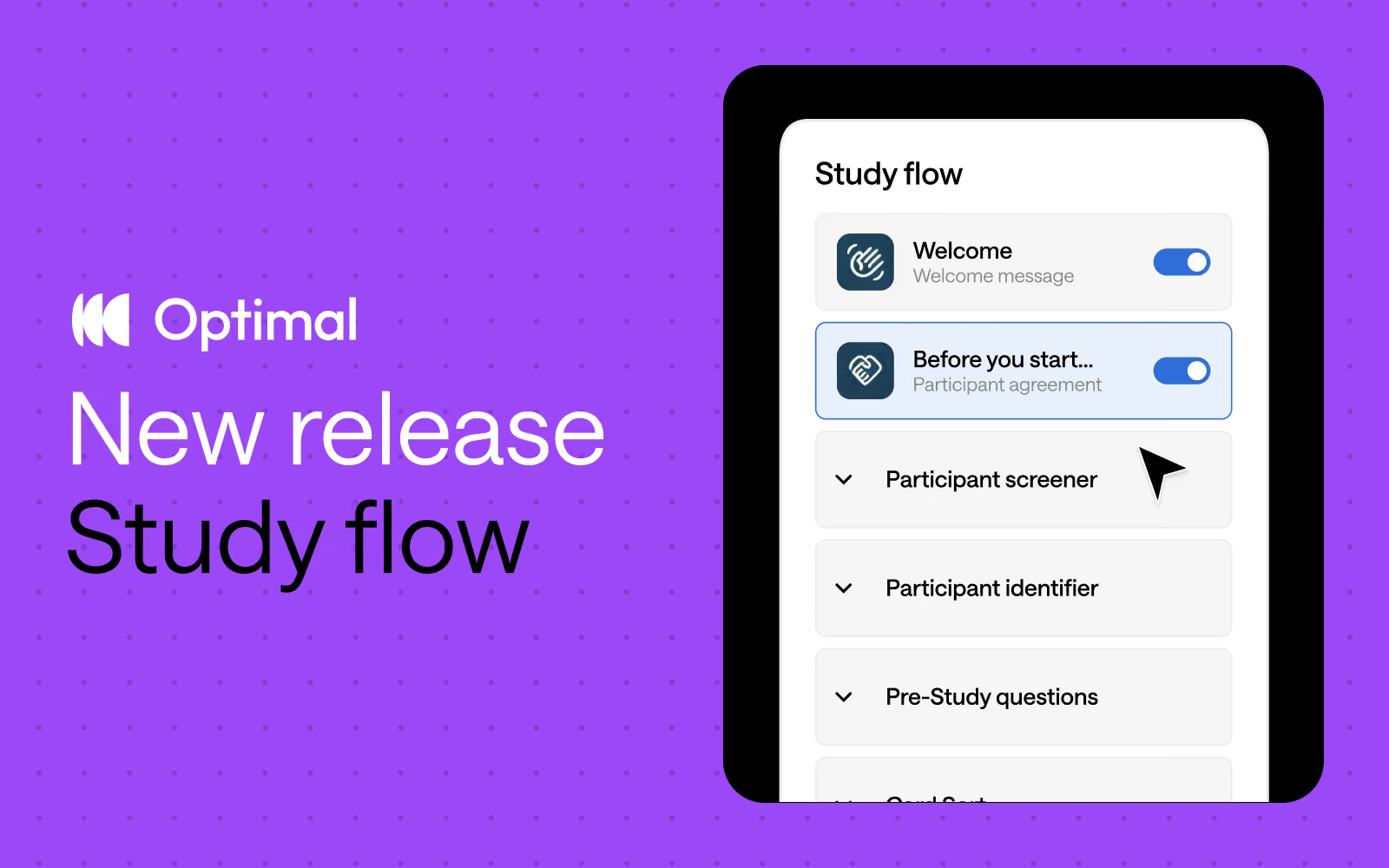
Say hello to the new Study Flow, an intuitive tab that helps to accelerate study creation, combining the Messages & instructions and Questionnaire tabs into one. Visualize every step of the participant’s journey, from the welcome screen to the final thank-you message with the Study Flow panel. Save time by quickly duplicating questions across Surveys and other study types. Navigate through studies with ease by collapsing and expanding sections as needed.

What We’re Working On Next


Here’s a sneak peek at some exciting features in the works:

AI-Powered Survey Question Simplification
We’re unleashing an AI-powered feature to help users simplify complex question wording and improve clarity. Users can quickly accept, reject, or regenerate more suggestions with a click. By improving clarity and simplifying your questions, you’ll gather more accurate, higher-quality insights that drive better results.

This AI feature is available for surveys questions as well as screening, pre and post study questions for surveys, prototype tests, card sorts, tree tests and first-click tests. This is just the beginning of even more AI-driven improvements to come, all aimed at helping to accelerate your time to insights.

Advanced Logic Capabilities
We’re working on bringing more advanced logic capabilities to Optimal - one of the most highly requested features for surveys. With display logic, the study changes dynamically - showing or hiding answer options or subsequence questions based on a participant’s previous responses. Apply display logic to Surveys, screening questions, and pre- and post-study questions. This is just the beginning. We’ll be exploring additional advanced logic capabilities in 2025. 


Join Us on the Journey
Stay tuned for regular updates, and let us know how we can make your research experience even better. Have feedback or feature requests? We’d love to hear from you so we can continue to shape the future of Optimal.

Share this article
Author
Optimal
Workshop

Related articles

View all blog articles
Learn more
1 min read

Figma + Optimal: Design, Test, Iterate Faster

Figma has long been the go-to tool for UI/UX designers, known for its intuitive interface and real-time collaboration. In fact, over 95% of Fortune 500 companies rely on Figma, and 13 million monthly active users trust it to design and prototype digital experiences.

If you’re already designing in Figma, integrating with Optimal can help to validate your ideas early, reduce costly mistakes, and deliver experiences users actually want.

The Hidden Cost of Skipping Design Validation

Validating designs before development and catching usability issues early has a measurable impact on both users and the business. Research consistently shows that:

Figma + Optimal: Prototype Testing and Design Validation

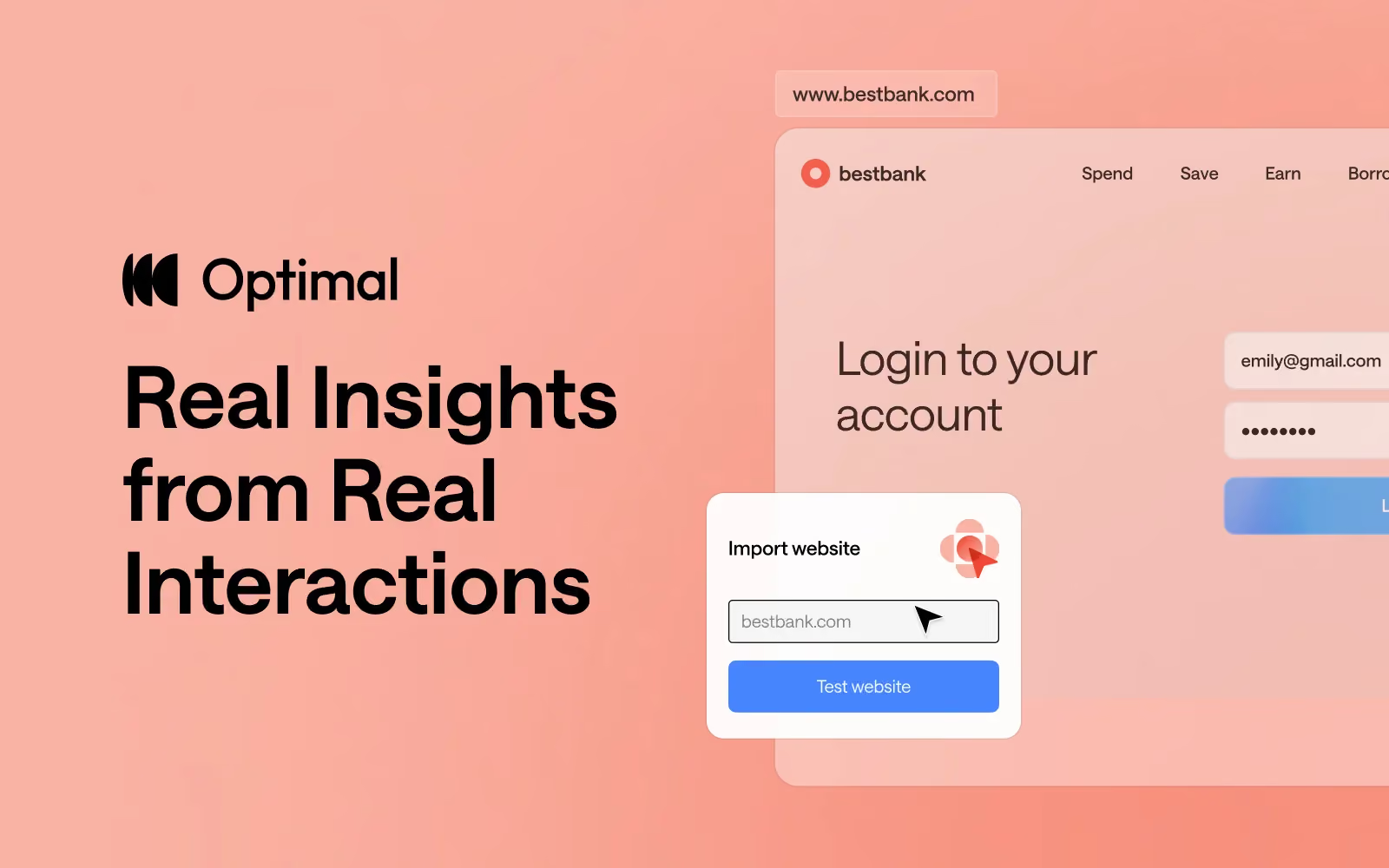
Instead of waiting for post-launch analytics or expensive redesigns, you can test your Figma prototypes with real users in hours, not weeks with Optimal. Get quantitative data, watch recordings, analyze heatmaps, and actually see where users struggle, all before a single line of code is written.

Here’s a look into 4 practical ways teams use Figma and Optimal together.

4 Ways to Test Figma Designs with Optimal

1. Preference Testing: Let Users Pick the Winner

Ever had a debate with your team about which design direction to take? Let data decide.

Here's how:

  • Create a Figma frame with two designs side-by-side (think: two homepage variations, competing button styles, different navigation approaches)
  • Copy your Figma link and drop it into an Optimal first-click test
  • Ask participants: "Which design do you prefer?"
  • Watch the results roll in with heatmaps showing exactly where users clicked

2. Concept Testing: Does Your Idea Actually Make Sense?

You've got a bold new concept. It makes perfect sense to you. But will users get it?

The process:

  • Build wireframes or mockups in Figma (they don't need to be pixel-perfect)
  • Import your Figma link into an Optimal first-click or prototype test
  • Create tasks like “Click the option that best matches what you’re trying to do.” or “Click where you would sign up.”
  • Analyze whether users successfully understand and navigate your concept

3. Prototype Testing: Find the Friction Before Development

You've built a clickable prototype with multiple screens and interactions. It looks polished. But does it actually work for users?

Step-by-step:

  • Build a complete interactive prototype in Figma
  • Ensure all frames and flows are complete in Figma before importing into Optimal.
  • Copy your Figma prototype URL (works even with password-protected links)
  • Paste it into an Optimal prototype test
  • Define realistic tasks: "You want to buy running shoes under $100. Complete the purchase."
  • Watch video recordings and analyze usability metrics, clickmaps, misclicks, successes/failures, and heatmaps

What you'll discover might surprise you. Users will:

  • Click on things you never intended to be clickable
  • Miss obvious CTAs you thought were perfectly placed
  • Get lost in navigation that seemed intuitive to your team
  • Abandon tasks at friction points you didn't know existed

4. AI Prototype Testing: Validate AI-Generated Designs

The rise of AI design tools like Figma Make has changed the game. You can now generate a functional prototype from a text prompt in minutes. But just because AI can create it doesn't mean users can use it.

Quick workflow:

  • Generate a prototype using Figma Make
  • Copy the URL and drop it into an Optimal live site test
  • Add your testing tasks
  • Review recordings to spot usability issues

This is perfect for rapid experimentation. 

Getting Started Is Simple

  1. Prep your Figma file - Have a prototype or design ready
  2. Copy the link - Grab your Figma share URL
  3. Create your test - Choose first-click, prototype test, or live site test in Optimal
  4. Paste and configure - Add your Figma URL and write your test tasks
  5. Launch - Use your own participants or tap into Optimal's panel or Managed Recruitment services
  6. Analyze - Review results and iterate

Launch Designs Users Love

Figma gives you the power to design and prototype rapidly, while Optimal gives you the insights to make sure those designs actually work for real users. Together, they create a workflow built on real insights, not guesswork.

By testing early and often, teams can reduce risk, build confidence in their designs, and move into development knowing their work has already been validated by users. Gather insights quickly, collaborate more effectively, and keep projects moving forward with evidence-backed decisions.

Ready to validate your next Figma prototype? Use Optimal as part of your workflow and start testing with real users today.

Learn more
1 min read

Accelerate Study Creation with the New Study Flow

Inspired by insights from Optimal users, we’ve reimagined study creation to bring you a beautifully streamlined experience with the new Study Flow tab.


With the new Study Flow, you’ll: 

Enjoy faster study set up: Messages & instructions and Questionnaire tabs are combined in a single tab - called Study Flow - for faster editing and settings customization.

✨ See it all at a glance: Easily visualize and understand the participant experience—from the welcome message to the final thank-you screen—every step of the way. 

🎯 Duplicate questions: Save time and quickly replicate questions for surveys, screening questions, and pre- and post-study questions. 

Experience enhanced UI: Enjoy a modern, clean design with intuitive updates that minimize scrolling and reduce mental load.

🗂️ Collapse and expand sections: Easily navigate studies by collapsing and expanding sections, making it easier to build out specific parts of your study.

This Study Flow tab is available across all Optimal tools, except for Qualitative Insights. 


What’s next?

We’re not stopping there. We have some significant improvements on the horizon designed to give you even greater flexibility and control.

Advanced logic: Enhanced logic capabilities is one of our most highly requested features, and we’re thrilled to introduce new capabilities to help you build your ideal study experience – available for surveys and other tools. We will first introduce “display logic”, allowing for: 

  • If answer is X for Question Y, then hide/show Question Z.
  • If answer is X for Question Y, then hide/show specific answer options.

Customizable sections: Organize your questions into different sections to build a better study experience for your participants. For example, segment your questions into relevant groupings, such as demographics or product usage. With custom sections, you can add new sections, rename, reorder, duplicate, and move questions between different sections.* 

*Note: Questions cannot be moved to/from the screening questions section.

These upcoming features will empower you to create dynamic, tailored study experiences for different audiences with ease for more valuable insights. 

Start exploring the new Study Flow now.

Learn more
1 min read

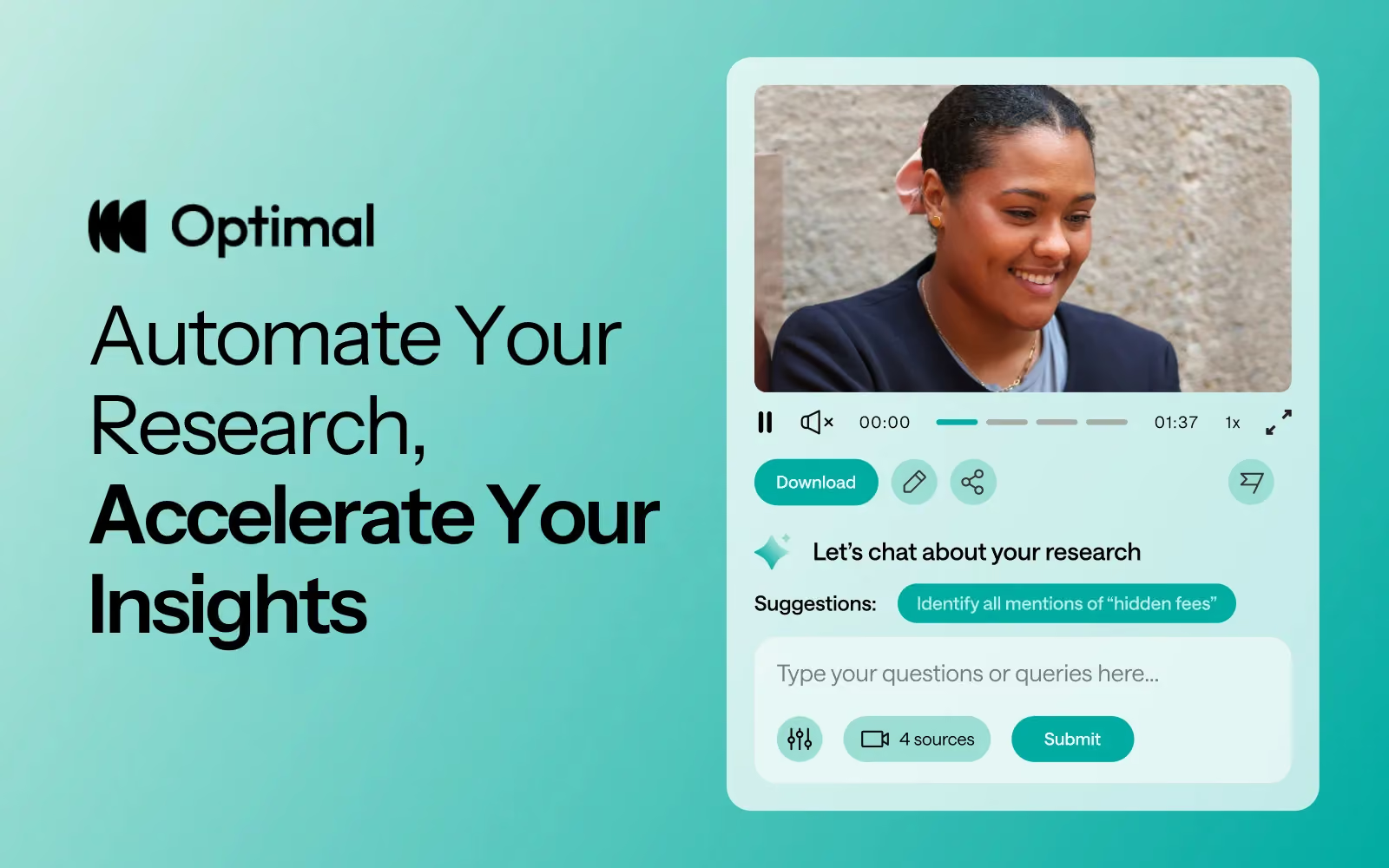
Introducing Optimal’s New Interviews Tool: Automate Your Research, Accelerate Your Insights

At Optimal, we know the reality of user research: you've just wrapped up a fantastic interview session, your head is buzzing with insights, and then... you're staring at hours of video footage that somehow needs to become actionable recommendations for your team.

User interviews and usability sessions are treasure troves of insight, but the reality is reviewing hours of raw footage can be time-consuming, tedious, and easy to overlook important details. Too often, valuable user stories never make it past the recording stage.


That's why we’re excited to announce the launch of Interviews, a brand-new tool that saves you time with AI and automation, turns real user moments into actionable recommendations, and provides the evidence you need to shape decisions, bring stakeholders on board, and inspire action.

Interviews, Reimagined

We surveyed more than 100 researchers, designers, and product managers, conducted discovery interviews, tested prototypes, and ran feedback sessions to help guide the discovery and development of Optimal Interviews.

The result? What once took hours of video review now takes minutes. With Interviews, you get:

  • Instant clarity: Upload your interviews and let AI automatically surface key themes, pain points, opportunities, and other key insights.
  • Deeper exploration: Ask follow-up questions and anything with AI chat. Every insight comes with supporting video evidence, so you can back up recommendations with real user feedback.
  • Automatic highlight reels: Generate clips and compilations that spotlight the takeaways that matter.
  • Real user voices: Turn insight into impact with user feedback clips and videos. Share insights and download clips to drive product and stakeholder decisions.

Groundbreaking AI at Your Service

This tool is powered by AI designed for researchers, product owners, and designers. This isn’t just transcription or summarization, it’s intelligence tailored to surface the insights that matter most. It’s like having a personal AI research assistant, accelerating analysis and automating your workflow without compromising quality. No more endless footage scrolling.


The AI used for Interviews as well as all other AI with Optimal is backed by AWS Amazon Bedrock, ensuring that your AI insights are supported with industry-leading protection and compliance.

Evolving Optimal Interviews

A big thank you to our early access users! Your feedback helped us focus on making Optimal Interviews even better. Here's what's new:

  • Speed and easy access to insights: More video clips, instant download, and bookmark options to make sharing findings faster than ever.
  • Privacy: Disable video playback while still extracting insights from transcripts and get PII redaction for English audio alongside transcripts and insights.
  • Trust: Our enhanced, best-in-class AI chat experience lets teams explore patterns and themes confidently.
  • Expanded study capability: You can now upload up to 20 videos per Interviews study.


What’s Next: The Future of Moderated Interviews in Optimal

This new tool is just the beginning. Our vision is to help you manage the entire moderated interview process inside Optimal, from recruitment to scheduling to analysis and sharing.

Here’s what’s coming:

  • View your scheduled sessions directly within Optimal. Link up with your own calendar.
  • Connect seamlessly with Zoom, Google Meet, or Teams.

Imagine running your full end-to-end interview workflow, all in one platform. That’s where we’re heading, and Interviews is our first step.

Ready to Explore?


Interviews is available now for our latest Optimal plans with study limits. Start transforming your footage into minutes of clarity and bring your users’ voices to the center of every decision. We can’t wait to see what you uncover.
Get started with Interviews.

Seeing is believing

Explore our tools and see how Optimal makes gathering insights simple, powerful, and impactful.